요약
Financial conditions could also tighten, and growth led by artificial intelligence developments could be affected as well.
본문
Advertisement Inflation expected to ease in 2027 but prolonged Middle East conflict may keep prices high, slow growth: MASFinancial conditions could also tighten, and growth led by artificial intelligence developments could be affected as well.
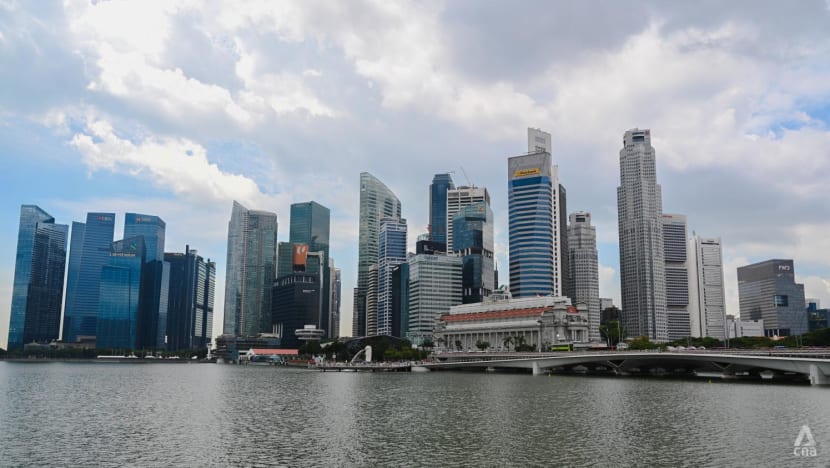
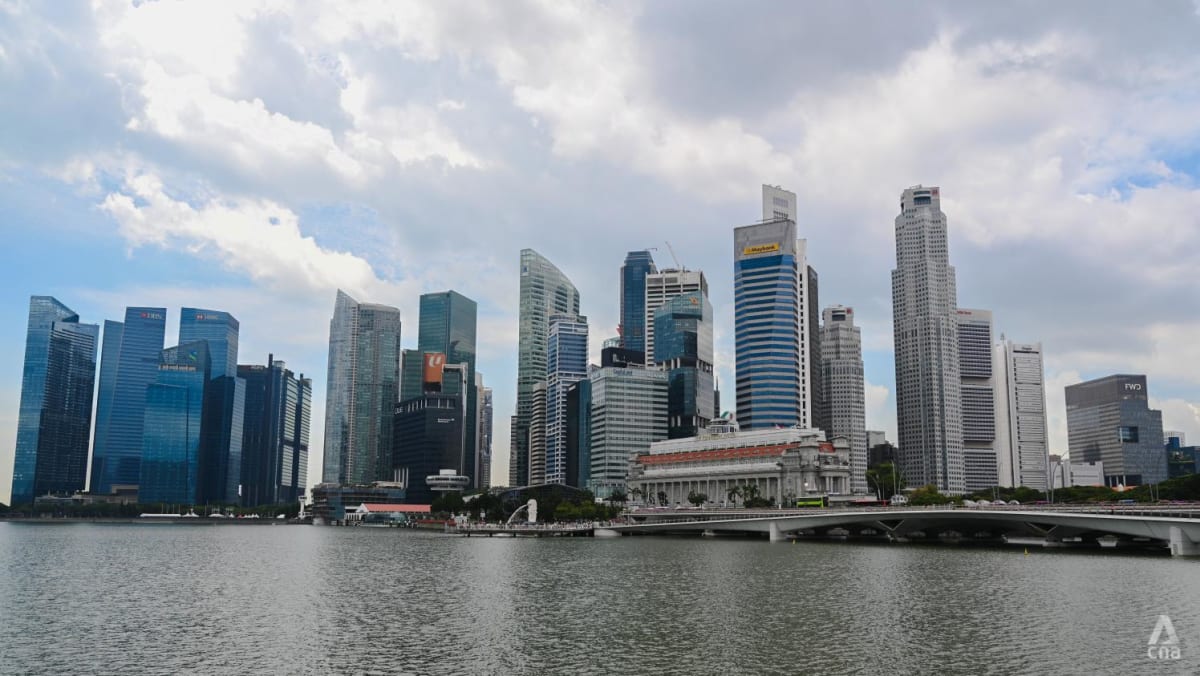
Buildings in Singapore's central business district on Nov 16, 2022. (File photo: CNA/Hanidah Amin)

This audio is generated by an AI tool.

Abigail Ng
 Abigail Ng
14 Apr 2026 03:00PM
(Updated: 15 Apr 2026 09:37AM)
Bookmark
Share
WhatsApp
Telegram
Facebook
Twitter
Email
LinkedIn
Add CNA as a trusted source to help Google better understand and surface our content in search results.
Read a summary of this article on FAST.
Get bite-sized news via a new
Abigail Ng
14 Apr 2026 03:00PM
(Updated: 15 Apr 2026 09:37AM)
Bookmark
Share
WhatsApp
Telegram
Facebook
Twitter
Email
LinkedIn
Add CNA as a trusted source to help Google better understand and surface our content in search results.
Read a summary of this article on FAST.
Get bite-sized news via a newcards interface. Give it a try. Click here to return to FAST Tap here to return to FAST FAST
SINGAPORE: Inflation is expected to "ease progressively" over 2027 in line with global energy prices, but a prolonged disruption to energy supplies risks driving up inflation and stifling economic growth here, the Monetary Authority of Singapore (MAS) said in its latest quarterly macroeconomic review on Tuesday (Apr 14).
"The trajectory of inflation beyond 2026 will depend heavily on global energy and food prices, as well as growth developments," said MAS, noting that even if supplies from the Middle East resume, global oil prices are expected to remain elevated for some time.
Prices are already starting to tick up in Singapore and MAS said inflation should eventually peak and decline, in line with the projected moderation in global energy prices. But the risks to the inflation outlook are tilted to the upside, said the central bank.
"A prolonged disruption to global energy supplies or the unexpected implementation of export controls would lead to even higher import costs for Singapore, and pose upside risks to inflation alongside downside risks to growth," the report said.
CNA Games Guess Word
Crack the word, one row at a time
Guess Word
Crack the word, one row at a time
 Buzzword
Create words using the given letters
Buzzword
Create words using the given letters
 Mini Sudoku
Tiny puzzle, mighty brain teaser
Mini Sudoku
Tiny puzzle, mighty brain teaser
 Mini Crossword
Small grid, big challenge
Mini Crossword
Small grid, big challenge
 Word Search
Spot as many words as you can
Show More
Show Less
Word Search
Spot as many words as you can
Show More
Show Less
Household real incomes, which take inflation into account, are likely to be eroded as higher prices of imports feed into domestically produced goods and services. That could then dampen aggregate demand.
In Singapore, GDP growth for 2026 is expected to "step down" from the 5 per cent reported last year, with the slowdown expected to be broad-based across various sectors, MAS said.
The output gap - defined as the economic measure of the difference between the actual output of an economy and its potential - is expected to average around zero per cent this year.
"In the near term, global AI demand is unlikely to unwind abruptly due to committed investments, which in turn should support domestic activity, particularly in the technology-related segments," said MAS.
But a more uncertain macroeconomic backdrop and tighter financial conditions could weigh on demand in the latter part of the year, the central bank added.
For example, higher energy prices could feed through to production costs, erode real incomes and weigh on consumption and investment.
MAS also noted that the damage to energy infrastructure during the conflict could have "enduring constraints on downstream production inputs", which are expected to have "sustained" effects on the Singapore economy.
Downside risks to growth will "compound" if the energy crisis becomes prolonged, MAS said.
"All in, the impact from the Middle East conflict will weigh on Singapore's economic activity in the coming quarters, although the extent remains uncertain given the evolving developments," said the central bank.
Related:
MAS tightens monetary policy, raises inflation forecast for 2026

Singapore faces slower growth, higher inflation as Middle East conflict disrupts global supplies: Gan Kim Yong
SECTORAL IMPACT
Different sectors see differing levels of impact depending on their degree of reliance on energy.
The most energy-dependent industries include petroleum, gas and electricity, petrochemicals, basic chemicals, transportation and water and waste services.
"Energy inputs exceeded 10 per cent of total input requirements in each of these industries, which together comprise about 10 per cent of overall GDP," the report said.
The chemicals industry has been more affected because of disruptions to critical inputs, but this could potentially spillover to other areas.
MAS said the indirect impact is estimated to be the most pronounced for Singapore's wholesale trade sector, which comprises 19 per cent of GDP. Around half of the sector's input requirements are from the energy-intensive transport and storage sector, especially water transport services.
Domestic-oriented sectors likely will also face mounting cost pressures and operational challenges, with land transport operators being most directly affected.
"Recent anecdotal reports have also pointed to rising petroleum-based material costs in construction, while food & beverage operators could face higher utility, plastic packaging and raw material costs," said the report.
In the technology sector, artificial intelligence (AI) demand remains strong, but could be disrupted by supply shocks, higher costs and tighter financial conditions.
A disruption in the supply of critical inputs could cause the global AI cycle to "unravel", said MAS.
For example, the Middle East is a big producer of helium, which is used to produce semiconductors.
If supply shortages emerge in semiconductors, prices for servers and networking equipment could go up, said MAS. Together with higher energy costs, data centres' operating costs will increase.
Continued uncertainty and a higher inflationary environment could also affect investment sentiment in the AI ecosystem, said the central bank.
SYSTEMIC, SUSTAINED IMPACT ON GLOBAL ECONOMY
The current energy shock is likely to be more systemic and sustained than past energy crises, said MAS on the global economy outlook.
If energy supplies are interrupted for a longer period of time, there could be "disorderly corrections" in asset prices.
"The ensuing demand destruction from a combined energy and financial shock will be more severe, weighing heavily on growth in the global economy and subsequently generating disinflationary pressures into 2027," the report said.
Countries with lower energy, fiscal and external reserve buffers would be the most vulnerable, while "contagion" could take hold in financial markets if risk-off dynamics are amplified.
In this scenario, global growth would be expected to drop sharply even as inflation stays high in 2026, said MAS.
Related:

Hiring, wage growth likely to ease in 2026 due to Middle East conflict: MAS
Source: CNA/an(nj) NewsletterWeek in Review

Subscribe to our Chief Editor’s Week in Review
Our chief editor shares analysis and picks of the week's biggest news every Saturday.
Sign up for our newsletters
Subscribe here
Get the CNA app
Stay updated with notifications for breaking news and our best stories
Download here
Get WhatsApp alerts
Join our channel for the top reads for the day on your preferred chat app
Join here
Related Topics
Singapore economy inflation Monetary Authority of Singapore AdvertisementAlso worth reading
Content is loading... Advertisement Expand to read the full story Get bite-sized news via a newcards interface. Give it a try. Click here to return to FAST Tap here to return to FAST FAST