🔗 원문 전체 보기 → Legalinsurrection.com

요약
The FCC will vote November 19 on allowing prisons to jam contraband cellphones used to order hits, coordinate gang activity, and exploit children. The post FCC Moves to Let Prisons Jam Contraband Cellphones first appeared on Le·gal In·sur·rec·tion.
본문
FCC Moves to Let Prisons Jam Contraband Cellphones
The FCC will vote November 19 on allowing prisons to jam contraband cellphones used to order hits, coordinate gang activity, and exploit children.
Posted by Ben Smith Saturday, October 31, 2026 at 07:00pm 15 Comments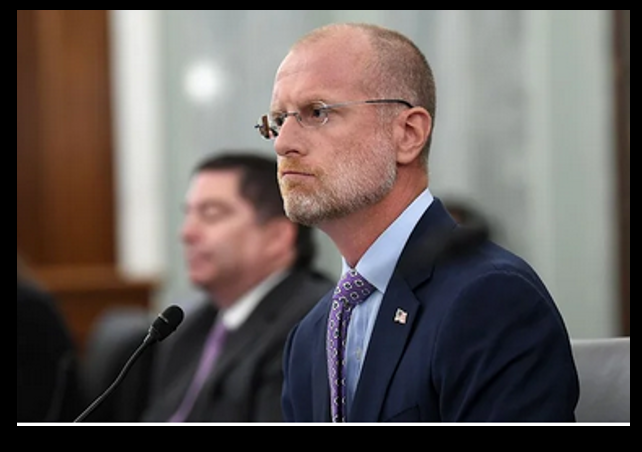
- Telegram
- Digg
- Buffer
- Blogger
- Yahoo Mail
- Viber
- Facebook Messenger
- Copy Link
Going to prison should make running a criminal enterprise a little harder. A smuggled cellphone gets them around that.
Federal Communications Commission (FCC) Chairman Brendan Carr announced Wednesday that the commission will vote November 19 on rules allowing state and local prisons and jails to jam contraband cellphones, giving corrections officials another way to stop inmates from directing crimes from behind bars. Facilities would have the option to use the technology, but would not be required to install it.
MAKING AMERICA SAFE AGAIN 🇺🇸
Today, I announced the FCC will vote to authorize prisons to jam contraband cellphones for the first time ever.
Almost 500,000 inmates now have access to them and 25,000 phones are seized in jails annually.
Inmates are using them at exceptionally… pic.twitter.com/R6zyIOSiUv
— Brendan Carr (@BrendanCarrFCC) October 28, 2026
Carr joined Sen. Tom Cotton (R-AR) and Arkansas Attorney General Tim Griffin (R-AR) in Little Rock for the announcement. His description of what prisoners have been doing with the devices leaves little mystery about why corrections officials want them shut off:
“For years, thousands upon thousands of contraband cellphones have been pouring into prisons, and some of the worst possible offenders have been using them to order hits, coordinate violent gang activity, and aid criminal enterprises. Recently, there has been an increase in inmates using these devices to target and victimize young girls, including the creation of CSAM.”
This has been dragging on for years. When Carr announced the initial push in September 2025, the Associated Press reported that phones were reaching inmates through drone deliveries and hollowed-out footballs tossed over prison fences. Officials also linked smuggled phones to the 2018 South Carolina prison riot that killed seven inmates.
Former South Carolina corrections officer Robert Johnson has an especially personal reason to support jamming. Johnson survived six shots to the stomach and chest in 2010 as he prepared to head to work. By September 2025, he had undergone 36 surgeries.
Locking up the person who orders an attack means little if he can still reach the person who carries it out.
The obvious objection is that jamming could knock out legitimate calls outside prison grounds. Wireless industry group CTIA has opposed the technology, citing interference risks to lawful communications and public safety services.
The FCC says it has an answer: test before equipment enters service, and set a hard boundary for where jamming can happen.
“This includes initial testing pursuant to an experimental license to prove that the jamming solution does not cause harmful interference outside of the designated geographic areas, as well as post-license grant testing at the subject correctional facility prior to beginning operations.
“Jamming may occur only within a Commission-authorized ‘jamming containment area’ where wireless device operation is prohibited, and it must not cause harmful interference outside that area.”
Carriers, public safety coordinators, and 911 authorities would receive advance notice of on-site testing, while nearby communities would be notified before deployment. Carr also acknowledged that jamming will not suit every facility.
Nobody living next to a jail should lose a working phone because an inmate has an illegal one. Making the equipment stay within those limits is a reasonable condition.
Cotton wants Congress to put the policy into law with his Cellphone Jamming Reform Act. Commissioners don’t have to wait. They vote November 19.
- Telegram
- Digg
- Buffer
- Blogger
- Yahoo Mail
- Viber
- Facebook Messenger
- Copy Link
Donations tax deductible
to the full extent allowed by law.
| 15 15 Comments | Crime, DOJ, Media |