요약
The Marine Corps has committed $19.25 million to REGENT's Viceroy electric seaglider, a proposed low-flying transport for troops and cargo.
본문
Follow Followed Add us on
 By
Robert Billard
Published Oct 17, 2026, 3:00 AM EDT
Sign in to your Military.com account
By
Robert Billard
Published Oct 17, 2026, 3:00 AM EDT
Sign in to your Military.com account

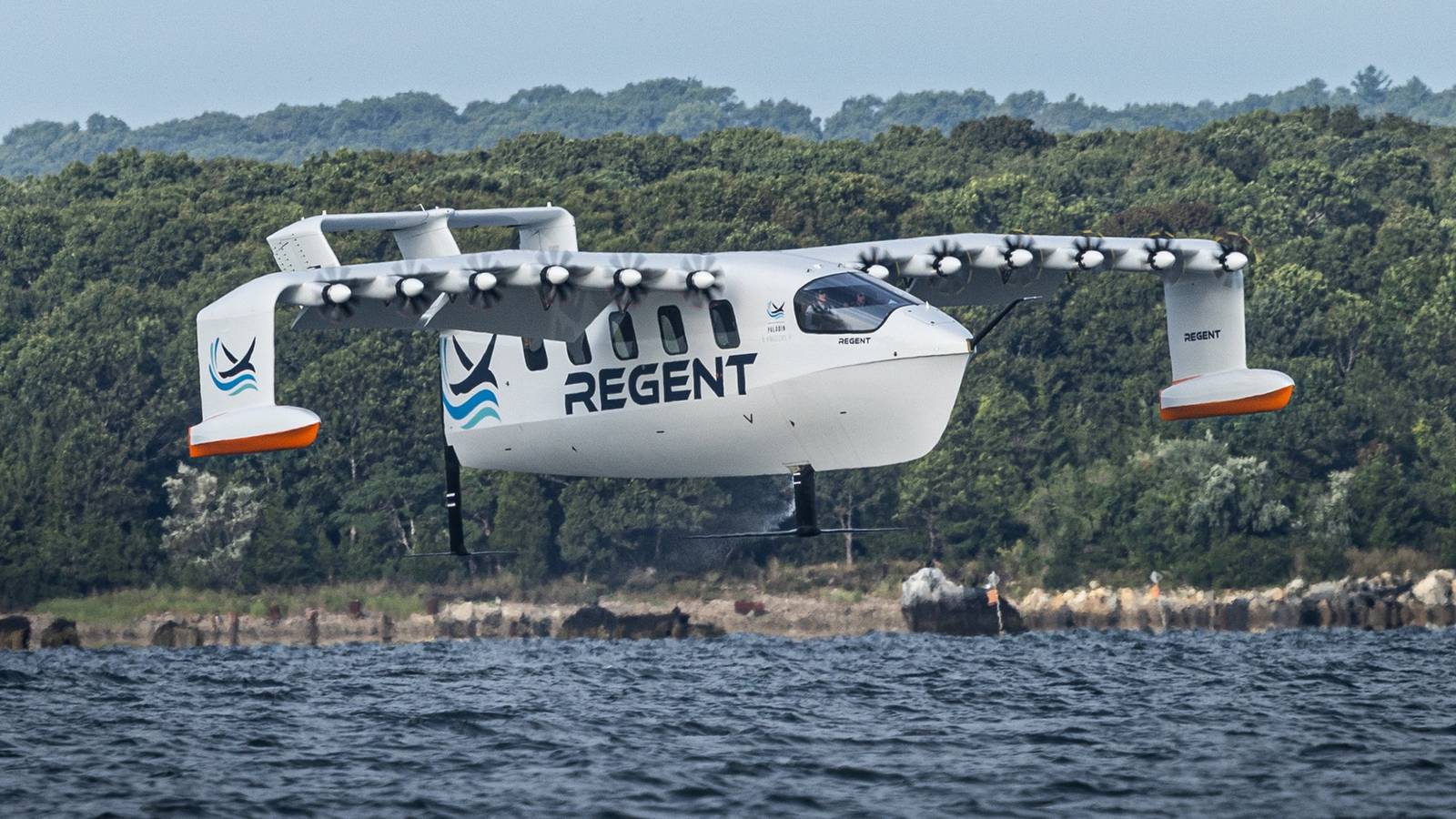
The Marine Corps Warfighting Lab is putting another $5 million into an electric craft that takes off from the water, flies about 30 feet above the waves and lands without a runway.
REGENT Craft, the Rhode Island company building the Viceroy Seaglider, announced Sept. 30 that the extension brings its partnership with the Marine Corps Warfighting Lab (MCWL) to $19.25 million to date.
The company's headline rounds that to $20 million. The new money pays for a fourth phase of demonstrations and command-and-control work with six planned deliverables, The Defense Post reported.
The deal pays for testing. When the lab signed its first agreement in 2023, REGENT co-founder and CEO Billy Thalheimer told Marine Corps Times the service was not purchasing any craft and that its money would mature the technology and validate the concept.
What the lab is testing goes at the hardest problem in the Corps' Force Design update: moving people and supplies between small units spread across islands. "You have these vast distances where effectively you have to run a supply chain," Lieutenant General James Glynn, commander of Marine Corps Forces Pacific, told reporters in June, according to Stars and Stripes.
"What started as a feasibility question has become a real operational program," Thalheimer said in the company's announcement.
What a Seaglider Is
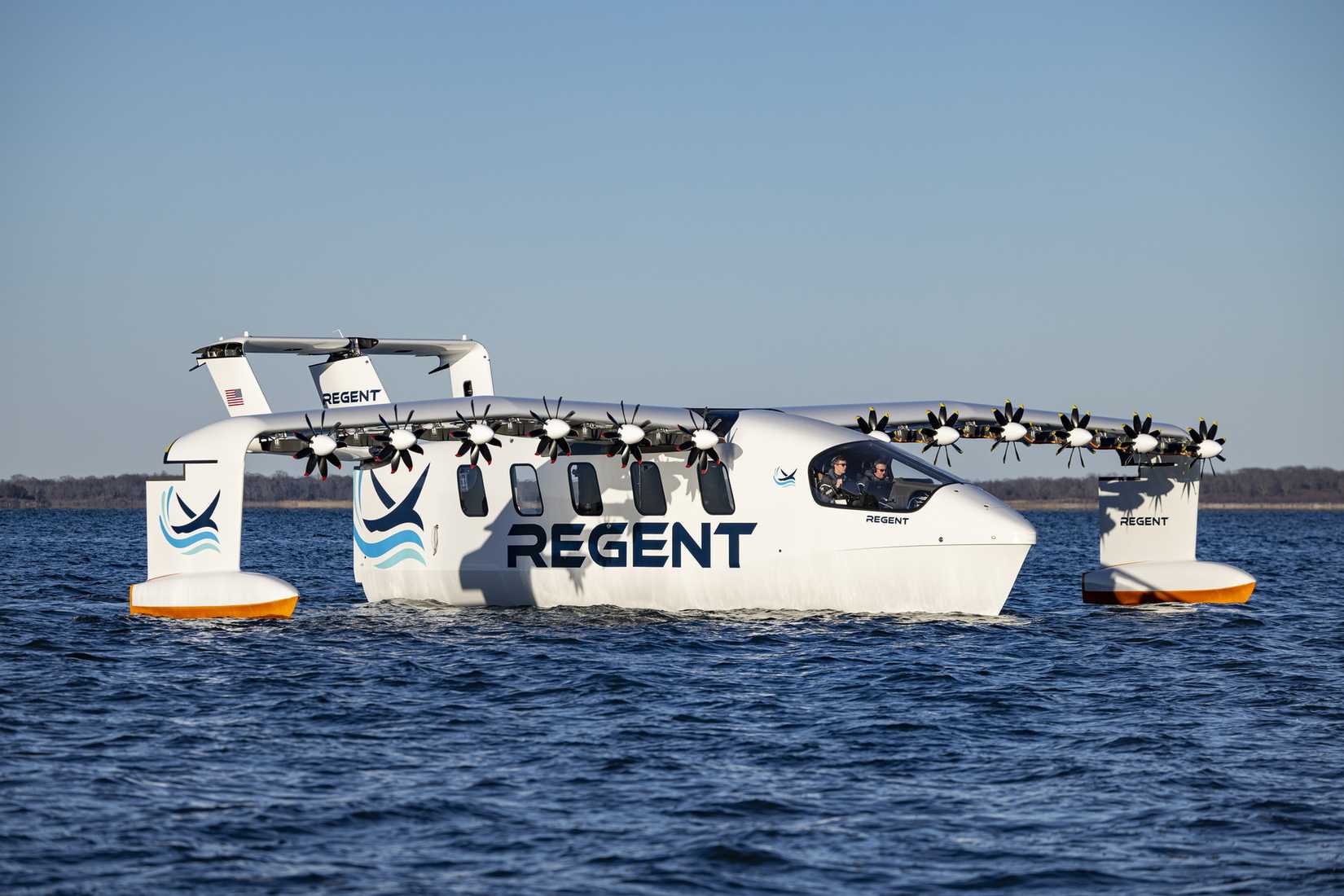
A Seaglider is a wing-in-ground effect craft. It flies within one wingspan of the water, where ground effect cuts drag and improves efficiency. For the Viceroy, that means about 30 feet above the surface, according to REGENT.
It works in three modes. The craft floats on its hull at low speed, rises onto hydrofoils once it clears the dock and then lifts into ground effect. The hydrofoils are REGENT's answer to the old knock on these machines. DARPA has described the Soviet "ekranoplans" as fast and runway-independent but "restricted to calm waters" with "limited maneuverability."
Regulators treat it as a boat. Under federal law, wing-in-ground craft are small passenger vessels overseen by the U.S. Coast Guard, and certified mariners captain them, according to REGENT. Thalheimer pitched that as a manpower advantage in 2023.
"These can be enlisted service men and women who are at the helm of this, driving it like a boat with essentially all the capabilities of an aircraft," he told Marine Corps Times.
From a $4.75 Million Test to a Fourth Phase
REGENT signed its first MCWL agreement, worth $4.75 million, in October 2023. The goals were to prove the craft in hull, foil and wing-borne modes and to inform risk reduction and craft-level certification requirements.
Retired General Robert Neller, the 37th Commandant of the Marine Corps and a member of REGENT's defense advisory board, said at the time, "In the littorals we have to move, and signature management is critical."
In March 2025, REGENT said it had finished that first contract and signed a second phase estimated at $10 million. The Defense Post put that phase at $9.5 million for full-scale prototype demonstrations. REGENT unveiled the full-scale Viceroy prototype and began crewed sea trials in Narragansett Bay that same month.
REGENT hosted lab staff on the water to watch testing, the company said in an Aug. 6, 2025, post. "The whole team here is excited to see this in the water and to see these demonstrations," Matthew Koch, an MCWL project officer, said in that post.
In November 2025, REGENT ran three rescue drills for the Marine partnership: dockside litter boarding of a patient who could not walk, a simulated beach extraction and an open-water life raft rescue.
Tom Huntley, general manager of REGENT Defense, told Janes the agreement focuses on medical and casualty evacuation, contested logistics, and intelligence, surveillance and reconnaissance. He said lessons from the drills would help the Corps build tactics "as we move towards a Program of Record."
On Sept. 2, 2026, the prototype made its first crewed flight over Narragansett Bay. Two captains flew it 1,956 feet at 33 feet above the water for 30 seconds, REGENT said. Four weeks later, the lab added the $5 million.
"This next phase of our MCWL partnership is about putting the technology in the hands of the war fighter," said Becky Russo, REGENT's director of defense mission integration.

Speed, Range and Payload on Paper
The figures below are REGENT design targets. The prototype's first crewed flight lasted 30 seconds.
- Speed: up to 180 mph, which REGENT's spec sheet lists as 156 knots.
- Range: up to 180 miles on battery. REGENT says a hybrid version could cover up to 1,400 nautical miles.
- Load: 12 passengers and two crew, or 3,500 pounds of cargo.
- Size: 55 feet long with a 65-foot wingspan and a 15,000-pound maximum takeoff weight.
REGENT is also developing the larger Monarch, a 50- to 100-passenger Seaglider with delivery targeted before the end of the decade.
On signature, REGENT says flying that low keeps Seagliders "below radar and above high-range sonar" and that electric propulsion keeps heat and infrared signature down. Those are company claims, not Marine Corps findings.
Waves, Charging and Certification
Weather is a tangible limit for operations. REGENT says the Viceroy can take off and land comfortably in 5-foot waves and fly over waves up to 13 feet, a ceiling set by an emergency landing scenario.
Power presents another field problem. REGENT's defense materials say a 60-kilowatt tactical generator would need about 17 hours to fully charge one Viceroy, enough for two supply runs. The company pitches ship power and barge-mounted battery packs as faster options and says one 1-megawatt-hour pack could charge two Viceroys in an hour.
Under federal law, a Seaglider carrying even one paying passenger is regulated as a Coast Guard small passenger vessel. The 2024 FAA reauthorization gave the FAA and the Coast Guard until May 2026 to sign an agreement dividing oversight of such craft, from design approval to crew certification and inspection. REGENT expects its first customer deliveries in 2027.
The Pentagon has tried big ground-effect ideas before. DARPA ended Liberty Lifter, a heavy-lift seaplane meant to fly low over the ocean with roughly the size and capacity of a C-17, in June 2025 after spending about $98 million, Defense News reported. It never built a demonstrator.
"We've learned we can build a flying boat capable of takeoff and landing in high sea states," program manager Christopher Kent told Defense News. DARPA also said more work was needed to blend maritime construction with aircraft certification.
The Seaglider joins other contested-logistics bets, from large unmanned surface vessels to the low-profile resupply boats one littoral regiment commander has said his Marines will lean on. "I need them to be survivable," Colonel Peter Eltringham said of his logistics and support Marines in April 2025.
Next, the Viceroy will be tested in conditions relevant to military missions and tied into defense command-and-control systems, according to The Defense Post.