🔗 원문 전체 보기 → New York Magazine
요약
The closer we get to the end of this election, the clearer it is that Republicans should have found a way to muzzle their unpopular president. Unhappy non-MAGA 2024 Trump voters are the ball game, and parading Trump around won’t win them over.
본문
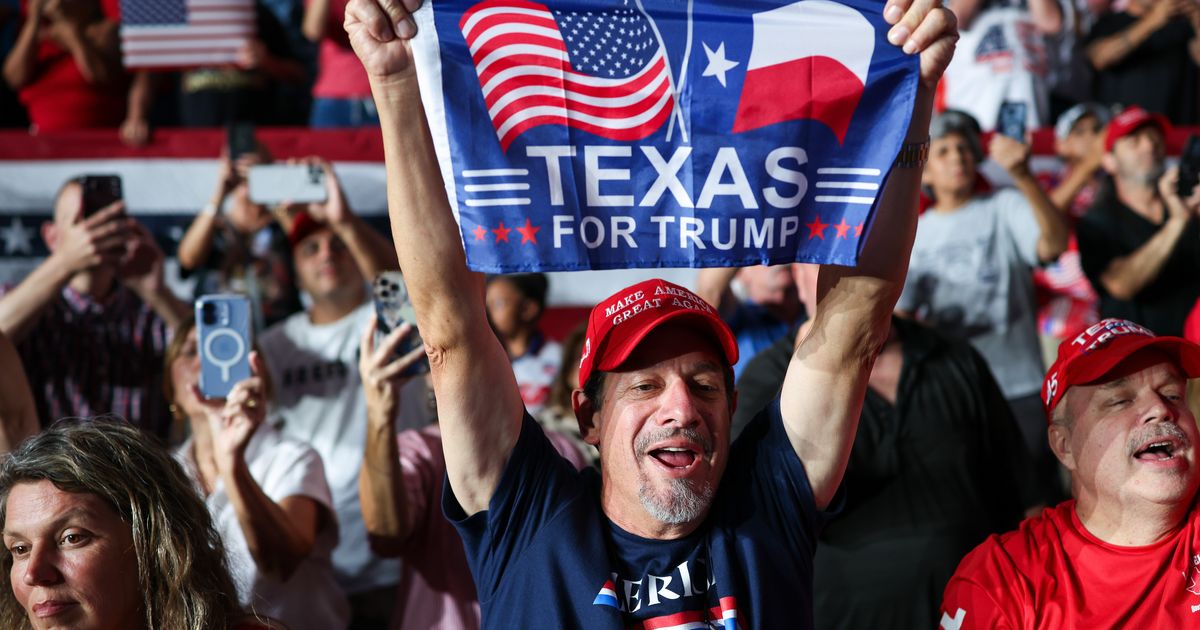
 This man gets to vote only once. Republicans should worry about the others.
Photo: Win McNamee/Getty Images
This man gets to vote only once. Republicans should worry about the others.
Photo: Win McNamee/Getty Images
Just a few weeks from the end of the 2026 midterm elections, there are all sorts of variables that could affect the outcome on the margins. There remain many races for House, Senate, and governorships that are very close. Polling errors could be painting an unduly rosy picture of Democratic prospects. Late ad blitzes or candidate debates may tilt the balance here and there. “October surprises” remain a possibility, or even a “November surprise” by way of Trump-administration efforts to suppress or intimidate voters.
But the basic national dynamics of this election seem very clear. Midterms are always to a considerable extent referenda on the job performance and character of whoever occupies the White House. In Donald Trump, we have a highly controversial president who is the dominant personality of our era, with a record that is drawing terrible reviews from the public. His current job-approval ratio per the RealClearPolitics polling averages is 38.1 percent approval and 59.5 percent disapproval. Presidents with this level of unpopularity almost always post big midterm losses. But he also has a virtually unshakable hard core of supporters. As a party, Democrats have made their campaign a consistent frontal assault on Trump’s most vulnerable point — his poor record on, and his contemptuous disinterest in, high and rising living costs — with important sub-themes stressing the corruption that has flourished in his administration and deploring his war of choice against Iran. For their part, Republicans have mostly focused on energizing Trump’s most loyal supporters and maximizing their turnout, while trying to get more skeptical voters to think about their misgivings toward the opposition.
Let’s be clear about one thing: Trump’s energize-the-base tactics aren’t going to win the midterms. These voters are already energized. Yes, slightly increasing their turnout can help staunch the bleeding and keep down Democratic gains in deep-red territory. But even if the president gets them whipped up into a frenzy, there aren’t enough of them to overwhelm super-energized Democrats plus the vast and largely alienated ranks of swing voters who don’t like Trump’s economy or Trump’s war and are generally tired of his act.
But the shred of hope for a less-than-disastrous GOP result (defined as holding onto the Senate and holding Democrats to a small majority in the House) stems from the battle over a more strategic slice of the electorate: non-MAGA folk who voted for Trump in 2024. Many are standard-brand Republicans who never drank the Kool-Aid. Others are independents who were unhappy with Biden’s own economic record and remembered Trump’s first term as relatively prosperous. Some, though not many, were even Democrats weary of the octogenarian president or of this or that annoying party faction.
But however they got themselves into Trump’s column in 2024, many are up for grabs this year and his party is still losing ground. A large new Pew survey released last week shows that only 67 percent of verified 2024 Trump voters approve of the job he’s doing as president. This percentage drops to 57 percent among Latino voters, and 49 percent of under-30 voters, who backed Trump in 2024. Similarly the latest Economist-YouGov weekly tracking poll shows 21 percent of 2024 Trump voters disapprove of his job performance, a number that drops to 7 percent among self-identified MAGA supporters.
The drop-off among non-MAGA 2024 Trump voters largely explains the big picture. In 2024, Republicans won the presidential popular vote by 1.5 percent and the national House popular vote by 2.6 percent. According to the RCP averages, they trail in the generic congressional ballot (an estimation of the national House popular vote) by 7.9 percent at present (the margin is 9 percent at Silver Bulletin and 8.5 percent at Decision Desk HQ). That’s a loss of over 10 percent in vote share. Losing a big chunk of your coalition from the last election will do that to you. And it doesn’t help that Republicans are also losing among those who did not vote at all in 2024 (a mix of 2024 couch potatoes and new 2026 voters). Pew shows them breaking Democratic by about a 3-to-2 margin.
While parading Trump around to play the old hits and bellow about his accomplishments isn’t likely to help Republicans close the gap, the GOP tactic of relentlessly and expensively attacking Democrats could gain some traction, precisely because many alienated 2024 Trump voters aren’t sold on the opposition either. The Cook Political Report’s Amy Walter recently zeroed in on the GOP’s challenge:
[W]hile Trump tries to rally his base with calls to vote “like I’m on the ballot”, a recent Echelon Insights poll taken for Puck News illustrates just how much the MAGA/Trump coalition has splintered since 2024. In January of 2025, writes Puck’s Peter Hamby, “59 percent of Republicans identified more with Trump, while 36 percent identified with the party. Now? Only 34 percent of Republicans consider themselves primarily a supporter of Trump, versus 56 percent who say they support the G.O.P.”
In other words, the challenge for the GOP this cycle isn’t to get Trump voters to the polls; it’s getting non-MAGA identified voters to show up.
Ideally for Republicans to turn back the “blue wave,” they’d need Trump to take a back seat and use their vast resources to whale away at Democrats, individually and collectively. The hope would be to break even in a war between excited base voters and close to half of the others who bother to vote deciding Republicans are the lesser of evils. So instead of Trump telling voters to “pretend I’m on the ballot,” Republicans should be telling voters to pretend he’s far away.
Unfortunately for the GOP, Trump can no more step to the rear of the stage than the sun can turn off its blinding light. His constant, abrasive presence will operate as a drag on late Republican campaign tactics, perhaps reminding his party that national elections are won by normal pols appealing to normal people.