요약
By driving down battery costs and improving the technology, Chinese manufacturers have solved solar and wind's intermittency issue. Read on
본문

On a production line in south-east China, machines paste a black slurry of electrode material on to a copper ribbon just five microns thick — one 20th of the width of a human hair.
Sign In or Create an Account
or View more offersArticle contentFurther down the line, a team of robots monitored by an AI quality inspection system will turn the strips into battery cells by cutting them with lasers, winding them into rolls and pressing them with a force equivalent to a 23-tonne weight.
Article content We apologize, but this video has failed to load.Try refreshing your browser, or
tap here to see other videos from our team.
We apologize, but this video has failed to load.Try refreshing your browser, ortap here to see other videos from our team.Article contentAdvertisement 1Story continues belowThis advertisement has not loaded yet, but your article continues below.Article content
The factory is at the Ningde headquarters of CATL, the world’s biggest battery producer and a goliath in the electric car industry.
Article content Top StoriesThanks for signing up!
Interested in more newsletters? Browse here.
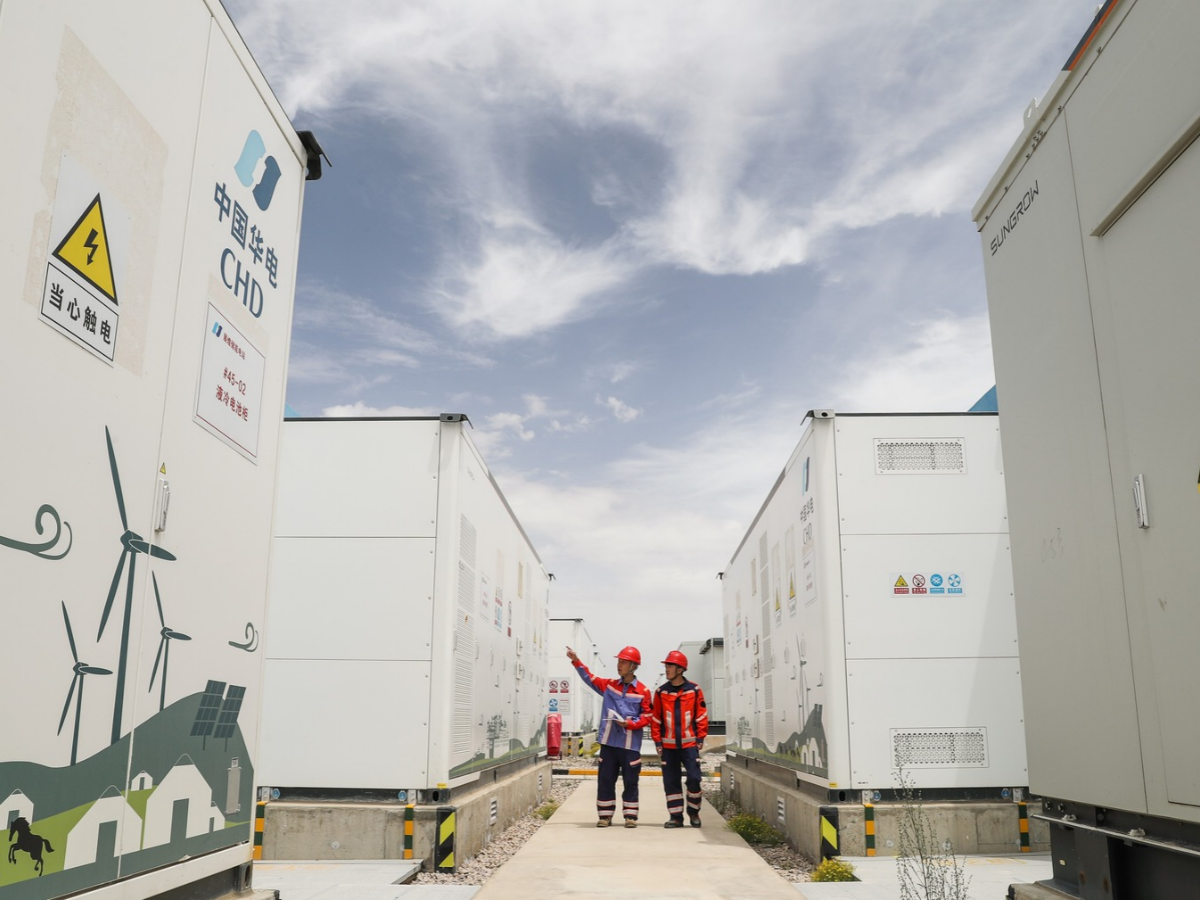
Article contentBut the large-scale storage batteries these cells will go into are destined not for the world’s roads but for the energy sector. They represent the fastest-growing power technology today, according to the International Energy Agency, the world’s energy watchdog.
Article contentBy driving down battery costs and improving the underlying technology, CATL and other Chinese manufacturers have provided an answer to a longstanding problem with solar and wind energy: their intermittency — or, simply, the fact that they only generate power when the sun shines or the wind blows.
Article contentSystems using Chinese batteries are now able to store solar power long after sunset, for example, eroding the need for fossil-fuel generation that until now has ensured round-the-clock electricity supply.
Article content“This is the big one,” says Michael Liebreich, a veteran energy analyst and consultant. Reliance on intermittent wind and solar power for the majority of electricity supply seems implausible, he says, “until you realize you have cheap batteries”.
Article contentAdvertisement 2Story continues belowThis advertisement has not loaded yet, but your article continues below.Article contentThe cost of battery packs used in grid-scale storage systems fell by 45 per cent last year alone, according to think-tank Ember. This year, prices have edged upwards because of tight global supplies of lithium. But the storage capacity of large-scale batteries installed around the world is today 11 times greater than the level five years ago, says the IEA.
Article contentRead More-
 Short sellers reap US$2 billion profit as modular nuclear reactor stocks tumble
 -
 China bypasses shipping chokepoints with 'Ice Silk Road' through Arctic
 - Advertisement 1Story continues belowThis advertisement has not loaded yet, but your article continues below.
 Short sellers reap US$2 billion profit as modular nuclear reactor stocks tumble
  China bypasses shipping chokepoints with 'Ice Silk Road' through Arctic
 Momentum around renewable energy investment has quickened as countries smart from the soaring cost of natural gas due to the United States war with Iran and in anticipation of demands from data centres. This year, 40 per cent more large-scale batteries are set to be installed than in 2025, according to analysts at S&P Global.
Article contentBut the power storage boom has brought energy security worries of its own. Governments from Washington to Brussels are wary of their reliance on Chinese-made equipment. Chinese producers account for 95 per cent of large-scale storage batteries, says Benchmark Mineral Intelligence.
Article contentThe sector’s rapid growth is strengthening China’s position as the dominant force in low-carbon energy, compounding opportunities for Chinese companies in adjacent markets such as wind and solar generation equipment.
Advertisement 1This advertisement has not loaded yet.Trending-
Carney fast-tracks massive West Coast oil pipeline, dubbed Pacific Link
 Oil & Gas
 -
Trump's trade war redraws a border New Brunswick and Maine had learned to ignore
 Economy
 - Advertisement 2Story continues belowThis advertisement has not loaded yet, but your article continues below.
-
Posthaste: Canadians mulling retirement abroad might want to consider one of these top ranked countries, says report
 News
News -
Calls increase for Bank of Canada to hike rates in October as global investment bank UBS weighs in
 Economy
 -
Bank of Canada senior deputy outlines dilemma at centre of housing affordability
 Economy





It is also changing power systems around the world. “We see, in all our scenarios, transitions towards systems based on renewable energy,” says Brent Wanner, head of the power sector unit at the IEA, whose long-term energy market modelling is closely watched by governments and investors. “Battery storage is kind of the glue that can hold [such systems] together.”
Article contentChina’s battery surge
Article contentThe seeds of China’s battery storage boom were sown in the years after Xi Jinping took power in 2012, with his pledge to build an “ecological civilization”.
Article contentThe government increased support for renewable power investment in an effort to boost energy security, tackle urban pollution and gain a strategic advantage in a sector with global growth potential. Solar and wind generation duly soared, supporting manufacturing capacity gains and cost declines that fed a global rush of renewable technology installations.
Article contentAt the same time, China’s government started giving out hefty subsidies for electric vehicles, aiming to capitalize on the country’s battery prowess and to build strength in the automotive sector, where it had long struggled to compete.
Article contentAdvertisement 3Story continues belowThis advertisement has not loaded yet, but your article continues below.Article contentThis fuelled the rise of CATL, a company established in 2011 to make batteries for EVs, based in Ningde, an obscure fishing town close to where founder Robin Zeng grew up.
Article contentToday, the company produces 40 per cent of the world’s EV batteries. Plug-in vehicles now account for nearly two-thirds of new passenger car sales in China.
Article contentBut that is only one part of the batteries sector. By 2021, it had become clear to the Chinese state that a vast amount of renewable power was being wasted, with solar and wind plants often generating far more electricity than the grid could absorb.
Article contentSo it launched a strategic push to deploy battery storage on the grid at large scale. Across much of the country, developers were required to build or commission large-scale storage as a condition of approval for new wind and solar plants.
Article contentAgain CATL has been at the forefront of this effort. Its fastest-growing business line today is the production of cells for large-scale energy storage systems. The company accounted for 22 per cent of cell sales for these systems globally in the first half of the year, making it the market leader in China and abroad.
Article contentAdvertisement 4Story continues belowThis advertisement has not loaded yet, but your article continues below.Article contentAs a result of the state’s drive, China’s battery storage capacity expanded from 2.4 gigawatts in 2020 to more than 140GW at the end of last year, according to the Energy Institute, an industry membership body. In the first half of this year, coal’s share of Chinese power generation fell below 50 per cent for the first time ever.
Article contentExports of China’s large-scale battery technology have also surged. Researchers at BloombergNEF estimate that new battery storage capacity of 84.6GW will be added outside China this year — 65 per cent higher than last year.
Article content“It is absolutely a global trend,” says Jeh Vevaina, chief investment officer for energy at the asset manager Brookfield. “We’re seeing it in all our markets, be that in Europe, the U.S., Asia — really everywhere we do business.”
Article contentOn a vast stretch of sun-baked desert south of Abu Dhabi, construction is under way on a $6bn power plant designed to provide a power output of 1GW — equivalent to the average demand of more than 2mn European homes — around the clock. A huge battery array, installed by the Chinese companies BYD and Sungrow, will soak up excess solar power during the day from millions of panels stretching over 90 square kilometres, discharging it after dark.
Advertisement 2This advertisement has not loaded yet.Advertisement 3Story continues belowThis advertisement has not loaded yet, but your article continues below.Article contentThe plant’s developer, state-owned clean energy company Masdar, is presenting it as a blueprint for similar projects elsewhere — opening the prospect for a greater uptake of low-cost renewable power than had previously seemed possible, and weakening the case for continued investment in fossil-fired plants to provide 24-hour “baseload” power.
Article content“We have always been challenged, as an industry, by the fact that renewables are intermittent,” says Masdar chief executive Mohamed Jameel Al Ramahi. “This project demonstrates the ability for renewables to become a baseload solution.”
Article contentIn May, the International Renewable Energy Agency, an organization with more than 170 national governments as members, found that the cost of hybrid power plants that combined renewables and storage had fallen so much that in many parts of the world they could provide a “firm” round-the-clock power supply, matching the typical level of reliability achieved by fossil-fired plants at an equivalent or lower cost.
Article contentIn India, the government in August held an auction for renewable power delivered round the clock, with bidders required to match the typical supply of coal plants. It secured 1GW of solar and storage capacity at a lower cost than recent coal power contracts.
Article contentAdvertisement 5Story continues belowThis advertisement has not loaded yet, but your article continues below.Article contentChinese-made batteries are now being deployed en masse in the country, which in the first half of this year added seven times as much new power storage as it had in total at the end of 2025, according to energy research company Mercom India. Much of the rise comes from a single huge solar and storage project built by the Adani Group, whose founder Gautam Adani has pledged to support Prime Minister Narendra Modi’s clean energy drive.
Article contentThe government is now planning regulation that would require storage to be installed alongside new solar and wind power plants — similar to the rules that drove China’s storage lift-off. Climate advocates hope this will reduce the country’s heavy reliance on coal, the most carbon-intensive fossil fuel.
Article content“Give it another two or three years…when all this gets set up, then you can start seeing a decline in the requirement for coal-based power,” says Sumant Sinha, chief executive of ReNew, one of India’s largest green energy developers.
Article content‘The equipment is safe’
Article contentChina’s battery makers are now firmly in the ascendancy.
Article contentNingde came third this year in a UN World Intellectual Property Organization ranking of the world’s most “innovation-intensive” places, sandwiched between the United Kingdom’s Cambridge and the Boston-Cambridge cluster in Massachusetts. The accolade reflects the more than 60,000 patents filed by CATL, exceeding the combined total of its biggest rivals. Zeng, meanwhile, is China’s fourth-richest person with a fortune of US$50 billion.
Article contentAdvertisement 6Story continues belowThis advertisement has not loaded yet, but your article continues below.Article contentYet CATL and others now risk becoming victims of their own success. As the technology has seemed increasingly crucial to the renewables transition, officials in major markets have grown alarmed by the dependence on supply from a single country — and the potential for interference from Beijing.
Article contentEarly in September, Ford chief executive Jim Farley received a strongly worded letter from U.S. transportation secretary Sean Duffy, voicing “profound concern” over the carmaker’s partnership with CATL.
Article contentDuring Joe Biden’s presidency, Ford had started investing heavily in EV technology, only for Donald Trump to return to power and scrap Biden’s industry-supporting policies.
Article contentIn December, Ford announced that it would use its idle car battery capacity as the foundation for a US$2 billion push into a new business line: stationary battery storage systems, which it would produce under a licensing agreement with CATL. “There is no doubt that the growth for battery storage… is exploding,” Farley said in August.
Article contentFord’s strategy has now run into government opposition. Duffy’s letter warned against “reliance on technologies of foreign adversaries”. It is the latest instance of Washington’s resistance to the incursion of Chinese technology, following prior crackdowns on companies from telecom infrastructure provider Huawei to the social media app TikTok.
Advertisement 3This advertisement has not loaded yet.Advertisement 4Story continues belowThis advertisement has not loaded yet, but your article continues below.Article contentIn August, Trump authorized the energy department to block Chinese-linked battery storage equipment from the U.S. grid on national security grounds. Washington has also revised the rules around tax credits for battery storage, in effect limiting the amount of Chinese equipment American companies can use.
Article contentSome U.S. officials say that Chinese-made storage equipment could potentially contain chips enabling it to be controlled or switched off remotely. Similar worries have emerged in the EU, where the authorities have moved to restrict public funding for storage projects using certain key components from “high-risk” countries including China.
Article contentSuch concerns are baseless, says Cao Renxian, the billionaire founder of Sungrow, one of the world’s biggest providers of large-scale battery systems. “It is a trade issue, not a safety issue,” Cao says, at his headquarters in China’s eastern Anhui province. “We all know that the equipment is safe.”
Article contentLike battery sector peers including CATL and BYD, Sungrow is seeking to address European worries of excessive reliance on imports from China by building up large-scale manufacturing operations on the continent. In the U.S., however, it is forecasting a gradual decline in sales as restrictions tighten.
Article contentAdvertisement 7Story continues belowThis advertisement has not loaded yet, but your article continues below.Article contentThe U.S. crackdown will force a growing reliance on kit made by alternative suppliers such as South Korea’s Samsung SDI and LG Energy Solution, whose storage batteries are significantly more expensive, says Anna Darmani, a battery storage analyst at Wood Mackenzie.
Article contentThe U.S. government’s Energy Information Administration still forecasts that battery storage capacity in the country’s grid will continue to soar, doubling between 2025 and 2027, as utilities try to meet rising power needs from data centres. Battery storage is “the main lever left to pull to meet new demand”, says Andy Bowman, chief executive of Jupiter Power, one of the country’s biggest storage project developers.
Article contentThe AI power rush has exposed the limitations of today’s battery storage technology. U.S. data centre developers are also investing in on-site generation — most of which is in the form of gas power, despite the falls in the cost of renewables and batteries.
Article content“Not everywhere do we have the right combination of renewable resources and land footprint that’s required to build out large amounts of renewables plus storage,” says Lucia Tian, Google’s director of advanced energy technologies.
Article contentAdvertisement 8Story continues belowThis advertisement has not loaded yet, but your article continues below.Article contentAnother concern is the fact that lithium-ion battery storage systems are typically designed to provide power for only several hours at a time — meaning it can be “economically challenging” to build enough capacity to fully guard against periods of unusually weak solar or wind generation, Tian says.
Article contentAll the same, Tian adds that Google will use renewable and storage plants to provide much of the power for its new data centres. It will also invest in alternative “long-duration” storage technologies that could provide power for much longer periods. It has commissioned storage projects from Form Energy, which uses reversible iron rusting to store energy for up to 100 hours at a time, and Italy’s Energy Dome, whose system uses compressed carbon dioxide.
Article contentChina’s battery makers, however, insist that some of their biggest advances are still to come.
Article contentLast month CATL began commercial deliveries of power storage units with batteries that use sodium — an abundant mineral — instead of lithium. “When the production volume goes up, we expect it will be much cheaper than lithium,” says Ni Jun, CATL’s chief manufacturing officer.
Advertisement 4This advertisement has not loaded yet.Advertisement 5Story continues belowThis advertisement has not loaded yet, but your article continues below.Article contentImprovements in lithium-ion technology are also increasing the duration for which storage systems can provide power.
Article contentIn June, the Shanghai-based Envision Group launched a new system designed to provide up to 16 hours of storage, compared with the roughly four-hour capacity that is currently standard on the market. The company is developing in Inner Mongolia what it says will be China’s largest AI data centre, to be powered by on-site renewable energy and battery storage.
Article contentEnvision founder Zhang Lei argues that such projects provide a model for the rest of the world — if it can overcome what he sees as an irrational fear of reliance on Chinese-made equipment.
Article contentFor creating energy technology that is “not only sustainable but also extremely cost competitive”, Zhang says, “China deserves respect”.
Article content© 2026 The Financial Times Ltd
Article contentWe apologize, but this video has failed to load.Try refreshing your browser, ortap here to see other videos from our team.Article contentAdvertisement 5This advertisement has not loaded yet.Share this article in your social networkComments Join the Conversation


 Pinterest
  Tumblr
 Postmedia is committed to maintaining a lively but civil forum for discussion. Please keep comments relevant and respectful. Comments may take up to an hour to appear on the site. You will receive an email if there is a reply to your comment, an update to a thread you follow or if a user you follow comments. Visit our Community Guidelines for more information.
Featured Local Savings