요약
No more fighting slow hotel internet
본문
 By
Sanuj Bhatia
Published Apr 26, 2026, 1:00 PM EDT
Sanuj is a freelance tech journalist with over six years of experience covering smartphones, wearables, and consumer technology. He currently writes for Android Police, Tom's Guide, Android Central, Android Authority, and Pocket-lint. He has previously contributed to publications like Pocketnow and MakeUseOf.
By
Sanuj Bhatia
Published Apr 26, 2026, 1:00 PM EDT
Sanuj is a freelance tech journalist with over six years of experience covering smartphones, wearables, and consumer technology. He currently writes for Android Police, Tom's Guide, Android Central, Android Authority, and Pocket-lint. He has previously contributed to publications like Pocketnow and MakeUseOf. Since the start of 2025 alone, he has tested over 30 smartphones. He has also attended major global trade shows including MWC (2024, 2025, 2026) and IFA (2024, 2025), along with launch events hosted by Google, Samsung, and other leading Android brands.
When he's not writing about tech, you'll find him sipping a cup of chai, scrolling Twitter, and reading updates about his favorite football club, Chelsea FC.
Feel free to reach out to him via email at sanujb6 [at] gmail [dot] com. Sign in to your Android Police account
As someone who tests a lot of phones and travels to many events, I often have to rely on public or hotel Wi-Fi.
Sure, having an eSIM makes it easier to stay connected on the go, especially internationally. Still, those plans usually come with limits, so I end up depending on Wi-Fi anyway.
I make sure I'm following all the right steps to stay safe on public Wi-Fi, but even then, the experience isn't great.
Most public networks are outdated and can't handle many devices at once, so I rarely get good speeds on my phone.
Thankfully, on a recent trip, I found a workaround that lets me use my hotel's internet directly on my Android phone without actually connecting to the Wi-Fi network.
It's a simple trick that could be really useful, especially if you're dealing with limited data while traveling.
 Related
How to force your phone to use LTE or 5G
Change your network settings the easy way
Posts 8 By Steven WinkelmanYour Android phone can connect directly to Ethernet
Using a simple adapter, you can bypass slow and unreliable Wi-Fi
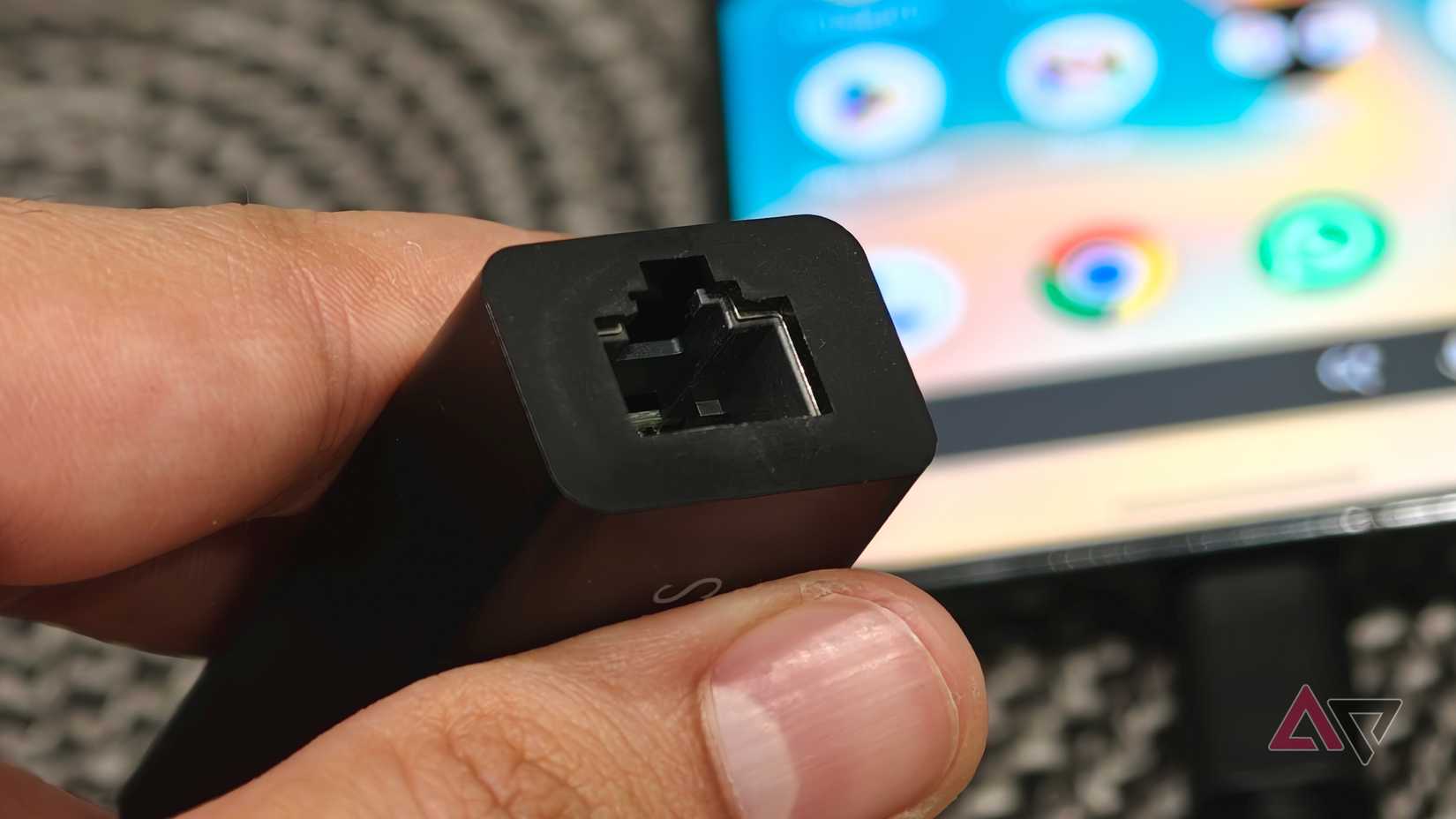
One lesser-known feature of Android is that your phone can access the internet when it's plugged into an Ethernet connection. You don't always need an active mobile data plan or a Wi-Fi network to get online.
All you really need is a USB-C-to-Ethernet adapter and a standard LAN cable.
Most modern Android phones support USB OTG out of the box, meaning they can recognize external accessories like storage drives, keyboards, and, in this case, Ethernet adapters, without additional apps or drivers.
The setup is as simple as it gets. Plug the LAN cable into your hotel's Ethernet port, connect it to the adapter, and then plug the adapter into your phone. Within seconds, your phone should detect a wired connection and switch over automatically.
In most cases, there's no setup screen, no login page, and no annoying captive portal to deal with.
I tried this on my Google Pixel 9 (running Android 17 beta), and it worked flawlessly.
It usually takes a few seconds to kick in, but when connected, you'll see a new icon in the status bar indicating a wired connection. Moreover, in Settings, you'll also see a banner confirming that your phone is using Ethernet.
If you want to switch back to Wi-Fi or cellular, you'll need to disconnect the cable.
The best part about this setup is that it's wired. Since you're bypassing the crowded hotel Wi-Fi network entirely, speeds tend to be more stable, latency is lower, and the connection doesn't randomly drop when too many people hop online.
I've also noticed that streaming, uploads, and downloads feel noticeably faster this way.
It basically turns your phone into a wired device, which we don't think about often anymore.
You can share that Ethernet connection as a hotspot, too
Turn your phone into a mini router for all your other devices
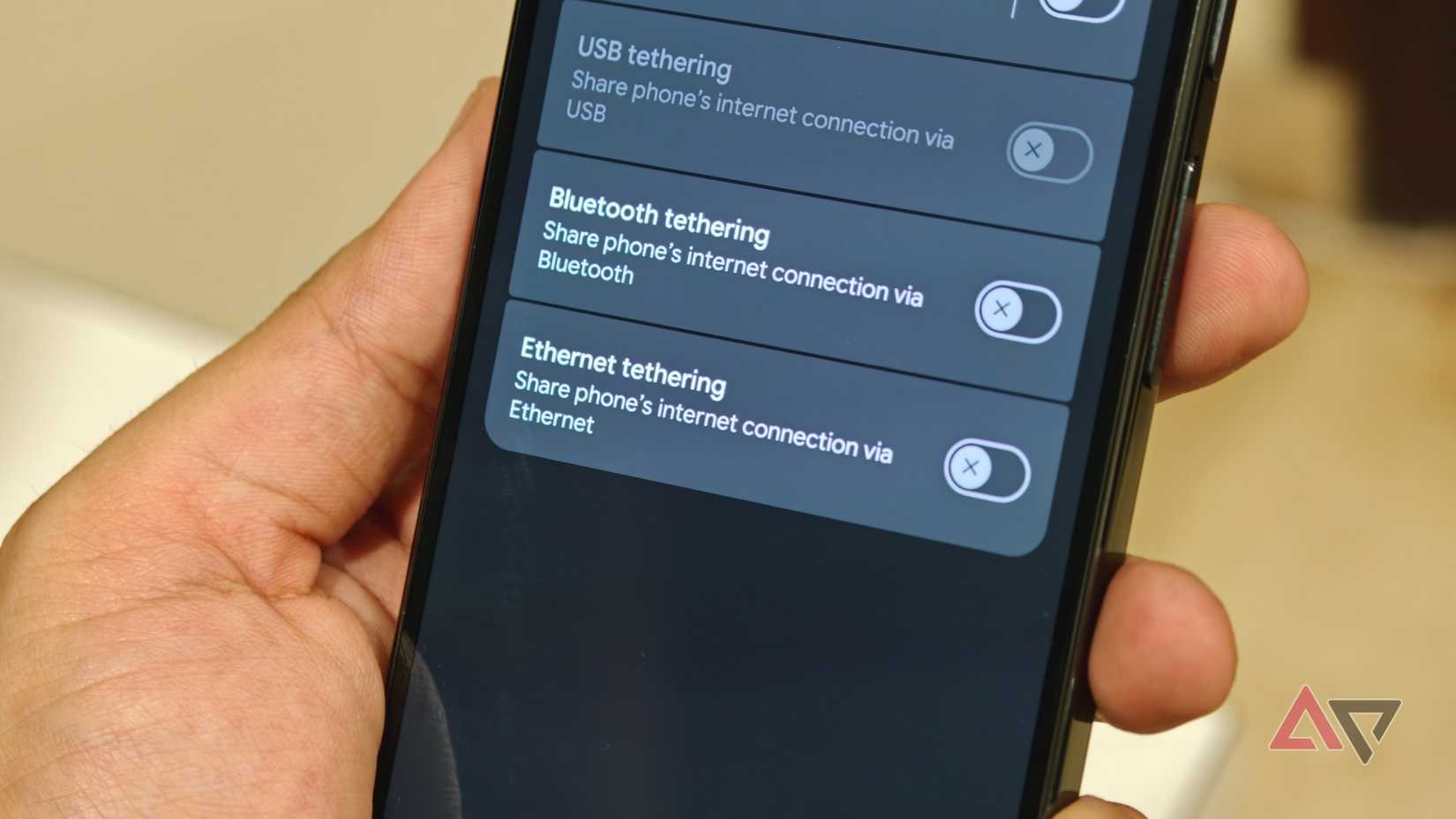
And this is where it gets even more useful.
When your phone is connected to Ethernet, you can turn on the mobile hotspot and share that wired internet over Wi-Fi to other devices. In other words, you can turn your phone into a portable router inside your hotel room.
So, instead of connecting your laptop, tablet, or Kindle to the hotel's Wi-Fi individually, you can connect them to your phone and access the internet that way.
This way, you don't have to log in to the hotel's Wi-Fi every time, and your devices will automatically connect with your phone, since most of us don't really change hotspot settings anyway.
This also helps get around those annoying device limits that many hotels impose. Some networks only allow two or three devices per room, and managing that can get frustrating pretty quickly.
With this setup, the hotel network only sees one device, which is your phone, while everything else runs through it.
I've used this setup to get better speeds on my laptop and have a more consistent experience overall. I've found it to work flawlessly.
 Related
6 offline Android apps I use to stay productive when there's no Wi-Fi
My go-to offline Android productivity kit
Posts 3 By Parth ShahThis Ethernet trick works across all Android phones
On the whole, this one trick has improved streaming and general connectivity across my devices when I'm traveling. It's now something I make sure to carry with me, especially for events where having a reliable internet actually matters.
Still, it's worth keeping in mind that some hotels may have data limits on their networks. In those cases, you can tweak a few settings on your phone to control usage, so it only consumes data when needed and doesn't burn through your allowance unnecessarily.