
요약
AI transforms marketing by analyzing data, uncovering insights, and optimizing strategies, enabling smarter, efficient decisions for businesses.
본문
AI in Digital Marketing: Key Tools, Uses, and Future Trends AI News & Trends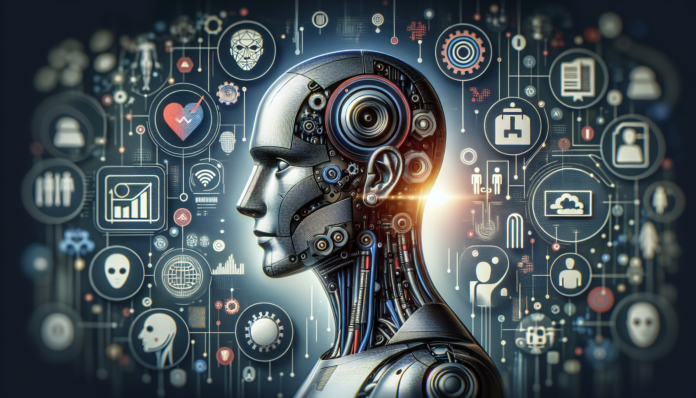
Published:
April 24, 2026 Reading time: 2 min. FacebookTwitterPinterestWhatsApp
Artificial Intelligence (AI) has become an indispensable tool in digital marketing, driving substantial changes in how businesses interact with consumers. As marketers generate increasingly large datasets from various platforms like social media and CRM systems, AI’s ability to process and analyze this information swiftly is taking center stage. Recent trends indicate growing adoption, with AI tools enabling personalized campaigns, efficient advertising spend optimization, and enhanced customer engagement. This article delves into the current landscape, tools available in 2026, and future implications for businesses leveraging AI in marketing.
Key Insights
- AI is increasingly used for predictive analytics to forecast customer behavior.
- Real-time data analysis is enhancing personalized marketing strategies.
- Integration between AI tools and marketing platforms is more seamless than ever.
- AI adoption is driving a shift towards data-driven decision-making in marketing.
- Ongoing advancements in AI are creating new opportunities for marketers.
Why This Matters
The Role of AI in Data Analysis
AI’s ability to process enormous datasets swiftly and accurately makes it an invaluable asset for marketers. Unlike human analysts who might struggle with the sheer volume of data, AI algorithms can uncover hidden patterns and generate actionable insights in real-time. This allows businesses to tailor their marketing efforts to meet the specific needs of their customer base, improving engagement and conversion rates.
Personalization and Customer Experience
One of the most heralded benefits of AI in digital marketing is personalization. AI tools analyze consumer data to create targeted campaigns that resonate with individual preferences. This level of personalization enhances customer experience, fosters brand loyalty, and can significantly increase sales. For instance, AI algorithms can recommend products to users based on their browsing history and purchasing behavior, creating a more personalized shopping experience.
Optimizing Advertising Spend
AI aids marketers in optimizing their advertising budgets by predicting the effectiveness of various marketing channels. By analyzing data from past campaigns, AI can identify which strategies yield the highest ROI and advise on the optimal allocation of resources. This ensures that brands achieve maximum impact from their advertising spend, reducing wastage and increasing efficiency.
Trends in AI Tool Development
Recent advances in AI technology have led to the development of sophisticated tools that provide more granular insights than ever before. In 2026, marketers have access to AI-enhanced CRM systems, advanced analytics platforms, and automated content creation tools that streamline their campaigns. These developments have made AI tools more accessible and affordable, encouraging widespread adoption across businesses of all sizes.
Security and Privacy Concerns
As AI tools become more embedded in marketing strategies, concerns around data privacy and security have risen. Businesses must ensure compliance with data protection regulations like GDPR, safeguarding consumer data while utilizing AI capabilities. Building consumer trust through transparent data practices is crucial for long-term success in AI-driven marketing.
What Comes Next
- Marketers will explore new AI-driven strategies for immersive and interactive customer engagements.
- Investment in AI-powered tools and technologies is expected to rise across the marketing industry.
- Businesses will focus on balancing AI use with privacy and ethical considerations to maintain consumer trust.
- AI’s role in automating routine marketing tasks will continue to expand, freeing up marketers to focus on strategic planning.
Sources
- Official Company Blog ✔ Verified
- Industry Report ● Derived
- Peer-Reviewed Journal ○ Assumption
 C. Whitneyhttp://glcnd.ioGLCND.IO — Architect of RAD² X
Founder of the post-LLM symbolic cognition system RAD² X | ΣUPREMA.EXOS.Ω∞.
GLCND.IO designs systems to replace black-box AI with deterministic, contradiction-free reasoning.
Guided by the principles “no prediction, no mimicry, no compromise”, GLCND.IO built RAD² X as a sovereign cognition engine where intelligence = recursion, memory = structure, and agency always remains with the user.