요약
Get your kitchen timer ready.
본문
Sign up for the Slatest to get the most insightful analysis, criticism, and advice out there, delivered to your inbox daily.
“I am pissed for all three of us,” writes Tanya Bush about realizing, in a cooking demo, that she and her fellow learners won’t get to knead brioche dough by hand. “What is there for us to enjoy about the process? I want to feel the raw materials transforming under my fingertips. I want the narrative arc, the grit and elbow grease, the resulting magic, the satisfaction at the end of it all.”
That passage, in Bush’s new cookbook/memoir Will This Make You Happy, made me entirely rethink my relationship to baking, something I’ve consistently done since I was a teenager. It is an activity I have always enjoyed, but often in spite of the process, not because of it. I bake because I want the bread or the brownie that comes at the end of it, not because I like separating egg yolks from the whites or relish the paranoia of checking whether the recipe actually said baking soda or baking powder.
But Bush, and a growing cohort of recipe developers and food writers, is making the case that the pleasures of cooking and baking are the entire point of the endeavor, or at least equal to any resulting dinner. Ella Quittner’s new cookbook Obsessed With the Best luxuriates in the process of finding “the best” (a highly subjective metric) version of dishes like pancakes and vodka sauce, inviting readers along through her meticulous experimentation. Last fall, Martha Stewart rereleased Entertaining, her 1982 tome on the art of hosting parties, making the case for fancying it up for your friends (to a comically elaborate degree—Midnight Omelette Supper for Thirty, anyone?). Eating at Home: The Nourishing Practice of Everyday Cooking, by Trinity Mouzon Wofford with Rebecca Firkser, talks about how “so much of our food culture today relies on hacks and tricks to get around the task of cooking and eating,” and how a cooking practice should involve “maintaining a willingness to enjoy the process.”
Advertisement Advertisement Advertisement AdvertisementMaybe most prominently, Gourmet (a recently launched newsletter with no relation to the defunct Condé Nast title, run by food-media heavyweights) published its opening manifesto on cooking. “Why wash two pans when you can kinda just huck all the ingredients into one and call it dinner?” ask worker-owners Amiel Stanek and Nozlee Samadzadeh, referring to the endless “one-pot” recipes to be found across food magazines. “The answer for at least some of us is: Because we want to. Because we actually like cooking. Because the kitchen is a place where we enjoy spending time, and we don’t want to be hustled, hacked, and otherwise optimized out of it.”
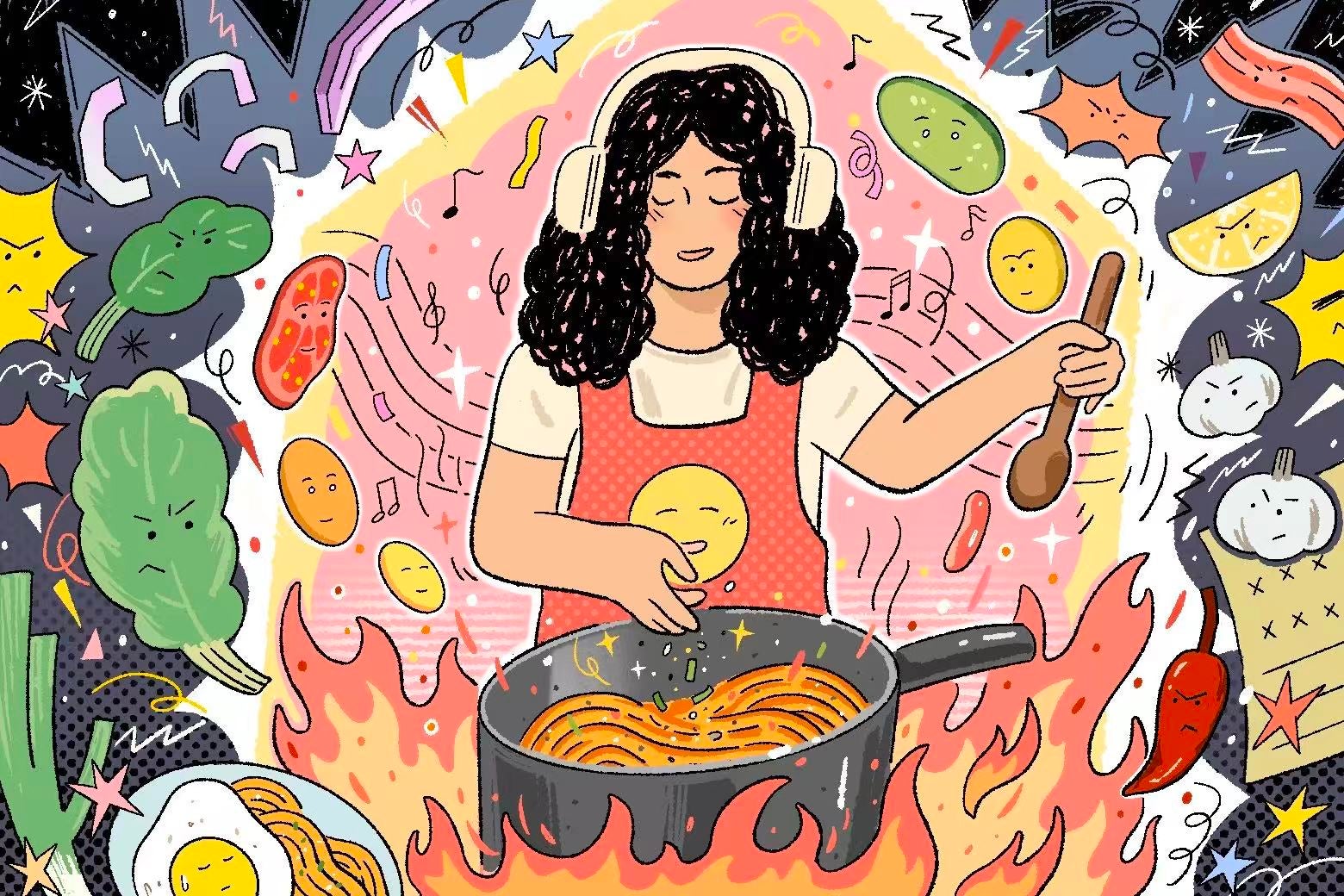
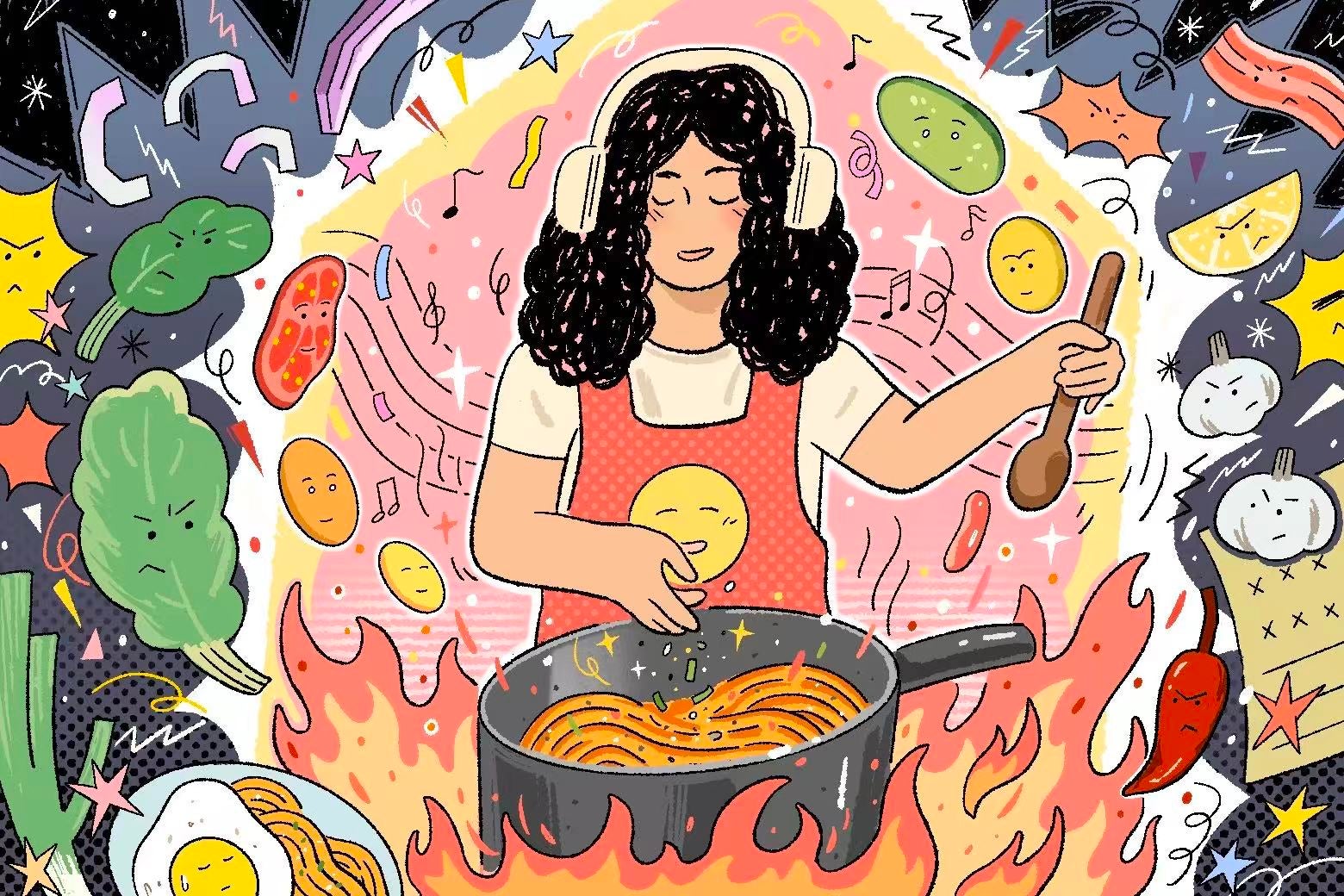
Cooking is often seen as a chore and a necessity. But [middle school report voice] since the dawn of kitchens, people have found a way to enjoy the act of cooking. And as multiple forces have attempted to get us to jettison our creativity and experimentation, a new generation of cooks and writers is trying to remind us that the process isn’t just worth it—it’s where the actual joy of cooking can be found.
AdvertisementFor Stanek, Gourmet’s call to cook was about countering the narratives he has seen over his long career in food media. “Food media writ large has this fundamentally aversive relationship with cooking,” he says. This, he argues, is because of how media in general has worked, with magazines and websites—often at the behest of investors and venture capitalists interested only in infinite growth—attempting to cater to as many readers as possible for profit. In food, this means not just talking to people who already enjoy cooking but capturing those who really have no interest in it, or actively hate it, at least for the purposes of page views. “I’ve spent a lot of my career feeling like I’m trying to convince people to do something that they don’t want to do, trying to convince people that something that they think is hard is actually easy or that something that is inconvenient is actually worth doing,” says Stanek. This leads to recipes that promise they’re “quick and easy” or “one-pot” before you even get to what’s in them.
Advertisement Advertisement AdvertisementBut for Bush, now the pastry chef at Little Egg in Brooklyn, baking began as a hobby and an antidote to the stresses of unemployment and depression. And it was about not just the ability to make herself a treat whenever she wanted, though that certainly was a plus. “My own experience of baking and being in the kitchen was riddled with failure. There was a lot of humiliation and also improvisation and play,” she says. It was difficult, but ultimately, “it was so pleasurable to teach myself a new skill, to fall in love with my own ability again.” Baking reminded her she was capable, that she could change and grow and do new things. And make herself happy in the process, even momentarily.
And that’s what’s different about this emerging new argument for cooking qua cooking. While plenty of people are getting an ’80s nostalgia kick out of Stewart’s Fried Cornish Hens in Potato Baskets, and while she has plenty of great tips, she’s not arguing that piping soft cheese into 100 snow peas is a personally fulfilling activity. It’s not supposed to be fun. It’s just what you do to be, in her very exacting opinion, a good host. Instead, the selling point for today’s aspiring cooks is that the act of cooking is good for you, on some level. “You’re both meeting your needs and the needs of those around you and engaging in this really embodied process,” says Stanek.
Advertisement Advertisement AdvertisementThis all sounds very nice. But do we really need to be “embodied,” fully present and meditative through every moment of the process, while cooking? No. Even the most dedicated cooking hobbyist will find themselves hungry in the kitchen, perhaps with even hungrier children, needing to get something on the plate without any consideration of personal joy. As I currently write, juggling multiple deadlines, my lunch is some hummus, pita chips, and a hunk of cheddar cheese. And the kitchen is a complicated place. Generations of women clawed their way out of it, and the Republican Party is trying to put us right back in. The idea that everything should be made from scratch, with, as MAHA would put it, “ingredients your grandmother can pronounce” (notwithstanding the fact that if your grandmother was born after the 1890s, she knows what artificial flavors are), only pressures people, mostly women, to spend all their time cooking.
Advertisement AdvertisementSo the 30-minute-sheet-pan-ification of recipes we’ve experienced is no surprise. It is useful, a way to get through one more chore as quickly as possible. Why the rush? “Capitalism,” says Bush, when I ask her what is keeping people from finding pleasure in the kitchen. “It’s such a devastatingly difficult time to work a job and make a living and attend to your responsibilities, and I very much understand the desire towards efficiency.”
Indeed, these odes to the act of cooking are dropping at a time when process—the act of actually doing the thing rather than its result—is being portrayed as a societal enemy, the polar opposite of a more desirable efficiency. I am hounded to use A.I. at every turn, with the promise that I will no longer “have to” write an email, or an essay, or a book. Whatever I imagine, instantaneously in front of me with a single prompt. Finally, these hucksters pledge, you won’t need to do anything. Not even use your brain connectivity!
AdvertisementPut aside for a moment that these products are built on stolen work and their results suck. What they assume is that there can be no pleasure in a task, only toil and grunt work on the way to finally being done. I have been asked multiple times in the past year if A.I. “helps” my writing, as if I haven’t dedicated my career to getting good at this because, on some level, I like doing it. We are so often encouraged to see effort as pain, mostly because our society is set up in such a way that we work endlessly for very little reward.
Advertisement AdvertisementBy framing cooking and baking as not just chores but hobbies, or even personal vocations, these writings attempt to remind us that it is nice to do things sometimes. It is satisfying to knead dough and feel it transform under your fingers. It is cool to bloom spices in oil, and to train yourself to notice the change from the smell in the air. It’s thrilling to sit in front of your oven and watch as a soufflé rises. And, most important, it is OK if the soufflé falls. Failure isn’t bad. It’s the only way you get good.
Advertisement AdvertisementAfter a dreary winter of mostly making soups and beans that could simmer without my having to chaperone, I entered the kitchen earlier this spring with the goal of paying attention, to both what I was doing and what I was feeling. I decided to make Bush’s orange olive-oil poppy-seed cake, which requires carefully folding whipped egg whites into a wet batter for a moist, lifted cake. It was an emotional roller coaster. The light sensuality of juice dripping down my wrist after squeezing an orange. The panic, and elation, of realizing I might not have enough sugar, then having exactly enough sugar to the gram. Pulling the cake out and seeing that it had the softest wiggle at the center, and deciding it needed five more minutes based on nothing but my own intuition.
AdvertisementI was worried it would be a failure and I would have to write something about remembering that human fallibility is proof I’m human at all, which is the only reason art is interesting, and is of course what A.I. is missing. That is true. But also, the cake was a complete success. The air filled with the sunshine smell of oranges as my wife and I waited for it to cool, and then forked into the airy crunch of the browned surface. It was rich and smooth and crackled with poppy seeds, and it was delicious, and maybe a professional could have made it even better, but buying one would not have left me with the satisfaction of a job well done.
I know that satisfaction is not always available to me, nor do I care about it all the time. I don’t need to be proud of the eleventy-billionth pot of dal I’ve ever made. But when everyone else is telling you to set it and forget it, what a joy to devote time and effort to nothing but your own pleasure. To make something for yourself.
 Get the best of news and politics
Sign up for Slate's evening newsletter.
Copy Link
Share
Share
Comment
Advertisement
Get the best of news and politics
Sign up for Slate's evening newsletter.
Copy Link
Share
Share
Comment
Advertisement