
요약
Surveillance cameras are entering a new era in which artificial intelligence can detect dangerous situations, alert authorities and even issue evacuation warnings automatically, with the latest technology showcased at an exhibition in Nagoya on November 18. (…
본문
Web3 AI Cameras Can Now Spot Bears, Detect Falls and Warn of Flooding Nov 18, 2026 | News On JapanNAGOYA - Surveillance cameras are entering a new era in which artificial intelligence can detect dangerous situations, alert authorities and even issue evacuation warnings automatically, with the latest technology showcased at an exhibition in Nagoya on November 18.
The exhibition brought together camera manufacturer Axis Communications and six technology partners to demonstrate advanced AI-powered monitoring systems designed for applications ranging from wildlife detection and medical care to industrial safety and disaster prevention.
One system uses AI to identify wild animals, including bears and wild boars, and automatically notify administrators when they are detected. The technology could help communities respond more quickly to wildlife entering residential areas, where encounters with bears have become an increasing concern.
Another camera demonstrated the ability to detect when a person has fallen, displaying an alert identifying the location of the incident. The system is designed for hospitals, nursing care facilities and factories, allowing staff working elsewhere to receive immediate notifications when something unusual occurs.
Disaster prevention was another major focus, particularly following the record-breaking torrential rainfall that struck Nagoya in September.
A river monitoring system demonstrated how an ordinary surveillance camera could be transformed into an automated flood warning device through AI technology.
Conventional river monitoring relies heavily on people watching camera footage and checking water levels to determine whether warnings or evacuation advisories are necessary. AI-equipped cameras can instead analyze river conditions continuously and automatically initiate responses when water reaches predetermined danger levels.
According to a developer involved in the demonstration, the system can issue an alert when a river reaches a warning threshold and automatically trigger an evacuation advisory when water rises to a level indicating a serious risk of flooding.
The technology can also be connected to speakers installed near rivers, allowing authorities to broadcast warnings telling people to stay away from dangerous areas without requiring someone to be physically present.
Similar systems have already been introduced in Taiwan and France, while demonstration projects are underway in Japan, including in Takasaki, Gunma Prefecture.
Developers say the technology could significantly reduce the burden on local authorities and emergency personnel, particularly during heavy rainfall when conditions can deteriorate rapidly and simultaneous monitoring of multiple rivers becomes difficult.
The exhibition also highlighted a broader shift in the surveillance industry, with cameras increasingly moving beyond their traditional role of recording images toward actively identifying abnormalities and initiating responses.
"We believe we are now in a transitional period from conventional surveillance cameras to AI-equipped cameras," a representative said.
As AI technology continues to advance, developers expect intelligent monitoring systems to become increasingly common across a wide range of workplaces and public facilities, extending beyond cameras to other equipment used in everyday safety management and disaster prevention.
Source: 東海テレビ ニュースONE
 POPULAR NEWS

Magnitude 5.7 Earthquake Strikes Kumamoto, Raising Fears of Further Tremors
A magnitude 5.7 earthquake struck Kumamoto Prefecture in southwestern Japan at around 2:22 a.m. on November 19th, registering a maximum seismic intensity of lower 5 on Japan's seven-point scale and shaking a wide area of Kyushu, with experts warning that further strong earthquakes could occur near a fault system affected by the devastating Kumamoto earthquake in July.

Takaichi Holds 30-Minute Talks With Putin
Japanese Prime Minister Sanae Takaichi held approximately 30 minutes of talks with Russian President Vladimir Putin on the evening of November 18 during her visit to China for the APEC summit, marking the first direct dialogue between the leaders of Japan and Russia since Moscow launched its invasion of Ukraine in 2022.

Princess Aiko Reflects on Wartime Suffering During Singapore Visit
Princess Aiko, the only daughter of Emperor Naruhito and Empress Masako, expressed hope for stronger ties between Japan and Singapore during a luncheon hosted by President Tharman Shanmugaratnam on November 18th, acknowledging the suffering caused by Japan's wartime occupation and emphasizing the importance of remembering those who lost their lives.

Russian Aircraft Violate Airspace Over Okinoshima for First Time in 13 Years
Two aircraft believed to be Russian briefly violated Japanese airspace over Okinoshima Island in Fukuoka Prefecture on November 17th before flying between Okinawa and Taiwan toward the Pacific Ocean, prompting Japan's defense minister to condemn the incursions as a serious violation of national sovereignty.

Japan's Supercomputer Hit by Unauthorized Access
Japan's Fugaku supercomputer has been temporarily shut down following unauthorized external access to a system used to connect to the facility, raising concerns that user information may have been leaked, the Riken research institute announced on November 16th.
MEDIA CHANNELS


 MORE
Web3
NEWS

AI-Generated Images Spread to Restaurant Menus in Japan
AI-generated images are becoming increasingly common across Japan, appearing on restaurant signs, food menus and even election posters, raising questions about authenticity, consumer trust and how far the technology should be allowed to replace traditional photography and design.

AI Cameras Can Now Spot Bears, Detect Falls and Warn of Flooding
Surveillance cameras are entering a new era in which artificial intelligence can detect dangerous situations, alert authorities and even issue evacuation warnings automatically, with the latest technology showcased at an exhibition in Nagoya on November 18.

Create Cartoon-Style Product Promos Using the AI Marketing Studio
The cartoon-like promotions can be a creative way to promote your products instead of traditional product ads.

Young Japanese Entrepreneur Named in Forbes Under 30
Kazuki Yokoyama, a 28-year-old entrepreneur from Niigata Prefecture, has been named among Forbes Japan's 30 Under 30 for 2026, earning recognition for an innovative business model that combines artificial intelligence with the acquisition and revitalization of small manufacturing companies struggling with labor shortages and a lack of successors.
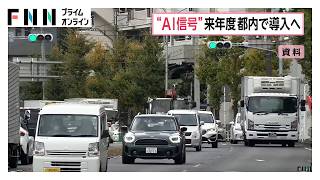
Tokyo to Introduce AI Traffic Signals
Tokyo is preparing to introduce artificial intelligence-based traffic signal control across the metropolitan area as early as fiscal 2027, using technology that predicts congestion 30 minutes in advance and adjusts traffic light timing to improve traffic flow.

AI-Generated Election Posters Spark Controversy in Japan
Election posters featuring AI-generated faces that did not resemble the actual candidates have sparked controversy in Amagasaki, Hyogo Prefecture, after a former prefectural assembly member acknowledged that four candidates in a November 15th city council by-election had used artificial images rather than their own photographs, exposing gaps in Japan's election laws and raising questions about the use of public funds.

Humanoid Robot Makes Runway Debut at Tokyo Fashion Show
A humanoid robot signed to the Japanese subsidiary of Elite World, one of the world's largest modeling agencies, made its runway debut at a fashion show in Tokyo on November 16th, walking alongside human models in a presentation exploring the coexistence of humans and robots.

NTT Develops Proprietary AI to Detect Software Vulnerabilities
NTT announced on November 16th that it has developed proprietary artificial intelligence technology capable of securely identifying vulnerabilities in software programs, aiming to strengthen defenses against cyberattacks that increasingly exploit AI.
< 2 3 4 5 >