🔗 원문 전체 보기 → Scientific American
요약
Nvidia’s chips power the AI frontier—thanks, many say, to co-founder and now ex-CEO Jensen Huang
본문
November 12, 2026
3 min read
What Jensen Huang leaving Nvidia means for AI
Nvidia’s chips power the AI frontier—thanks, many say, to co-founder and now ex-CEO Jensen Huang
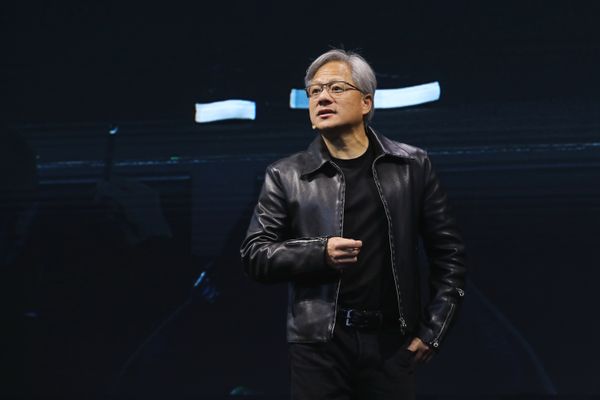
Jensen Huang, pictured in 2023.
glen photo/Shutterstock
Jensen Huang’s resignation from Nvidia, one of the world’s most valuable companies and the single most integral player in the artificial intelligence boom, could change the course of the technology, experts say, leading to a potential “brain drain” at Nvidia if others decide to leave alongside Huang.
Huang resigned after admitting to having a relationship with a woman who is an alleged Chinese intelligence asset. Further reporting by the New York Times suggests Huang may have had another affair with an unnamed Nvidia executive. He will be replaced in the interim by Nvidia’s current chief financial officer, Colette Kress, the company said in a statement.
The reason why Huang’s departure could prove so crucial lies in Nvidia’s unusual corporate structure and the central role Huang has had in its chip design and innovation pipeline since its founding. “[Huang] is intimately involved in almost every aspect of the company,” says Ryan Fedasiuk, senior fellow at the Foundation for American Innovation, who studies the intersection of technology and national security.
On supporting science journalism
If you're enjoying this article, consider supporting our award-winning journalism by subscribing. By purchasing a subscription you are helping to ensure the future of impactful stories about the discoveries and ideas shaping our world today.
Since co-founding Nvidia in 1993, Huang has been the figurehead of the firm. His trademark leather jackets and aptitude for diplomacy have made him a main character in the ongoing AI race, which was kick-started by OpenAI’s November 2022 release of ChatGPT. Nvidia provides almost all the major AI labs and a slew of private firms with semiconductor chips—graphics processing units, or GPUs—that make AI work.
Nvidia’s dominance in the industry stems from these GPUs, which the firm initially developed for rendering computer games. That capability made them ideal for AI because they were able to process multiple equations in parallel—something that is essential to making a game run smoothly. As a result, Nvidia had a decades-long head start over its competitors, such as AMD or Intel, which are only now catching up.
And when people think of Nvidia, they think of Huang. He has an unusually hands-on management style, with more than 60 direct reports, making his departure particularly difficult to navigate.
“We believe he is deeply involved in all strategic decision making,” wrote Rick Schafer and Trevor Bowers, researchers at the investment bank Oppenheimer & Co, in a note. “We see massive shoes to fill and no obvious successor. His departure presents a material, potentially thesis-changing event.”
But Nvidia isn’t a one-man engineering operation. It employs tens of thousands of people, including some of the world’s leading chip designers—that leads Fedasiuk to believe the company should be capable of sustaining its technical progress without Huang at the helm.
But Huang didn’t just provide technical capabilities. He also acted as a “voice of sanity” for the Trump administration amid the competition with China, says Kristy Loke, a researcher on the geopolitics of AI at MATS (Machine Alignment, Transparency, and Security) Research, an AI think tank. Huang also vocally supported open models, which make their core components public, allowing researchers to see how the models are trained. Huang was “making the case that as a general-purpose technology, AI should spread instead of be bottled up and sold at a premium,” Loke says.
Still, the distraction caused by Huang’s departure, rather than the loss of his personal technical expertise, could ultimately cause more damage, Fedasiuk says. “I don’t think it’s right to conceive of this as ‘if Jensen goes, then there goes a huge blow to the company’s technical capability,’” he says. His concern is that the scandal could materially harm Nvidia’s ability to operate business as usual.
“The longer this drags on,” Fedasiuk says, “the more distracted the company will grow, and the less effort or attention it will be able to dedicate to the real difficult technical problems.”
Those challenges include developing chips capable of processing ever larger AI models, finding ways to move information between processors without introducing bottlenecks and improving the enormous energy demands of modern AI systems.
Huang’s swift departure could mean that much of that work may continue unabated—though who replaces Huang in the long run, and whether they can act as such a totemic figure as he had, is yet to be seen. Another key unanswered question is whether Huang’s departure will be the only one.
“We see risk that a Huang departure creates a brain drain situation at the AI giant, threatening Nvidia’s pace of innovation, a critical competitive advantage,” the Oppenheimer researchers wrote.
Subscribe to Support Independent Journalism
Great science journalism requires human expertise, time, effort and creativity. And it costs money. That’s why I and the journalists here at Scientific American hope you’ll join our community.
When you subscribe, you are supporting staff and freelance journalists who are passionate about telling science stories that are true, important and compelling. Our editors and reporters are often experts in their fields, which means they understand the nuances of big discoveries and can untangle the breakthroughs from the hype. With a subscription, you are also supporting rigorous fact-checking to ensure the words we publish are precise and accurate. And you’re supporting original illustrations, graphics and photos that bring you closer to an advanced laboratory, an ice sheet in Antarctica or a space mission in orbit. You’re helping us craft other types of high-quality journalism as well: Our newsletters are carefully written, edited and curated by staffers you have or will come to know and love. Our Science Quickly podcast is based on original reporting, collaboration with editors and scientists and exacting production.
Subscriptions keep this engine running so we can continue to deliver thoughtful, rigorous and independent science journalism to you. In an era of viral misinformation, this work is crucial. If you value what we do, I hope you’ll consider joining us as a subscriber
Thank you,
Jeanna Bryner, Editor in Chief, Scientific American
Subscribe