요약
Big Tech is spending about a trillion dollars a year on AI data centers, and is now betting on factory modules and tents to go faster. SpaceX is already finishing data centers in about five months. Meta, Microsoft, Google and Amazon are all racing to build AI…
본문
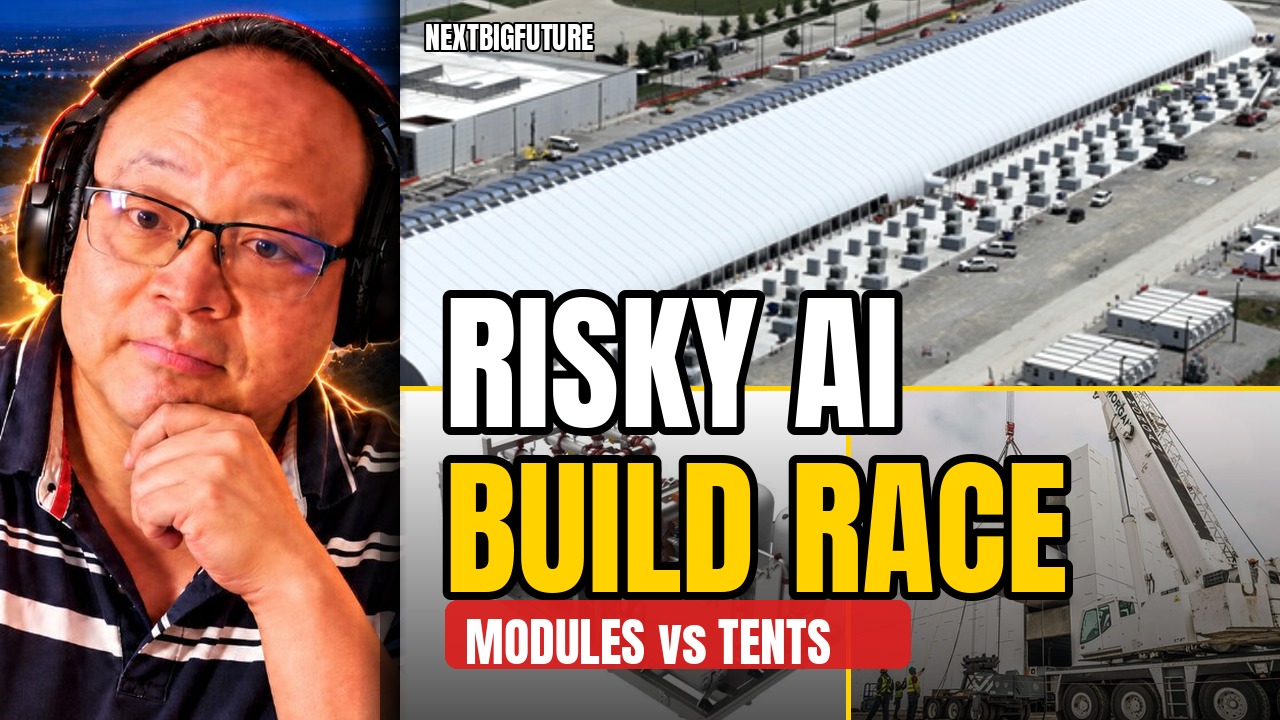
Big Tech is spending about a trillion dollars a year on AI data centers, and is now betting on factory modules and tents to go faster. SpaceX is already finishing data centers in about five months.
Meta, Microsoft, Google and Amazon are all racing to build AI data centers. They are spending about a trillion dollars a year doing it.
But only one in five of those projects gets done in under 24 months. About 20 months is their best time.
SpaceX is going from bare dirt to chips running in about five months. That is a radically different speed. It means lower cost, far less interest, and a lead that grows every month.
The 20-month trap
SemiAnalysis did a deep analysis in July of modular data center construction. The baseline matters.
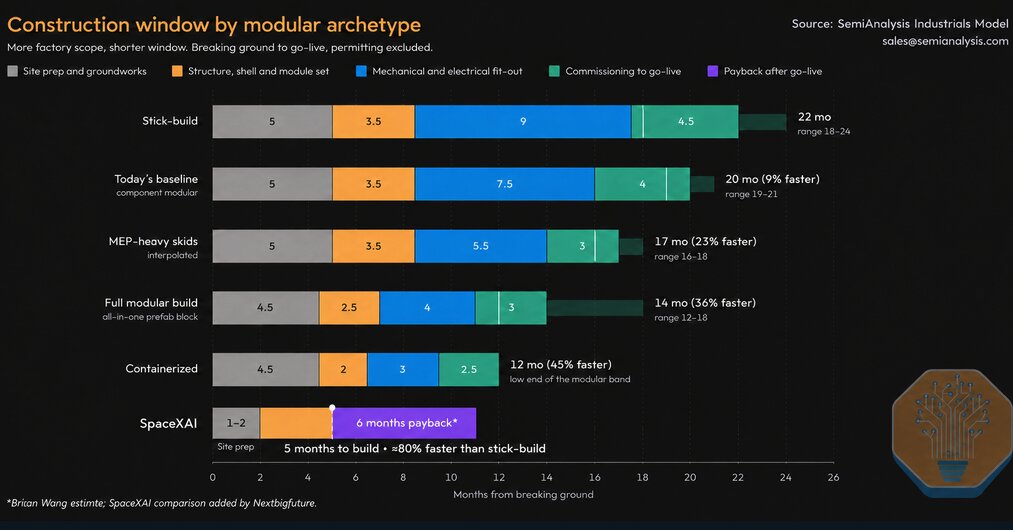
Full modular build IS aspirational. It has not happened yet.
Only about 20% of AI data center projects are using modular construction in some form.
Here is why time is money. A competitor’s data center can cost up to $50 billion. After 11 months, it is still being financed, with concrete still being poured, and it is still 12 months or more from a completed building. They are paying interest and debt on buildings that are not finished.
Finishing the building is not the end either. Commissioning a completed site can take another 3 to 8 months.
SpaceX’s 5-month build
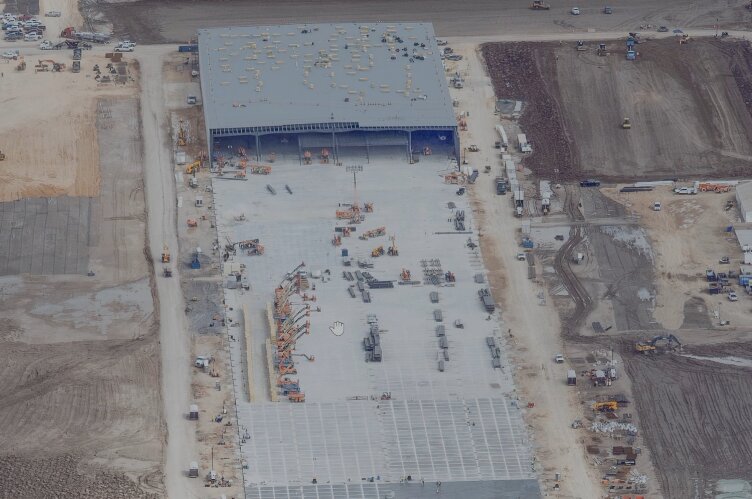
SpaceX’s 5 months is the entire end-to-end process. Land with no building at all becomes a finished building with power, all networking and all chips installed and operating.
Even with modular methods, competitors can take two and a half to three and a half months just for the shell. That is the empty building, with no electronics inside.
Here is the timeline behind the 5-month figure. Elon posted that the 220,000-chip Macrohard data center was completing at the end of September. Then in November, a 220,000-chip minihard was completed. That minihard did not exist in March or April. A building with operating chips in November that did not exist five or six months earlier is where the 5-month number comes from. Another unnamed data center is being completed in December.
SpaceX was already the leader in fast builds. Colossus 1 was done in 12 months. SpaceX has no bottlenecks on any part of the system, from energy to networking. It makes its own racks, cooling hardware and gas turbines in-house, and it uses behind-the-meter power from mobile natural gas units.
Labor is the other edge. Microsoft and Meta are paying three to four times what they paid for construction labor in 2020. SpaceX keeps it to about 3,000 people or fewer per site, sometimes for multiple data centers in one location. Others need 7,000 or more per data center. Welders and electricians are in short supply, so needing fewer of them is a big advantage.
Minihard economics
The minihard is SpaceX’s standardized data center. It has the same 220,000 Nvidia B300 chips as the bigger buildings, but packed into 25% less space. That means higher density, better cooling, shorter interconnects and less wasted power. The design stays the same when they switch from GB300 to Rubin chips.
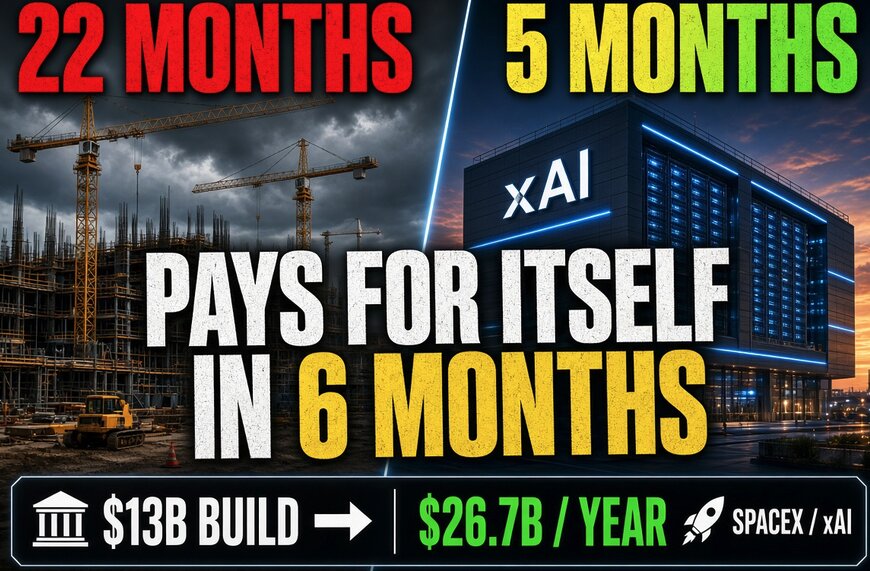
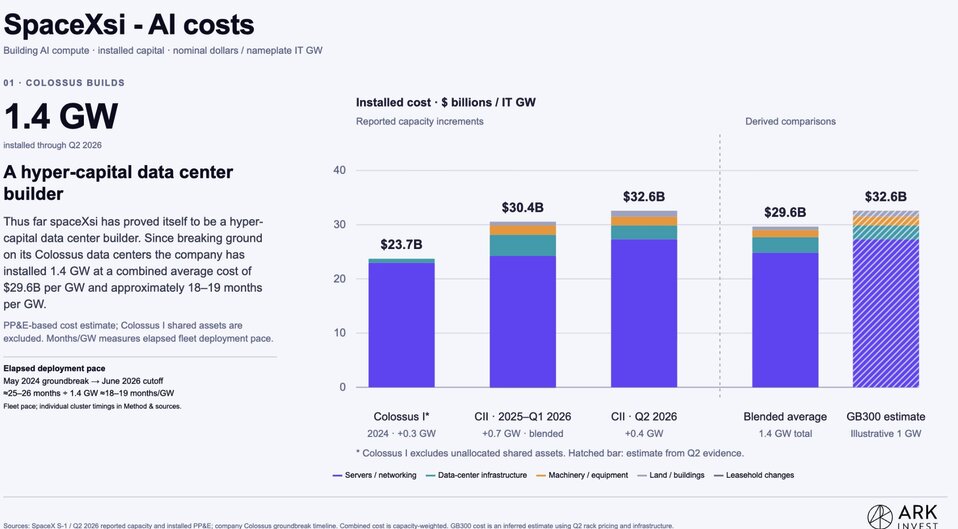
The $13 billion comes from ARK Invest’s analysis. ARK put SpaceX’s data centers at about $32.6 billion per gigawatt for GB300, so a 400 MW minihard comes in at about $13 billion. The industry average is about $52 billion per gigawatt. That puts SpaceX about $20 billion per gigawatt cheaper, or roughly 40% lower cost.
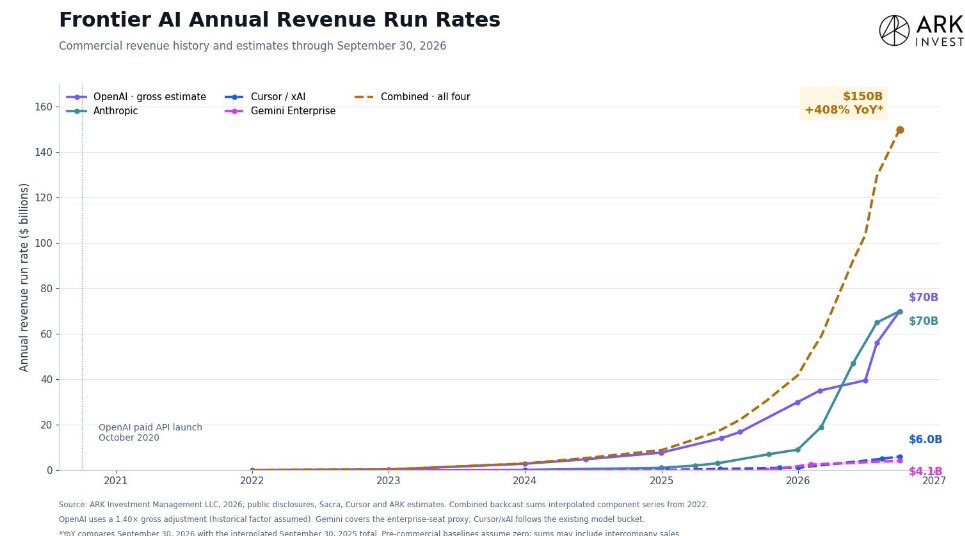
The revenue comes from a Deutsche Bank research report. It says there are two unnamed customers for minihard data centers, paying about $26.7 billion a year for 220,000 chips. That is a charge rate of roughly $60 million per megawatt, so leasing prices are not going down.
The contracts have a three-month term, plus a three-month cancellation notice. That six-month minimum is enough to pay back the data center.
Payback is figured on revenue, not profit. If the build costs a few billion dollars more, payback stretches by a month or two, to around eight months. It is still remarkable.
So in about 11 months, the data center is built and paid off. Over the same 11 months, a competitor is still pouring concrete and paying interest.
Six at a time in Texas and Tennessee
SpaceX built its first data centers in Memphis, Tennessee, around Colossus 2 and Macrohard. Now there is a possible site near Brownsville, Texas, close to SpaceX’s launch facilities. It has room for possibly six minihards, on a 166-acre site.
A local development agreement with the city of Starbase lets SpaceX keep building there, even with a Texas-wide moratorium on data center construction. A natural gas pipeline is bringing gas to these sites.
Forecast: six minihards could be built at once in Texas, and another six in Memphis after the first batch of five there is done. That would mean 10 or 11 data centers under construction at the same time. I think that gets SpaceX to finishing two minihards a month around Q3 2027. That fits their goal of 20 GW of powered shell, with 10 GW of chips, in 2027.
In the Altimeter Capital interview with Brad Gerstner, Jensen Huang indicated that at least a million Rubin chips are allocated to SpaceX. Five minihards would take 1.1 million chips. Forecast: Rubin minihards completing in 2027 would have more compute than Colossus 2, which is currently the largest data center in the world.
Modules and Meta tents: fast but risky
Everyone else is trying to catch up. Amazon wants a rapidly deployed design. About 50 companies are involved in modular construction.
The idea comes from shipbuilding and nuclear plants. You build 100-ton to 200-ton modules in a factory, then ship and snap them together like big Lego blocks. Containers and prefab blocks combine switchgear, transformers and cooling into whole modules, so less labor is needed on site. But not all prefabrication is modular, and partial prefab is less efficient.
Meta builds traditional H-style data centers, with two parallel buildings joined by a cross member. Now it is also building tent data centers, temporary-looking structures meant to shave off a few months. They give up some robustness to do it. Tesla used tents for Model 3 production for the same reason.
Meta’s schedule is still long. Its Prometheus expansion in New Albany, Ohio is listed for Q3 2028. Capacity at its El Paso campus with BlackRock is expected to start coming online in 2028. The Hyperion expansion still depends on seven new gas plants totaling more than 5.2 GW, about 240 miles of 500 kV transmission, and a commission decision targeted for December 16, 2026.
Power is a bottleneck too. GE Vernova, Siemens Energy and Mitsubishi Power have 5–7 year wait times on a 60+ GW turbine backlog.
Why the gap widens
The industry targets about 19 GW added in 2026 and 43 GW in 2027 (SemiAnalysis). It may only complete about 25 GW in 2027, and only about 13 GW in 2026. Other estimates are even more pessimistic.
Forecast: if SpaceX adds 10 GW in 2027 and 15 GW in 2028 on top of the roughly 3 GW it has, its 28 GW could be half or more of all data center completions.
Every finished minihard pays for the next one. Competitors are still financing concrete. That is why the gap grows every month instead of closing.
Conclusion
SpaceX builds in five months and pays it off in about six, on revenue. Modules and tents might get Big Tech from 22 months down to 20, or maybe 16 to 18. The competition isn’t just behind. Every month, they fall further behind.
Labels: build cost and payback are my MODEL from ARK Invest and Deutsche Bank figures. Six-at-a-time, two-per-month and 2027–2028 GW figures are FORECASTS.
Get the deeper analysis on Substack: nextbigfuture.substack.com
 Brian Wang
Brian Wang is a Futurist Thought Leader and a popular Science blogger with 1 million readers per month. His blog Nextbigfuture.com is ranked #1 Science News Blog. It covers many disruptive technology and trends including Space, Robotics, Artificial Intelligence, Medicine, Anti-aging Biotechnology, and Nanotechnology.
Known for identifying cutting edge technologies, he is currently a Co-Founder of a startup and fundraiser for high potential early-stage companies. He is the Head of Research for Allocations for deep technology investments and an Angel Investor at Space Angels.
A frequent speaker at corporations, he has been a TEDx speaker, a Singularity University speaker and guest at numerous interviews for radio and podcasts. He is open to public speaking and advising engagements.