🔗 원문 전체 보기 → Columbia Journalism Review
요약
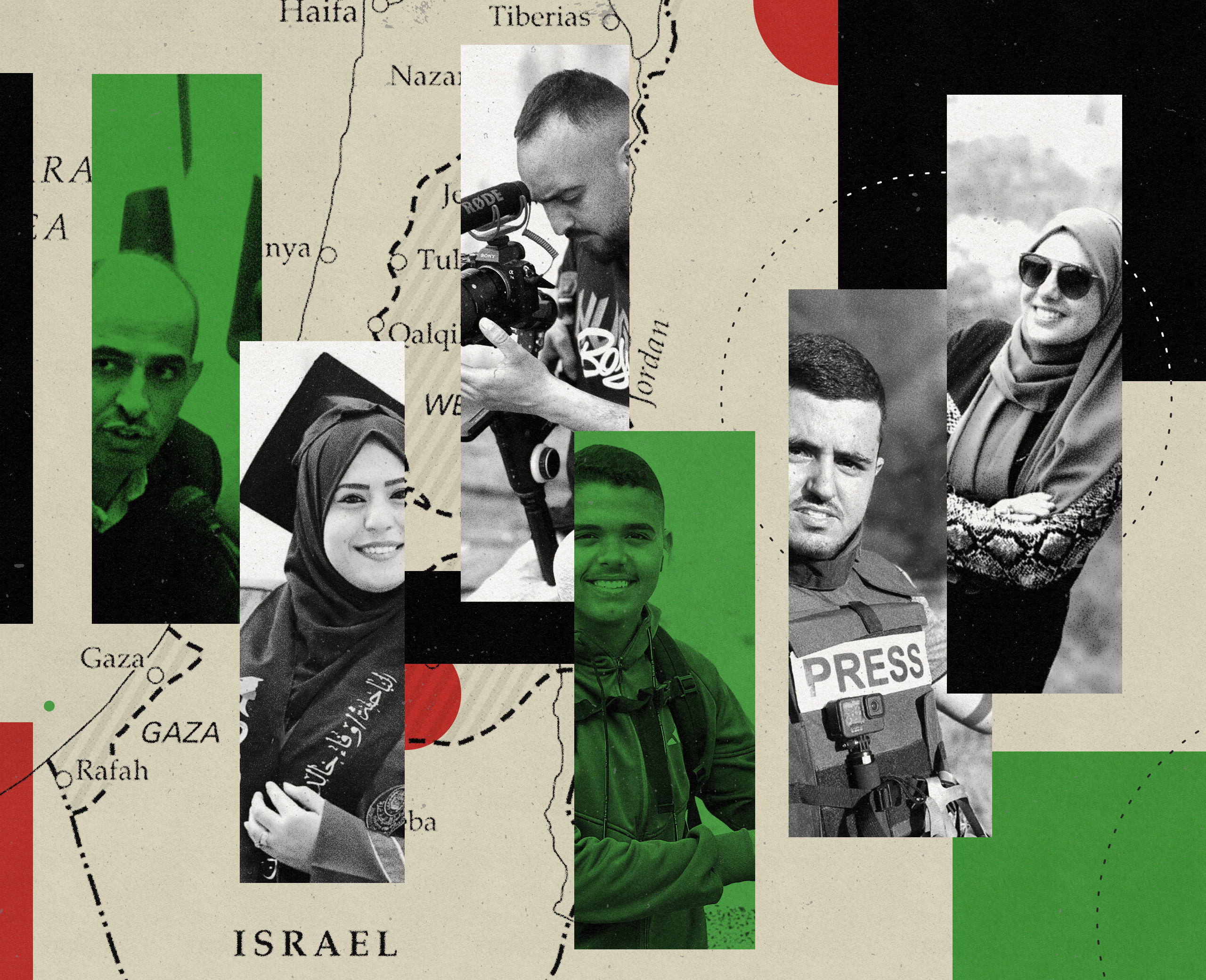
Israel has killed scores of Palestinian journalists with impunity and waged propaganda campaigns to discredit their work, but a full accounting tells a different story.
본문
Sign up for the daily CJR newsletter.
In early 2023, a Palestinian journalist named Bilal Jadallah was working his contacts. Coming from a family of journalists, and having founded Press House–Palestine in Gaza almost a decade earlier as a gathering place for journalists across political and ideological lines, he was deeply sourced and beloved by his colleagues.
When an Israeli sniper killed Shireen Abu Akleh, the veteran Palestinian American journalist, on May 11, 2022, while she was covering an Israeli raid in Jenin, in the West Bank, the Committee to Protect Journalists (CPJ) reached out to Jadallah. He was an ideal partner on the ground as the organization sought to establish whether Abu Akleh’s killing was part of a systematic pattern across the Palestinian territories.
The ensuing CPJ report, “Deadly Pattern,” which was published in May of 2023, revealed that Israel had killed twenty Palestinian journalists in Gaza and the West Bank over a twenty-two-year period. Jadallah, according to CPJ, proved “indispensable” in helping to locate the families of journalists killed in Gaza.
Months later, after the Hamas attack of October 7, 2023, and the intense aerial and military bombardment from Israel that followed, Jadallah’s Press House served as a refuge: a workspace for journalists and a provider of safety gear, community, and solidarity at devastating moments, as journalists would go to the site of an air strike and learn that their own relative or neighbor or colleague was buried under the rubble.
Then, on November 19, 2023, as he left northern Gaza by car to reunite with his family in the south, an Israeli air strike hit Jadallah in Gaza City near Salah al-Din Mosque, killing him immediately. He suddenly became a part of what he had once documented: Israel’s deadly pattern of killings of Palestinian journalists.
In the aggregate, stories such as Jadallah’s reveal larger truths—including that Israel has killed scores of Palestinian journalists with impunity, at a minimum, through recklessness that can amount to war crimes. A more direct and honest accounting might be that Israel has deliberately created systems that killed many of these journalists in order to cover up what they would have documented, while maintaining its ban on foreign journalists entering Gaza independently, even during declared ceasefires. As of today, CPJ has counted at least two hundred and forty-one journalists, a hundred and eighty-nine of whom are Palestinians, who have been killed by Israel in Gaza and the surrounding region in the past three years, a period that leading human rights groups and a growing consensus of legal experts label a genocide.
When reached for comment, the Israel Defense Forces (IDF) repeated a claim it has been making for almost three years: “It should be emphasized that the IDF does not target journalists under any circumstances. The IDF makes great efforts to mitigate harm to uninvolved individuals while maintaining the safety of its force.”
In the face of growing attention to the fact that Israel has been killing journalists at an unprecedented pace, Israeli intelligence and pro-Israel advocacy organizations that call themselves “media watchdogs” have repeatedly sought to muddy the narrative by waging systematic propaganda campaigns to cast Palestinian journalists overall as Hamas militants in order to justify their killing, delegitimize their work, and discredit those who defend them. Over time, Israel began to openly target journalists, many of them working for Al Jazeera, with thinly sourced or unsubstantiated allegations that they were, in reality, terrorists.
Recently, the IDF unveiled a new effort to paint journalists as terrorists—and to dispel the clear and discernible bigger picture. “The Press Files,” a new IDF website, seeks to justify the killing of journalists in Gaza in journalistic terms. The claim that the Israeli military has targeted journalists “does not tell the full story,” the website says. “Individuals presented as innocent journalists were, in fact, militants.” It goes on to say that its contents represent the findings of “an in-depth investigation based on a wide range of intelligence sources, including open-source information, documents gathered in the field, interrogations of military operatives by Israeli intelligence bodies and more.” The allegations are sometimes based on single lines from unverified documents that list an individual as once having been affiliated with an armed group, such as this shoddy claim.
I have spent more than a decade investigating the civilian toll of air strikes. The approach journalists should be taking has seemed obvious: Don’t lead with unsubstantiated claims that are not supported by evidence. Instead, examine recurring trends, identify patterns, and report out hard truths. No anomaly or extrapolated event can overshadow what the broad sample tells us, what the big-picture truth really is.
But over the past three years, we have seen the Israeli government, a network of pressure groups, and even the press parrot anomalies, disproportionately focus on unverified allegations, and fail to accurately reflect the work of journalists. Most glaring in these stories, to me, is the frequent absence of any effort to humanize these journalists, to write about their lives with dignity and in intimate detail, the way so many of them told stories about the people they covered.
None of this, however, was invented by Israel. It is part of a new reality that is in many ways a by-product of America’s “war on terror.”
Throughout my career investigating air strikes by the United States and its military partners, one of the most significant and discernible long-term effects of the war on terror was the ease with which a civilian, whose names targeters in most cases did not even know, could be stripped of that status based on flimsy intelligence or biases, designated as a legitimate target, and assassinated without any means for accountability or recourse.
As I wrote in 2021, the thousands of pages of strike documents I obtained through a legal fight with the Pentagon “point to the psychological phenomenon of ‘confirmation bias’—the tendency to search for and interpret information in a way that confirms a pre-existing belief. People streaming toward a fresh bombing site were assumed to be ISIS fighters, not civilian rescuers. Men on motorcycles moving ‘in formation,’ displaying the ‘signature’ of an imminent attack, were just men on motorcycles.” But the label of “terrorist,” or even the mere allegation of an association with a militant group, was damning, and the bar to prove their innocence was so much higher than the bar for the intelligence used to lethally target them.
We are seeing this same doctrine play out in Gaza. But this time, it is Palestinian journalists who are being killed, even explicitly targeted, and delegitimized at a scale and pace I have never before seen. Those efforts are often fueled by artificial-intelligence-based programs and automated systems.
In the first weeks after October 7, the Israeli military deployed an AI-based program called Lavender that marked tens of thousands of Palestinians and their homes as targets for air strikes based in large part on “features” considered “incriminating,” including “being in a WhatsApp group with a known militant” (which journalists often are for their reporting) or “changing cellphones” (which many Palestinian journalists did in order to preserve internet and cell access during frequent blackouts). Another red flag was “changing addresses frequently” (which journalists did more and more as they realized they were in danger of being assassinated, and as many of their families asked that they sleep separately).
Israel also established a unit known as the “Legitimization Cell,” which was “tasked with gathering intelligence from Gaza that can bolster Israel’s image in the international media,” according to a +972 investigation published by Yuval Abraham more than a year ago. One of its key tasks has been “to identify Gaza-based journalists it could portray as undercover Hamas operatives, in an effort to blunt growing global outrage over Israel’s killing of reporters.”
“If the global media is talking about Israel killing innocent journalists, then immediately there’s a push to find one journalist who might not be so innocent—as if that somehow makes killing the other 20 acceptable,” an intelligence source told +972.
The Israeli government frequently puts out messages associating a slain reporter with a terrorist group—and legacy news media outlets often echo the idea. In this way, the press itself becomes part of the problem.
Far too often, mainstream news outlets—including the one that I write for, the New York Times—have only covered the killings of Palestinian media workers in select circumstances, such as when Israel has accused the slain journalists of involvement with Hamas. Those unverified allegations often make up a significant portion of the story, leaving at the margins the journalist’s work, their character, how their families and friends remember them, the hardships they endured carrying out jobs while hungry and mourning loved ones, or their hopes, their love lives, their mistakes and regrets—the ordinary and extraordinary that made them human.
I remember one such story all too well, and frequently use it as an example in the courses I teach, asking students to annotate it for problems, as I once did after it was sent to me by push alert.
On August 10, 2025, Anas Al-Sharif, a twenty-eight-year-old Al Jazeera correspondent, was killed along with several colleagues when an Israeli missile struck the tent where they were sleeping outside a hospital in Gaza City. The Times published a nine-hundred-and-fifteen-word article, of which four hundred and two words focused on Israeli military allegations that Al-Sharif was, in the words of the Israeli military, a “terrorist.”
How many words were about Al-Sharif’s or his colleagues’ abundance of documented reporting? A grand total of sixty. The story mentions CPJ saying Al-Sharif had “cried on air while reporting on starvation in Gaza,” offers a sentence about his having described himself as “drowning in hunger” the previous month, and provides a quote from an update he posted on X before his killing: “Relentless bombardment.… For two hours, the Israeli aggression has intensified on Gaza City.”
Sixty words. Israel had not provided evidence for the claim printed by the reporter that Al-Sharif was involved in rocket attacks, but there is abundant evidence of his journalism captured on air, day after day after day. The footage is there for anyone to see, as millions who followed his work know. I had been watching his reports constantly, and what he did was reporting: hard, exhausting work. Millions watched him report the deaths of his own relatives in Beit Lahia live on air; watched his footage of a child wading through frigid rainwater in Jabalia in December of 2023, carrying another shrouded child in his arms; watched as he interviewed children traumatized by bombings.
Was even one paragraph about the coverage he was known for too much to ask? Sentences from the other journalists who knew his character and treasured him and were reeling after his death? Some record of his humanity and role as a colleague in this industry? Imagine the indignity of doing all that hard work for the world to see, and then being reduced to poorly evidenced claims about leading a “terrorist cell.”
It was shocking, it was terrible journalism, and it left readers with no understanding of these journalists’ contributions to the public.
About two weeks later, I watched as Israel killed five more journalists, many of whom wrote for Western outlets, in a double-tap strike on Nasser Hospital. It was captured live on video, and you can see journalists and rescue workers wreathed in smoke. If you are able to stomach it, you can watch footage of their bodies strewn about a stairway. Israel claimed it had targeted a “Hamas camera.” It was Reuters’s live feed, operated by Hussam al-Masri, who was killed along with Mariam Dagga of the Associated Press and freelancers Mohammed Salama, Ahmad Abu Aziz, and Moaz Abu Taha, who worked with outlets such as Middle East Eye and Al Jazeera.
In so many ways, for so long, the world has failed to protect Palestinian journalists.
For those of us who have closely watched and read their work, or followed their lives and careers before they were killed, there are so many scenes that remain indelible, like the video of Montaser Al-Sawaf on Instagram feeding hungry cats on one of his last days on earth.
It was this dignity that so moved me when I first read the words of a Palestinian journalist named Aseel Mousa as she reported on Israel’s killings of Al-Sharif and their colleagues. Mousa, born and raised in the Gaza Strip, attended Al-Azhar University in Gaza and received a degree in English literature in 2020. After graduation, she worked as a translator and journalist for local media agencies in Gaza and became an accomplished reporter. She spoke to family members who offered intimate memories of a thirty-six-year-old journalist named Mohammed al-Khaldi: “Despite the financial burden of investigative reporting, which he could barely afford, he was determined to create content on social media. Sometimes, he had to borrow money to complete his work, repaying the debt after he was paid for his investigations.”
These larger truths, and that absence of dignity, are why we asked Mousa to continue telling these stories. Her obituaries, reporting on the shades of life that would otherwise go unacknowledged, appear below.
—Azmat Khan
Obituaries by Aseel Mousa
Saadi Madoukh
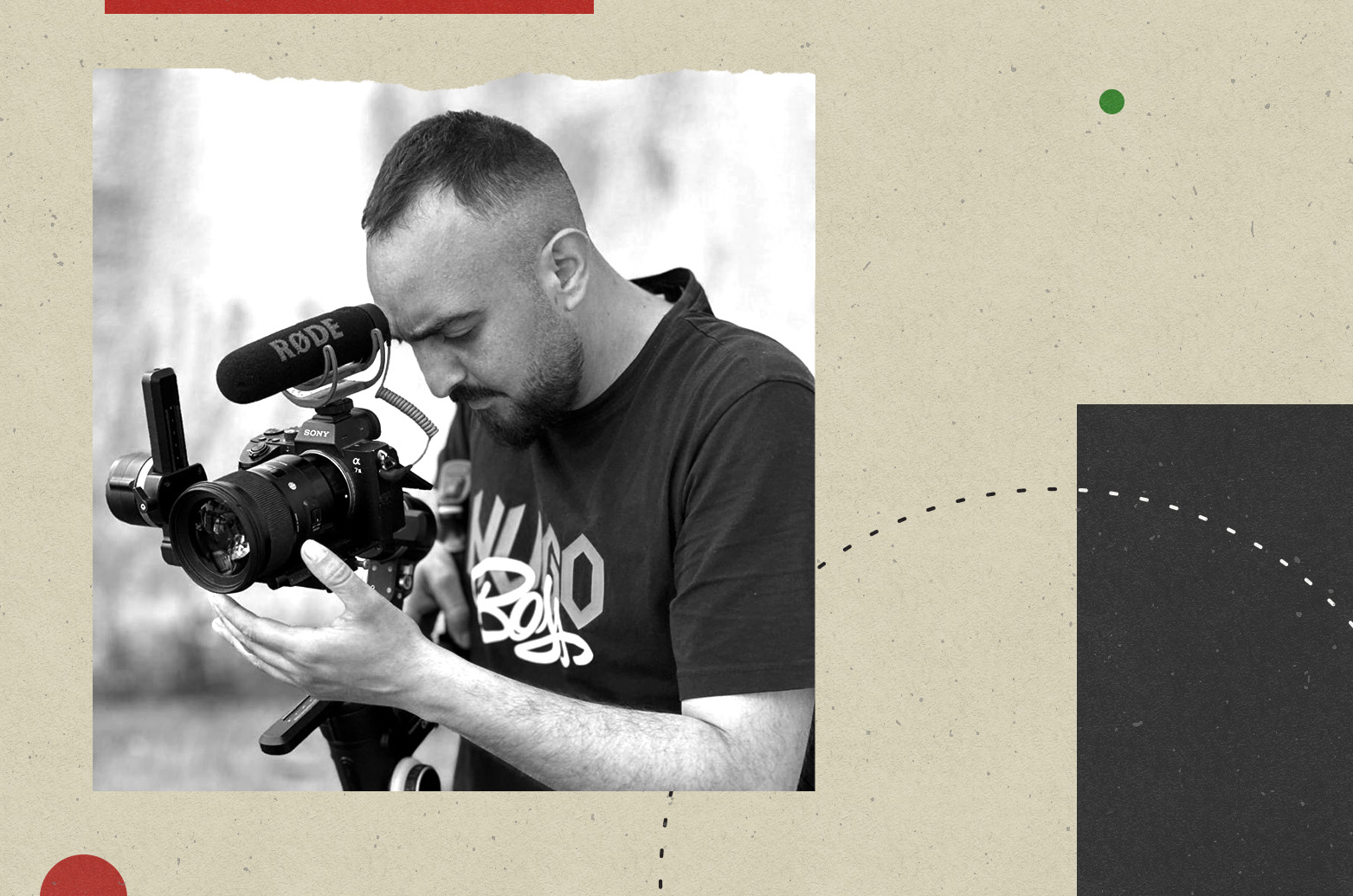
In a time of famine, when a bag carried home in Gaza might inspire hopes of flour, Saadi Madoukh once returned to his family looking unusually pleased with himself. “I found a treasure,” he told his wife, Sabreen.
She thought he had found food. Instead, Madoukh opened the bag to reveal two novels and some pens. He had discovered that the Samir Mansour bookstore was open and had bought books by one of his favorite Egyptian writers, Mohamed El-Gizawy. Even amid death and hunger, Madoukh, a Palestinian photographer and media producer, had found something worth celebrating.
Madoukh was killed in an Israeli strike on July 5, 2024, near his family’s home in the Al-Sahaba neighborhood of northern Gaza. He was thirty.
Four other young men were killed with him, according to his family. His mother, Lubna Madoukh, was seriously wounded in the strike and fell into a coma. She survived and was later evacuated to Egypt for medical treatment. Madoukh left behind Sabreen and their two young children, Mohammed and Lubna.
Madoukh had built his life around images and stories. He studied media and communication technology at the University College of Applied Sciences in Gaza and founded Deep Shot, a media production company. He photographed, edited, produced videos, and worked as a freelance camera operator for outlets including Al Jazeera and the Turkish state broadcaster TRT, according to the Committee to Protect Journalists. He also taught, offering workshops and freely sharing his skills with other photographers. One of the young men killed beside him was a twenty-year-old who had been studying photography with Madoukh. “He worked with great love and truly enjoyed what he did,” his mother said.
His generosity extended beyond his profession. More than sixty displaced people sheltered in Madoukh’s family’s home during the war, his mother said. Madoukh helped find water and food, and baked bread for his family and guests over a wood fire, even as hunger took a visible toll on his own body. At times, the family divided their bread so that each person received no more than one loaf a day. Madoukh lost considerable weight, but he did not complain, his mother recalled. “We must help those in need, and God will reward us,” she remembered him telling her.
Madoukh had opportunities to leave Gaza. Before the ongoing genocide, he had gone to Amman with Sol Band, a Palestinian music group founded in Gaza in 2012, and he hoped to continue traveling with the group to photograph and record their performances around the world. When the war began, his mother said, members of the band arranged to help him leave. But he refused to go without his parents, wife, and children.
Unlike others in Gaza, however, he pulled back from journalism. Sabreen said that several international news organizations approached him with work, but Madoukh preferred to stay close to his family and the displaced people living with them. He occasionally photographed humanitarian initiatives and documented children who had become emaciated because of the lack of food. He was not drawn to suffering for its own sake, Sabreen said. He preferred creating things.
Madoukh had known Sabreen for most of his life. They were cousins—their mothers are sisters—and they were born a year and a day apart, both in January. They grew up together, and both studied journalism and media. They married in 2018.
Sabreen described him as the person she trusted with her ambitions and decisions, but also as an unusually gentle husband. After complications from a congenital hip condition caused pain and affected the way she walked, she said, Madoukh took her from doctor to doctor, insisting on accompanying her himself. “He never once made me feel that my image had changed in his eyes,” she said.
He brought the same tenderness to fatherhood. When Sabreen wanted to meet friends, Madoukh would stay with the children. He took Mohammed to the sea and spoke of his son with evident pride. When doctors discovered that little Lubna had inherited her mother’s hip condition, Madoukh carefully tracked her treatment and accompanied her to medical appointments.
His mother knew another version of the same man. Madoukh was her only son, born after ten years of marriage. “Saadi was not just my son,” she said. “He was my friend, my beloved, my companion, my whole life.”
In happier times, he filled her house with friends, boasting that his mother made the best food. Lubna would cook pizza and Palestinian dishes. Once, when Madoukh was supposed to photograph an olive harvest, he took his family along instead. What might have been an ordinary assignment became a family outing, a memory that would become especially precious to his mother after he died. “He had a special ability to bring positive energy wherever he went,” Lubna said.
Books were another constant in Madoukh’s life. Lubna had encouraged him to read as a boy, and he avidly consumed novels. Even as bookstores closed or were destroyed, he searched for them.
One of the novels in his wartime bag of “treasure” was Blood and Milk. Madoukh liked to share books with Sabreen in a particular way: He would read to her aloud and pause to hear her reactions. “You have to read it,” he told her. “You’ll love it.”
A few days before his death, he posted a cryptic question on Facebook: “When does a hero die?” Sabreen didn’t understand it. On July 4, the couple marked their sixth wedding anniversary. In other years, Madoukh had celebrated with carefully chosen gifts and words. There was little possibility of that in 2024.
Still, early that morning, he turned to his wife. “Happy anniversary, my moon, my artist,” he told her. Artist was his nickname for Sabreen, who loved to draw.
The next day was a Friday. Madoukh and several young men who had been staying in and around his family home went out to play soccer. After the game, they gathered in a small hut beside the house. The hut was a popular meeting place, partly because it had something increasingly rare in Gaza: an internet connection.
Nearby, Lubna began heating water over a wood fire so her son could bathe. Sabreen and Madoukh were talking about their garden. Israeli bombardment had damaged it, but Madoukh had already begun preparing to plant again. He told her how much he wanted to see it green once more. Then came the air strike.
After his death, Sabreen and their children were displaced again. When they finally returned to the family home, it felt haunted by Madoukh’s absence. The younger Lubna eventually welcomed her grandmother and namesake home from the hospital. “Will my father come back like Grandma did?” she asked. Sabreen did not know how to answer.
She eventually found Blood and Milk, the novel Madoukh had asked her to read. About a month after his death, she opened it.
Only then, she said, did she understand the question he had posted shortly before he was killed. The novel’s hero endures despite the burdens and trials. For Sabreen, the question “When does a hero die?” finally had an answer.
“I believe that hero is Saadi,” she told me. “He is the hero of my heart, and a hero in the eyes of his children, his loved ones, and everyone who knew him.” She added, “He is a hero who never dies in our hearts.”
Iman Al-Shanti
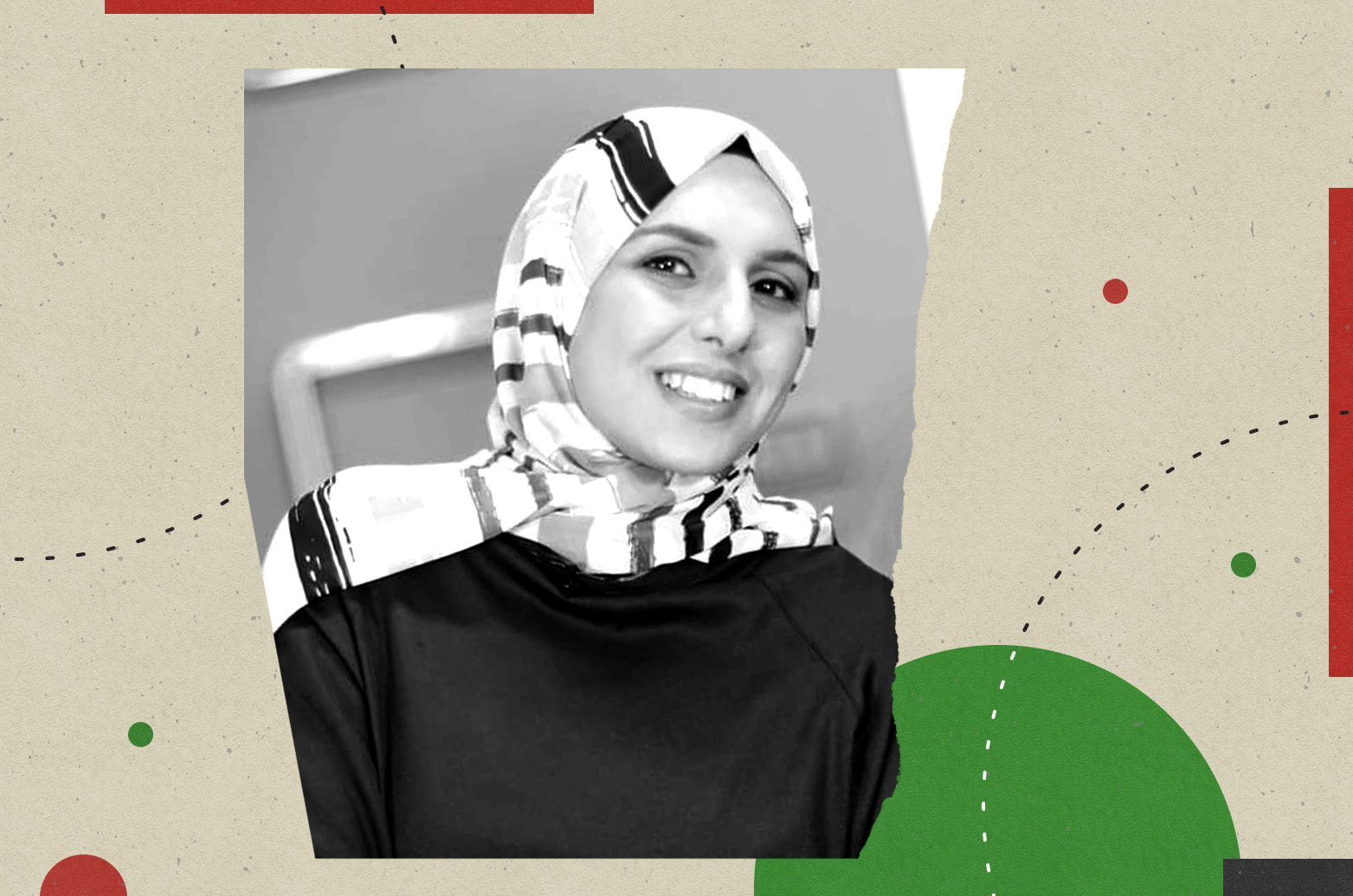
Iman Al-Shanti’s father tried to persuade her not to study journalism. But she built a career as a television presenter, writer, and producer, reporting from northern Gaza through war, displacement, and hunger—until she was killed in an Israeli strike on her home on December 11, 2024. She was thirty-eight.
Her husband, Helmi Abed, and three of their children—Bilal, fifteen; Omar, nine; and eight-year-old Alma—were also killed in the attack. Another daughter, Banan, who is fifteen, survived with critical injuries, according to Al-Shanti’s mother and sister, and they required long-term treatment.
As a girl, Al-Shanti read voraciously, often about politics and history, and excelled at school. The instincts that would eventually draw her into journalism were apparent early. Her mother, Ayda Al-Shanti, remembered a quiet girl who wrote elegantly and had a talent for leadership. At school and later at university, she organized and hosted events. “She was calm, yet a natural leader at the same time,” Ayda said.
After graduating from high school, Al-Shanti wanted to study agricultural engineering at the Islamic University of Gaza. But her father, Hatem, who had pursued a career in the same subject and worked at the university, objected. He predicted that Al-Shanti would excel in her classes, her sister Islam said, and he didn’t want anyone to think she was doing well because she was receiving preferential treatment. Journalism was another possibility, but Al-Shanti’s father rejected that, too. At the time, Islam said, Gaza was a conservative society, and journalism was considered a difficult and unconventional profession for a woman.
Al-Shanti studied physiotherapy instead, graduating with distinction. But she eventually entered the profession she had been discouraged from studying. She covered social issues and politics for Al-Aqsa Radio and Al Jazeera’s AJ+ platform, according to the Committee to Protect Journalists. She was best known for The Origin of the Story, a video program she shared on social media that highlighted Palestinian stories and conveyed the hardships Palestinians faced in their daily lives. She also made her mark reporting on social issues through Colorful Evening, a radio program she hosted on Al-Aqsa Radio. Her husband became her strongest supporter, Ayda said, helping Al-Shanti pursue a career while they raised their four children.
For six months before the war, Al-Shanti worked in Türkiye, leaving her children in the care of her husband and relatives in Gaza. She saw the separation, Ayda said, as part of her effort to draw international attention to the Palestinian cause.
By October of 2023, Al-Shanti was back in Gaza. She remained in the north and worked as a freelance journalist, determined, Islam said, “to be a voice for the voiceless.” The work worried her mother. Israel was killing journalists in Gaza, and Al-Shanti began receiving abusive and insulting messages in Hebrew on her phone, Ayda said. She repeatedly urged her daughter to stop reporting. Al-Shanti refused. She told her mother that she could not abandon Palestinians.
The war narrowed the distinction between the people Al-Shanti reported on and the life she was living herself. She struggled to find food, to travel, and to obtain basic necessities while continuing to work and raise her children. During a period of severe shortages, Ayda said, she baked bread using barley that was intended as animal feed.
She also devoted herself to helping others. Her most visible project was a free school she helped to establish in the Sheikh Radwan neighborhood in Gaza City for children whose education had been interrupted. But only after Al-Shanti’s death did her mother learn the extent of her charitable work. Her son Bilal helped her distribute water to displaced families. During the famine, Banan later told relatives, the family once received two trays of rice and chicken after going months with little food. Al-Shanti gave both trays to a friend and her children because she thought they needed the food more, Banan recalled.
Al-Shanti and her family had initially remained in their home in northern Gaza, but were temporarily displaced to a relative’s house after the bombings started. She soon grew worried, Ayda said, that because she was a journalist, her presence might put the relatives sheltering them at risk. She decided to return to her own house; her husband and children went with her.
“We want to die together,” her mother recalled them saying.
By late 2024, Ayda, Hatem, and Islam had moved to Egypt. Hatem suffered from liver fibrosis, which was worsened by upheaval and malnutrition. Islam, who has lupus, needed medical treatment that the family could no longer obtain in Gaza. The separation meant that Ayda and Al-Shanti relied on telephone calls.
On December 11, Al-Shanti called her mother from the family home, in Sheikh Radwan. Ayda thought something sounded wrong. Al-Shanti was exhausted, she told her. The warplanes and drones had been especially loud and close the previous night, and she had been terrified for her children. In previous conversations, she had sometimes asked Ayda to look after them if she were killed.
Ayda was returning from visiting a relative when they spoke. She told Al-Shanti she would call her back when she got home.
About seven minutes after their conversation ended, an Israeli strike hit the Al-Shanti family home in Gaza. Her mother called back, but got no answer.
A friend of Al-Shanti’s later told the family that she had been speaking with Al-Shanti when the house was bombed. Banan was pulled from the rubble, alive but severely injured. Al-Shanti’s parents and sister were still in Egypt when friends buried the rest of the family in the courtyard of the Sheikh Radwan clinic; months later, their remains were moved to a cemetery in Jabalia.
Even when Al-Shanti was a grown woman with a husband, four children, and a career of her own, “I still saw her as my little girl,” Ayda said. She remembered Al-Shanti at four years old, waking eagerly in the morning because she wanted to go to kindergarten and singing songs around the house. “I have lost my father, my mother, and my brother,” Ayda said. “But I never imagined that the pain of losing my daughter and her children would surpass every grief I have ever known.”
Ayda takes comfort in a place where her daughter is remembered, not through a photograph or a broadcast, but through children who continue to learn. The free school Al-Shanti helped establish in Sheikh Radwan has become part of her legacy. “I will always be proud of my daughter and everything she gave to Palestine,” Ayda said. The school, she added, “continues to operate to this day.”
Bilal Jadallah
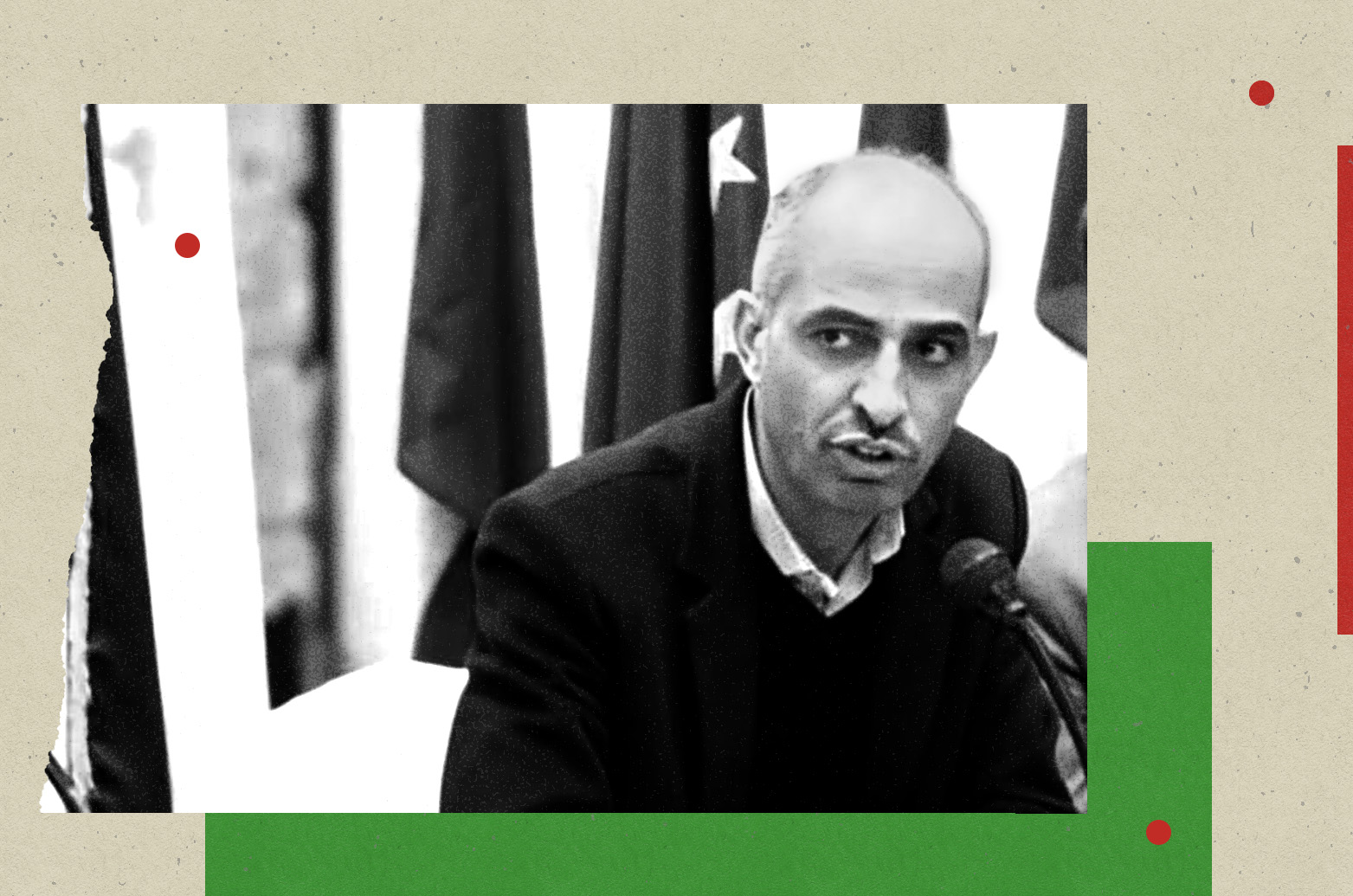
Bilal Jadallah, a Palestinian journalist who founded Press House in Gaza as a gathering place for reporters across political and ideological lines, and used his extensive connections to train and support a generation of young journalists, was killed by an Israeli drone on November 19, 2023. He was forty-five.
Jadallah was killed while trying to travel from northern Gaza to reunite with his family in the south. He was driving through the Zeitoun neighborhood of Gaza City with a relative when, according to his oldest son, Mohammad, their vehicle was attacked near Salah al-Din Mosque. Jadallah was killed immediately; the relative traveling with him was hospitalized and later died from his wounds.
Jadallah spent more than a decade building the institution with which his name would become closely associated. He founded Press House–Palestine in 2013, envisioning it as a place where a diverse group of Palestinian journalists could meet, work, and receive training. Press House “was a kind of sanctuary, especially in times of war,” Umar Farooq wrote for CJR in 2024. “It had reliable electricity and internet and, somehow, always seemed to be insulated from the conflict raging outside.”
Press House was more than a community hub for Palestinian and international journalists; it offered educational programs, psychological support, and financial assistance to help cover the costs of cameras and other equipment. On October 7, 2023, when Hamas militants invaded Israel, Press House handed out free flak jackets and helmets to a stream of journalists intent on covering the region’s latest conflict. Jadallah and his staff ultimately distributed more than eighty protective vests, and Press House staff worked in shifts to keep the electricity and internet running. They turned a conference room into a workspace for freelancers, and dozens of journalists gathered there with laptops and cameras to file stories, photos, and video.
“My father was deeply passionate about Press House,” Mohammad said. “Not just as a media center, but as a space for all journalists, regardless of their backgrounds, beliefs, or political affiliations.”
That principle mattered in Gaza, where political divisions have long shaped public institutions and the media. Jadallah developed a broad network of relationships with Palestinian and international journalists, and he used those connections to help others. When a Palestinian journalist was wounded during the Great March of Return protests in 2018, for example, Jadallah helped arrange for the man to travel abroad for medical treatment.
Jadallah had taken a circuitous path to journalism. Born on May 1, 1978, he studied English literature at the Islamic University of Gaza, graduating in 2000, and began his career with the Palestinian Authority. He rose through the ranks to become a director of media and international relations and later headed the Palestinian Center for Studies, a small organization that published news and political analysis and supplied material to news agencies in Gaza. He was also a member of the board of trustees of the University of Gaza.
Jadallah came from a family of journalists, and he recognized that the factionalized politics of Gaza and the West Bank created unnecessary problems for reporters. Tensions between Hamas and Fatah, which controls the West Bank, spilled over to the journalists covering them, “as reporters were viewed through their perceived allegiance to one faction or the other,” Farooq wrote. “For a journalist with the wrong kind of association, it was hard to obtain media credentials or even to cover a press conference. Jadallah wanted to break through that impasse.”
He aimed to make Press House “a forum for all media figures, opinion makers, and writers, so that they are all in one place, listening to each other and exchanging ideas,” he told a local television channel. “There will be no politics in this—Press House is open for all.” In 2014, Jadallah launched Sawa, a news agency that operated within Press House and offered fledgling journalists practical experience covering Gaza.
“He was giving space to anyone,” Seba Jaafarawi, a journalist and social media activist from Gaza who worked at Sawa early in her career, told CJR in 2024. “He was saying if you want internet, if you want space to work, come to Press House, it’s free and it’s open to you, regardless of your position. Instead of just focusing on the big journalists, Bilal was focusing on new journalists, on freelancers, on university graduates.”
Jadallah could be exacting. Running an organization required a firmness that his children recognized as part of his professional personality. With his family, however, he was mellower. “When he came home, he would leave his managerial role behind,” Mohammad said.
Jadallah was a father of five—three sons and two daughters—whom he treated as his children, but also as friends. He took a close interest in their education and made time for whatever subjects appealed to them. For Mohammad, that was history. He and Jadallah spent hours discussing the long-standing conflict between Palestine and Israel, and how journalism could make a difference in the pursuit of justice. Jadallah taught him what he knew, Mohammad said, encouraged his curiosity, and took his interests seriously.
But some of the family’s strongest memories of Jadallah have little to do with journalism or history. He loved the garden around his home, where he tended the plants, flowers, and trees himself, resisting suggestions that someone else should do the work. He could spend hours caring for his plants, Mohammad recalled, “as if he were caring for small children.”
He also loved the sea and took long walks along the beach, sometimes with Mohammad, sometimes with his wife or a friend.
His youngest child, Omar, was only eighteen months old in October of 2023. At the time, the family had an opportunity to leave, Mohammad said. On October 8, Jadallah urged his wife and children to go to Egypt or Qatar while he remained behind to continue his work. But they refused to leave without him.
On October 9, an air strike hit a nearby telecommunications building, and shrapnel from the explosion broke windows and doors and caused a power outage at Press House. When Israel ordered residents of northern Gaza, where Jadallah and his family lived, to evacuate to the south, the family separated. Jadallah’s wife and children went south, while he stayed in northern Gaza. He left his home, which was in a relatively dangerous area, and moved into Press House. As Gaza City grew more perilous, some journalists and Press House staff joined Jadallah. They would leave to check on their families and return to continue working, sleeping on mattresses laid on the floor between their desks.
Whenever circumstances allowed, Jadallah visited his family. The last time they saw him was October 29, 2023. That day, Jadallah, who had come south for a visit, was injured while trying to return north, Mohammad said. An Israeli strike hit the road nearby, and in the confusion, another car rear-ended Jadallah’s vehicle. Jadallah was wearing his press vest and helmet, which offered him some protection, but he was bruised and suffered a minor head wound, Mohammad said. As movement between northern and southern Gaza became increasingly dangerous, Jadallah stopped visiting. For a man whose professional life had been built around gathering facts, the collapse of Gaza’s communications network created a particularly painful kind of isolation. Telephone and internet blackouts sometimes made it impossible for his family to find out whether he was safe. Jadallah, in turn, struggled with uncertainty about what was happening to his wife and children in the south.
The violence and privation in Gaza affected his work in more ordinary ways, too. Fuel became scarce, forcing him to walk long distances, and food grew increasingly difficult to find. Jadallah rarely talked about his own fears, yet he understood the risks he and other journalists faced. He had contributed to a Committee to Protect Journalists report published in May of 2023 that documented the killing of twenty journalists by Israeli military fire, over more than two decades, for which no one was held accountable. “As for threats, I do not know whether he received any,” Mohammad said. “He never shared his fears or the difficulties he faced with us.”
His restraint was characteristic. Even as death closed in on him, his conversations with his children remained focused on them. What troubled Jadallah most, Mohammad said, was being separated from his family.
On November 18, 2023, Israeli forces attacked the area around Hamad Towers in Khan Younis, southern Gaza, where Jadallah’s family was staying. Jadallah called Mohammad. He wanted to know whether they were safe.
Mohammad had been asking his father to come south. That day, he asked again. On November 19, Jadallah set out. His car was struck at about 1:30 in the afternoon.
He was initially buried in Sheikh Radwan Cemetery in Gaza City. His family later moved his remains to a cemetery in Jabalia, north of Gaza City, because, Mohammad said, they feared the grave might be disturbed during Israeli military operations.
The relative traveling with Jadallah was taken to the Indonesian Hospital. “We understand that he later died there,” Mohammad said. “However, Israeli forces entered the hospital either that same night or the following morning, and the family does not know what happened after that.” News of Jadallah’s death reached his family in the south through one of his brothers. Mohammad was the first of his children to be told. Then came a task for which no father could have prepared his son: Mohammad had to tell the rest of the family.
Omar’s memories of his father are largely inherited. Now four and a half years old, he was too young when Jadallah was killed to retain the kind of memories his older siblings have—the conversations about history, the walks by the Mediterranean, the sight of their father spending hours tending and watering the plants in his garden.
His family tries to supply Omar what fate denied him. They show him photographs of his father and tell him stories about the man he sees in them. They want Omar to grow up knowing who his father was.
Press House did not survive Jadallah for long. In late January of 2024, Israeli forces in Rimal fired bullets and shells at the building for several days, Mohammed Salem, a former finance manager at Press House who was sheltering there with his family, told The Guardian. On February 10, Salem returned to find the entire building demolished. The cameras, laptops, notebooks, and other remnants of the organization Jadallah had built lay buried beneath the wreckage.
Montaser Al-Sawaf
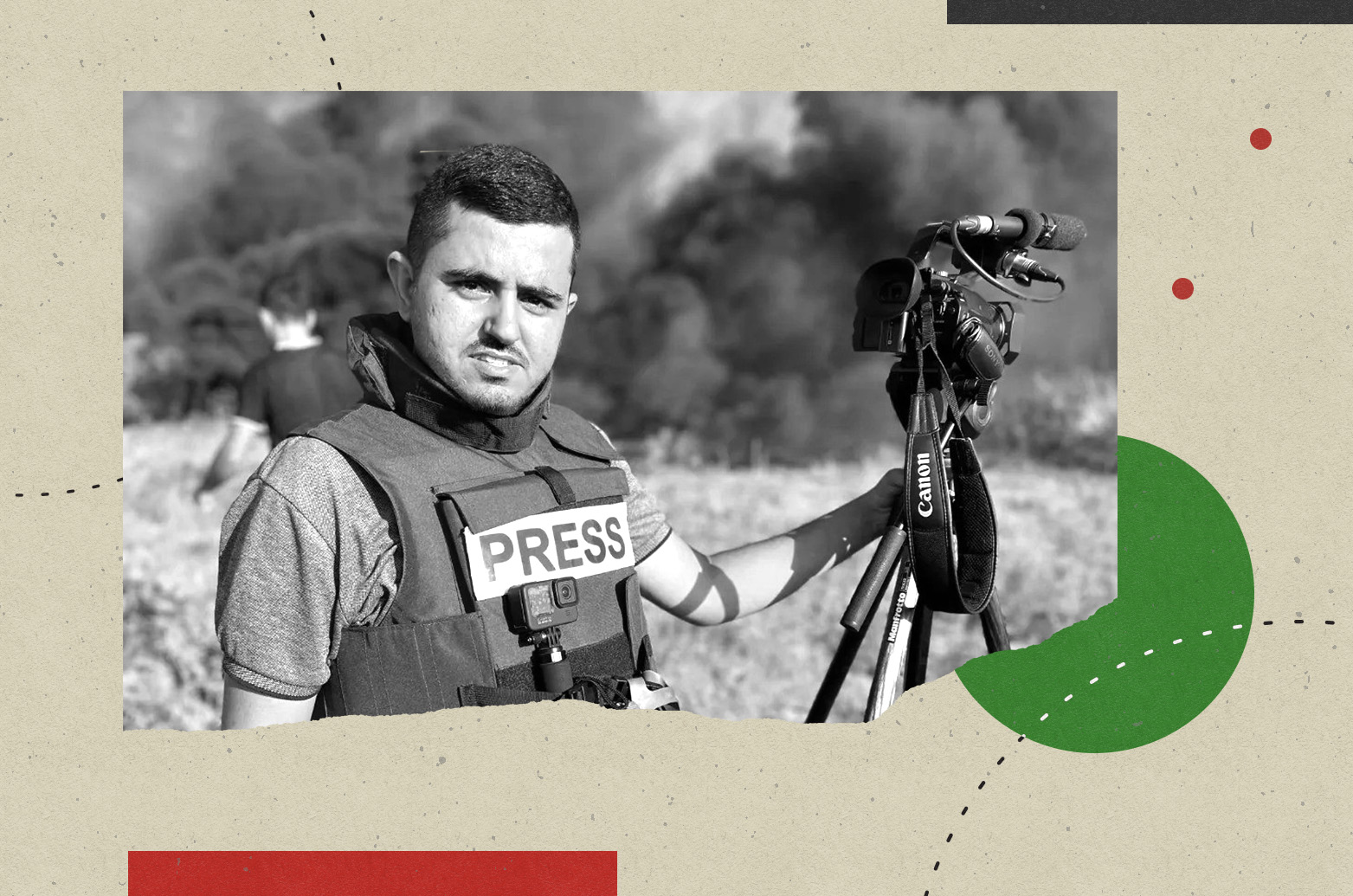
An Israeli air strike killed Montaser Al-Sawaf’s parents, two of his brothers, and many members of his extended family. But Al-Sawaf, a Palestinian photojournalist who had spent nearly a decade documenting Gaza, continued working. Then, on December 1, 2023, he too was killed by an Israeli strike, at the age of thirty-one.
Al-Sawaf, a photographer for the Anadolu Agency, a Turkish state-run news service, was killed in Gaza City alongside his brother Marwan, who was also a journalist. Al-Sawaf is survived by his wife, Alaa Rajab, and their two children, Sarah, who was seven when he died, and Ezz El-Din, who was six.
Al-Sawaf had joined Anadolu in 2014, shortly after graduating from Al-Aqsa University in Gaza. Mohammed Dahlan, a photojournalist at the agency who trained Al-Sawaf, recalled sending him into the streets of Gaza as a tryout. The photographs were good, Dahlan said. But “what impressed me most was his complete willingness to learn.”
That willingness was tested almost immediately. During the 2014 war in Gaza, Al-Sawaf worked both in the field and in the office under bombardment, while also attending to the practical difficulties of keeping a newsroom functioning in the midst of conflict. He found alternative electricity sources, made sure batteries and cameras were ready, and helped secure food and water for the staff. “He was courageous, proactive, and strong in character,” Dahlan said.
Four years later, Al-Sawaf photographed the Great March of Return protests along Gaza’s boundary with Israel. On September 24, 2018, he was working near the Zikim area in northwest Gaza when a bullet struck his camera and an Israeli tear gas canister hit his left foot. He suffered bruising and a muscle injury, and was treated at Al-Shifa Hospital, Dahlan said, but he kept taking photographs.
Photography had fascinated Al-Sawaf since childhood. He came from a family of journalists and studied media at Al-Aqsa. His brother Mohammed founded Alef Multimedia, according to the Committee to Protect Journalists, where their brother Marwan also worked.
Away from his camera, Al-Sawaf was an enthusiastic cook who liked preparing dishes his family associated with restaurants—chicken in creamy sauces. He organized barbecues and invited his brothers’ children to eat with him. Birthdays mattered to him, especially those of his nieces and nephews, and he sometimes made their presents himself, including beaded bracelets for the girls. “He brought joy to our homes,” Mohammed said.
Al-Sawaf also loved cats, and set out food for strays, Mohammed said, even when it became scarce. He was a devoted father to Sarah and Ezz El-Din. Before the war began, he and his wife had lost a child, Yousef, who died from an illness at six months old, devastating Al-Sawaf. In October of 2023, Al-Sawaf remained in northern Gaza to document the attacks, even as his family were displaced from their home in Sheikh Ajleen, west of Gaza City. They moved to his grandfather’s house farther east, while Al-Sawaf kept working.
His photography became as much a logistical challenge as a journalistic one. Al-Sawaf sometimes walked or traveled long distances by donkey-drawn cart to find an internet connection so he could submit his pictures to his editor. “He believed that journalism is a mission, not merely a profession,” Mohammed said.
The air strike that killed his family hit on November 17, 2023. His family estimates that around forty relatives died in the attack. Al-Sawaf suffered severe injuries to his face but survived. Mohammed was also wounded and left unable to move for eight weeks. With Gaza’s health system under severe strain, a cousin who was studying nursing began caring for Mohammed. A temporary ceasefire between Israel and Hamas began on November 24—but it ended a week later. On December 1, as Israeli bombings resumed, Al-Sawaf was with his brother Marwan in the Al-Tuffah neighborhood, among the remains of the house where their family had been staying. After the Asr prayer in the late afternoon, the two men headed on foot for Al-Ahli Hospital, Mohammed said, where they hoped to find an internet connection to send their photos to editors.
An Israeli air strike hit them as they walked, Mohammed said. Marwan was killed instantly. Al-Sawaf was gravely wounded and bled for about half an hour before being taken to Al-Ahli Hospital, where he died. Several others were killed in the strike, Mohammed said, including the nursing student cousin who had been caring for him.
Al-Sawaf’s death came almost a decade after Dahlan watched a recent university graduate walk into Anadolu and begin learning the craft that would become his career. Over those years, Dahlan had watched him develop from a young photographer into a trusted colleague during some of Gaza’s most difficult moments. He attended Al-Sawaf’s wedding, and during the final weeks of Al-Sawaf’s life, when both men were working under bombardment in different parts of Gaza, Al-Sawaf would brave air strikes to visit Dahlan, who was working in a tent used by journalists near Al-Shifa Hospital.
“He would come to check on me, and we would discuss work-related matters,” Dahlan said. “I witnessed his achievements and his dedication to mastering the skills of photojournalism. Losing him has not been easy at all.”
Moamen Abu Al-Ouf
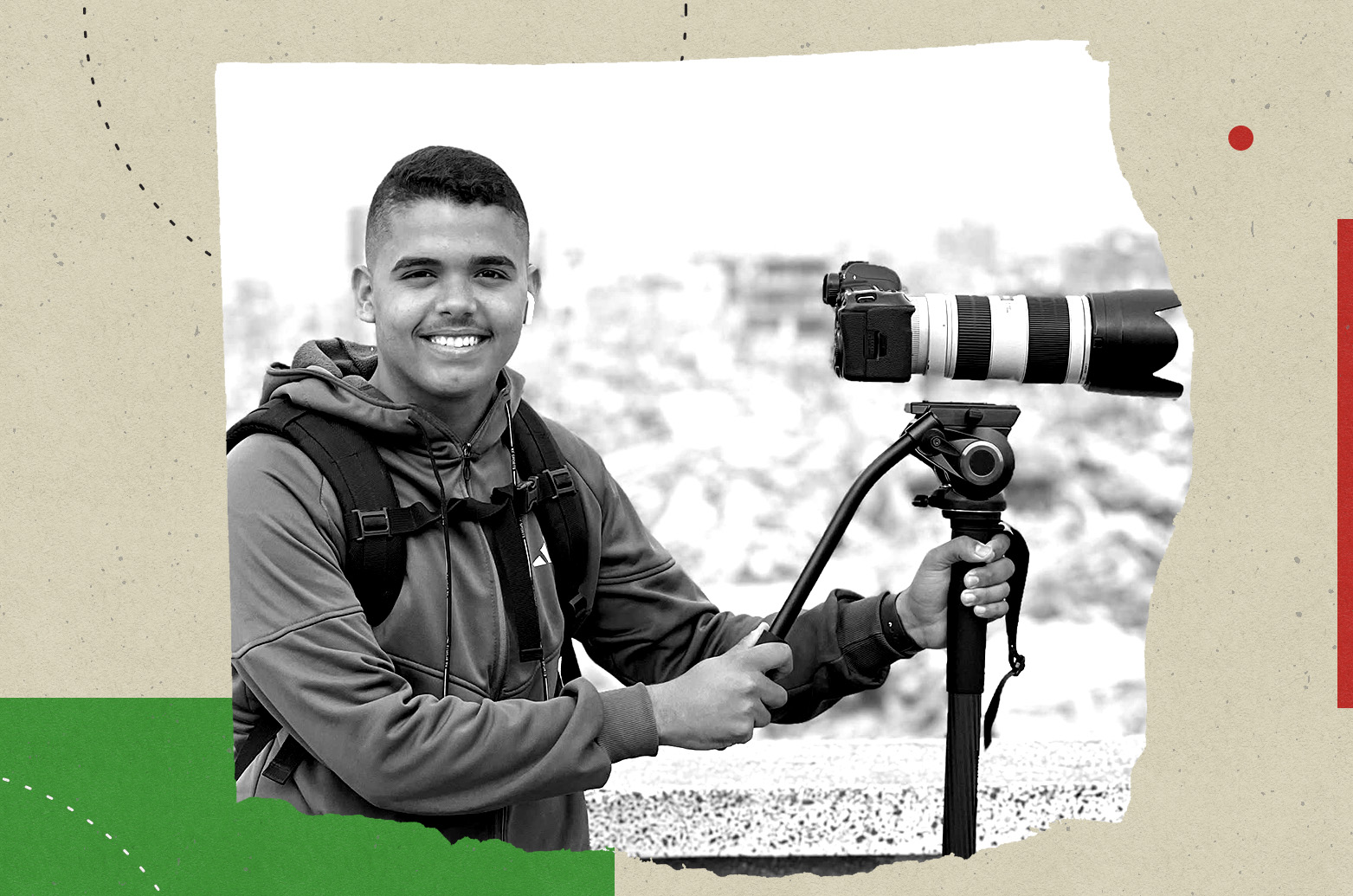
Moamen Abu Al-Ouf was still in high school when he began documenting the war in Gaza. He learned his craft by accompanying ambulance crews as they raced to the scenes of Israeli attacks. He was killed on June 9, 2025, while photographing the aftermath of an Israeli air strike in Gaza City, at the age of nineteen.
Al-Ouf was working alongside paramedics in the Al-Tuffah neighborhood when Israeli tank fire struck the area, according to his older brother, the journalist Majd Abu Al-Ouf. He was severely wounded and died shortly afterward at Al-Shifa Hospital. Three paramedics were also killed.
Amid older and more experienced journalists, Al-Ouf stood out for his instinctive desire to help. Osama Al-Ashi, a Palestinian film director and producer, met Al-Ouf at the Indonesian Hospital in Jabalia, in northern Gaza, early in the conflict. Many journalists had fled south by then, leaving few to document what was happening in the north. Al-Ashi was filming for a documentary, Gaza Doctors Under Attack. He had no assistant and, not being from the neighborhood, was unfamiliar with the hospital and its surroundings. Al-Ashi did not ask Al-Ouf for help, he said. Al-Ouf offered it all the same.
Al-Ouf showed Al-Ashi around, helped with the filming, and asked for nothing in return. It was the beginning of a friendship in which Al-Ashi found himself mentoring a young man whose professional life was taking shape in the midst of extraordinary violence. “He was passionate, ambitious, eager to learn,” Al-Ashi said.
Al-Ouf grew up in the Jabalia refugee camp. He had been an excellent student, his brother Majd said, and continued memorizing portions of the Quran even as the war upended ordinary life.
But events in Gaza increasingly drew him away from his studies. He volunteered at the Indonesian Hospital and spent long stretches accompanying ambulance and civil defense crews. According to his brother, he later freelanced for Al Jazeera and the Anadolu Agency, a Turkish state-run news service. His main reporting tool was his phone, which he used to record videos and take photographs of Israeli strikes, rescue efforts, and the impact on civilians, and to share his reporting with the organizations he worked for and on social media.
Getting his work out of Gaza presented challenges. Internet and electricity failures were frequent, transportation was scarce, and cash became difficult to obtain, so Al-Ouf and other journalists improvised by using eSIMs donated by people abroad. When local networks were down, the eSIMs could sometimes connect to foreign networks through roaming, allowing journalists in Gaza to get online and send photographs, videos, and news updates to their outlets. A few days before Al-Ouf’s death, Al-Ashi mentioned that he needed footage shot at night but did not want to leave his family. Al-Ashi was his parents’ only son, and preferred to remain close to them after dark. Al-Ouf offered to go in his place.
“Don’t worry, I’ll get you the footage you need,” Al-Ashi recalled him saying. “I’ll even learn how to use the camera.”
He borrowed Al-Ashi’s camera, which he did not normally use, and returned with astonishing footage. Al-Ashi was convinced that he was witnessing the beginning of a promising career. He had started working as a photojournalist when he was a teenager during the 2014 war in Gaza. “I felt as though he was a younger version of me,” Al-Ashi said. “I believed he would one day reach great heights and become internationally known in this field.”
Al-Ouf’s work took him repeatedly to the aftermath of Israeli strikes, often alongside the first people arriving to search for survivors. At times, Al-Ashi said, he put his phone aside and helped paramedics and civil defense workers pull people from the rubble. “We do not want to die in silence,” Al-Ashi recalled Al-Ouf saying.
His dedication to telling Gazans’ stories nearly killed him. While covering the violence, Al-Ouf was wounded in the abdomen and Majd was left with three pieces of shrapnel lodged in his brain. The brothers were hospitalized for days—but soon returned to work. During severe food shortages, Al-Ouf was hospitalized for weight loss.
All the while, he was known for his tenderness toward his mother and younger siblings, Jana and Mujahid—a recurring subject of conversation among his fellow journalists. Al-Ashi recalled standing one day with Anas Al-Sharif, Islam Badr, and Mahmoud Shalha, three other Gaza journalists, when Al-Ouf passed by and greeted them. After he walked away, Badr remarked on his politeness and generosity.
Al-Ouf worked with foreign medical teams visiting Gaza. Working with foreigners gave him the chance to build a wider professional network and, his brother said, he wanted to represent his country well in his interactions with people from abroad. Al-Ouf photographed and filmed the delegations and was delighted when doctors he had met continued checking on him after they left.
As Al-Ouf gained experience, his work began reaching audiences far beyond Gaza. Footage he posted after an Israeli attack on the Fahmi Al-Jarjawi School in May of 2025 that killed at least thirty-six people, including many children, was viewed nearly twenty-eight million times on Instagram, and received more than seven hundred and fifty thousand likes. He believes Al-Ouf’s increasingly visible reporting and online presence may have contributed to making him a target.
On June 9, Al-Ouf went with ambulance and civil defense crews to Al-Haddad Tower on Yaffa Street in the Al-Tuffah neighborhood, where an Israeli attack had been reported. While the emergency workers were at the scene, Majd and Al-Ashi said, the area was struck again.
After learning that his friend had been hit, Al-Ashi went immediately to Al-Shifa Hospital. Doctors told him that Al-Ouf had arrived alive, but his wounds were critical.
Al-Ouf had contemplated the possibility of dying. In a final WhatsApp message, his brother recalled, Al-Ouf wrote: “Take care of my mother and don’t let her cry if I am martyred. Take care of Jana and Mujahid.” Al-Ouf also told his family that if he were killed, they should give his phone to their mother because she had lost hers. “But after he was killed, we never found his phone,” Majd said.
Al-Ashi still finds it difficult to reconcile Al-Ouf’s death. He had expected to watch the teenager grow into an accomplished photographer. He remembers the young man who learned to use a new camera in a matter of days and talked hopefully, amid loss and death, about his future career.
And he remembers the shawarma: he and Al-Ouf joked about the meal they would have when chicken returned to Gaza. At one point, Al-Ashi made his young friend a promise: when chicken became available again, he would buy him shawarma.
Months passed. Eventually, they found it, and the two ate shawarma together. Al-Ashi still has the photograph a friend took of them that day.
Has America ever needed a media defender more than now? Help us by joining CJR today.