요약
As AI agents evolve from answering questions to spending real money, investors and tech giants are scrambling to control the financial networks powering machine-driven commerce.
본문
MarketsCathie Wood says smart investors need to start watching where AI agents spend moneyAs AI agents evolve from answering questions to spending real money, investors and tech giants are scrambling to control the financial networks powering machine-driven commerce.
작성자 Helene Braun, AI Boost|편집자 Cheyenne LigonOct 3, 2026, 11:00 a.m. EDTAI 번역4 분 읽기Make preferred on 이 기사 공유하기X iconX (Twitter)LinkedInFacebook이메일
- AI agents are moving beyond answering questions toward taking actions and spending money, raising new questions about what financial infrastructure they will use.
- Stablecoins and blockchains could become payment rails for agents buying data, computing power and other digital services, according to experts.
- The emerging battle is over whether agentic finance develops on open networks or becomes concentrated among a small number of banks, payment providers and technology platforms.
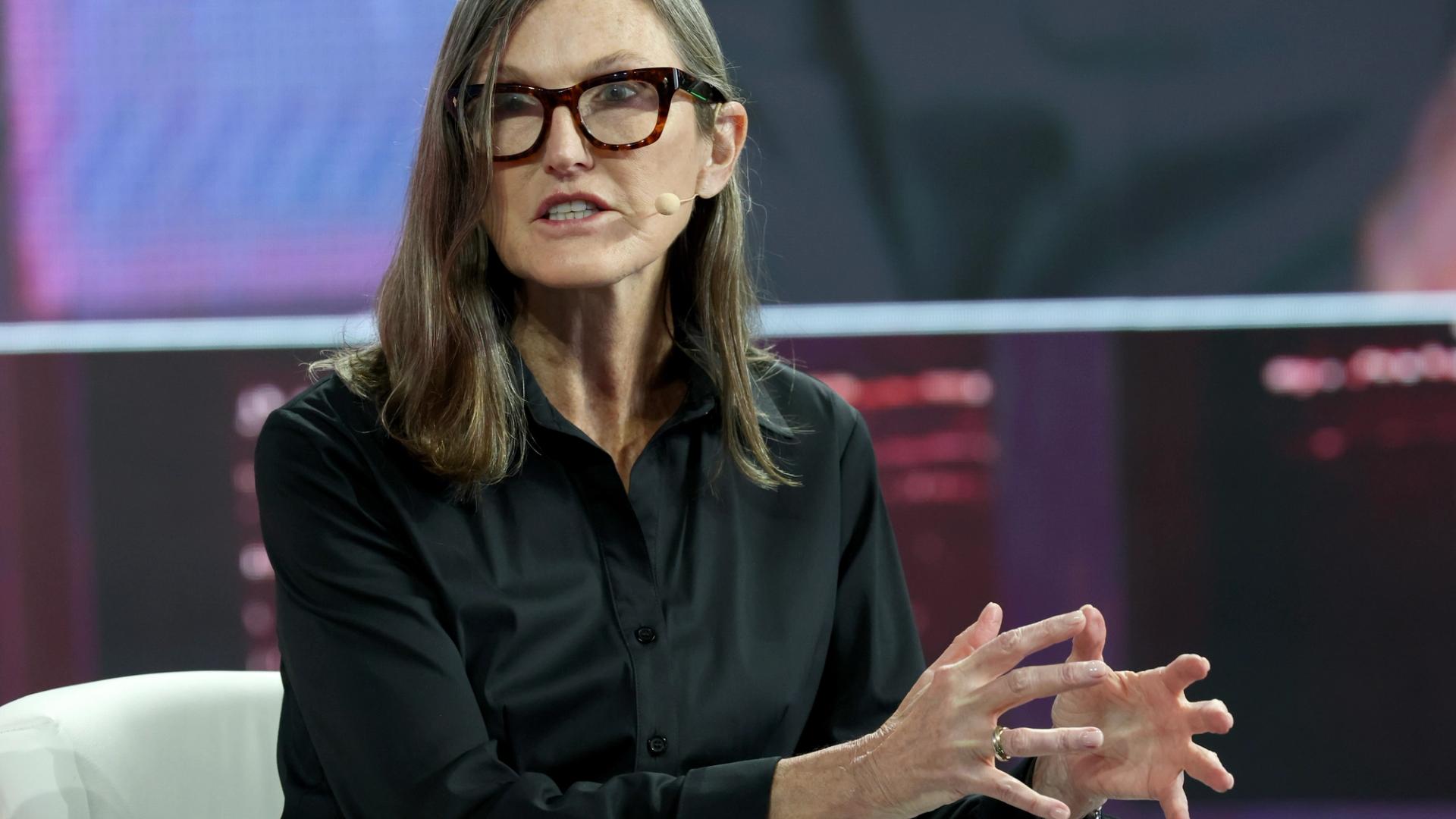
Cathie Wood has spent years telling investors to “follow the developers” when trying to figure out where technology is headed next. Now the ARK Invest CEO thinks investors may need to follow something else: the agents.
“We’re probably going to be talking more and more about ‘follow the agents,’” Wood said during a panel at Robinhood’s Summit in Houston on Wednesday. She was referring to AI agents, software that can carry out tasks on a person’s behalf rather than simply answering a question or generating text.
Wood's comment was brief, coming near the end of a wider discussion about AI, private markets and technology investing. But it points to a question that is becoming more important as companies race to build AI agents: What happens when AI stops simply giving people answers and starts spending their money?
Developers have long helped show which technologies are gaining momentum because engineers tend to gravitate toward tools they find useful. If millions of AI agents begin making their own choices about which software, services and networks to use, their activity could offer another way to see where demand is going.
But those agents will also need a way to pay.
In a post last month, Joseph Chalom, co-CEO of SharpLink and the former head of digital assets at BlackRock, argued that the financial system used by AI agents should not end up controlled by a small number of banks or technology companies.
“A world full of intelligent agents means nothing if a handful of companies decide where your money can go,” Chalom wrote in the final installment of a three-part series on agentic finance.
The issue, in Chalom's view, isn't simply whether an AI agent can spend money. It's how much power people give that agent and who controls the financial system behind it. A person might authorize an agent to spend up to $500 booking a hotel, for example, without giving it unlimited access to a bank account. The user should also be able to cancel that authority and see a record of what the agent did.
Chalom also argued that people should be able to move their agents between financial providers rather than becoming locked into one company's system. An agent should be able to carry its identity, financial information and permissions to another provider in much the same way a person can take a phone number from one carrier to another.
뉴스레터
Crypto Daybook Americas - The latest moves in crypto markets, in contextMarket analysis for crypto traders and investors.Preview가입하면 CoinDesk 제품에 대한 이메일을 받게 되며, 당사의 terms & conditions and 개인정보 보호정책.That's where he sees a role for crypto.
Chalom said open blockchains such as Ethereum ETH$2,697.35 could provide a common financial network that different agents, apps and companies can use. Instead of every AI company building its own closed payment system, agents could move money across a shared network without needing one technology company or bank to sit in the middle of every transaction.
That also gives Wood's idea of “following the agents” a financial dimension. If agents begin carrying out more tasks on their own, investors could watch not only which AI models and software they choose, but also how they pay for things and which financial networks they use.
BlackRock made a similar connection in a September paper examining the overlap between AI and digital assets. The asset manager argued that AI agents could create new demand for payment systems built for machines. An agent might need to pay for an API call, buy data from another service or rent computing power, all without waiting for a person to approve each transaction.
Stablecoins and blockchains could be one way to handle those payments, BlackRock said.
Stablecoins can move around the clock, while blockchain-based payment protocols can let software send small payments directly to other software. Coinbase's (COIN) x402, for example, is designed to let machines pay for online services such as data or API access.
There are already signs of agents showing up in other parts of crypto. Coinbase CEO Brian Armstrong said on X that “Grok is the leading client for agentic traders on Coinbase currently,” though he did not provide figures or further details on the activity.
Crypto won't have that market to itself. Stripe, Visa, Google and OpenAI are among the companies developing ways for agents to make purchases, and BlackRock said traditional payment systems will remain important.
That competition could make Wood's advice to “follow the agents” especially relevant for crypto investors. If AI agents become major economic actors, watching where they transact could offer a new way to measure whether stablecoins and blockchains are gaining real-world use or whether most agent activity stays on traditional payment networks.
Artificial IntelligenceAI Disclaimer: Parts of this article were generated with the assistance from AI tools and reviewed by our editorial team to ensure accuracy and adherence to our standards. For more information, see CoinDesk's full AI Policy.Related AssetsEthereum$2,697.350.50% Latest Crypto News
 - 1Crypto poured years into new products. The next challenge is keeping users1 hour ago
- 2The Clarity Act stalled. Bankers aren’t hitting the brakes yet on crypto dealmaking2 hours ago
- 3Payments firm OpenPayd targets year-end Nasdaq listing to fund U.S. expansion and acquisitions23 hours ago
- 4Crypto job postings triple to over 1,200 in September, but applications fall23 hours ago
- 5Crypto's Sisyphean struggle1 day ago
- 6BlackRock offers a glimpse of how tokenization may change your investment portfolio1 day ago
- 7Bank group sues U.S. regulator over granting crypto trust charters1 day ago
- 8BNY in talks with Kraken parent Payward over infrastructure partnership1 day ago
- 9Once a $2 billion Ethereum layer-2, Blast is shutting down after assets plunge 98%1 day ago
- 10Trump’s potential AI czar, Jay Clayton, helped pioneer the SEC’s crypto crackdown1 day ago
 Latest Research
 The Definitive Stablecoin Landscape Series: Asia Pacific

The Definitive Stablecoin Landscape Series: Asia Pacific
As stablecoins move into regulated finance, APAC is becoming a key proving ground. This report maps the region’s rules, use cases, and RLUSD’s role.
By CoinDesk ResearchSep 15, 2026Commissioned byRippleAs stablecoins move into regulated finance, APAC is becoming a key proving ground. This report maps the region’s rules, use cases, and RLUSD’s role.
Why it matters:
As stablecoins move into regulated finance, APAC is becoming a key proving ground. This report maps the region’s rules, use cases, and RLUSD’s role.
View Full ReportMore From Markets
U.S. added just 29,000 jobs in September, with unemployment rate rising to 4.2%

Crypto traders are in risk-on mode as bitcoin dominance nears return to 60%

Bitcoin open interest jumps $2.3 billion as traders pay more for bullish positions
More From Ethereum
Crypto poured years into new products. The next challenge is keeping users

The Clarity Act stalled. Bankers aren’t hitting the brakes yet on crypto dealmaking
