요약
David Ayer talks to Military.com about Brad Pitt, military authenticity and rejecting the “broken veteran” stereotype in ‘Heart of the Beast.’
본문
Follow Followed Add us on
 By
Douglas Lindsay
Published Sep 21, 2026, 3:00 AM EDT
Sign in to your Military.com account
By
Douglas Lindsay
Published Sep 21, 2026, 3:00 AM EDT
Sign in to your Military.com account

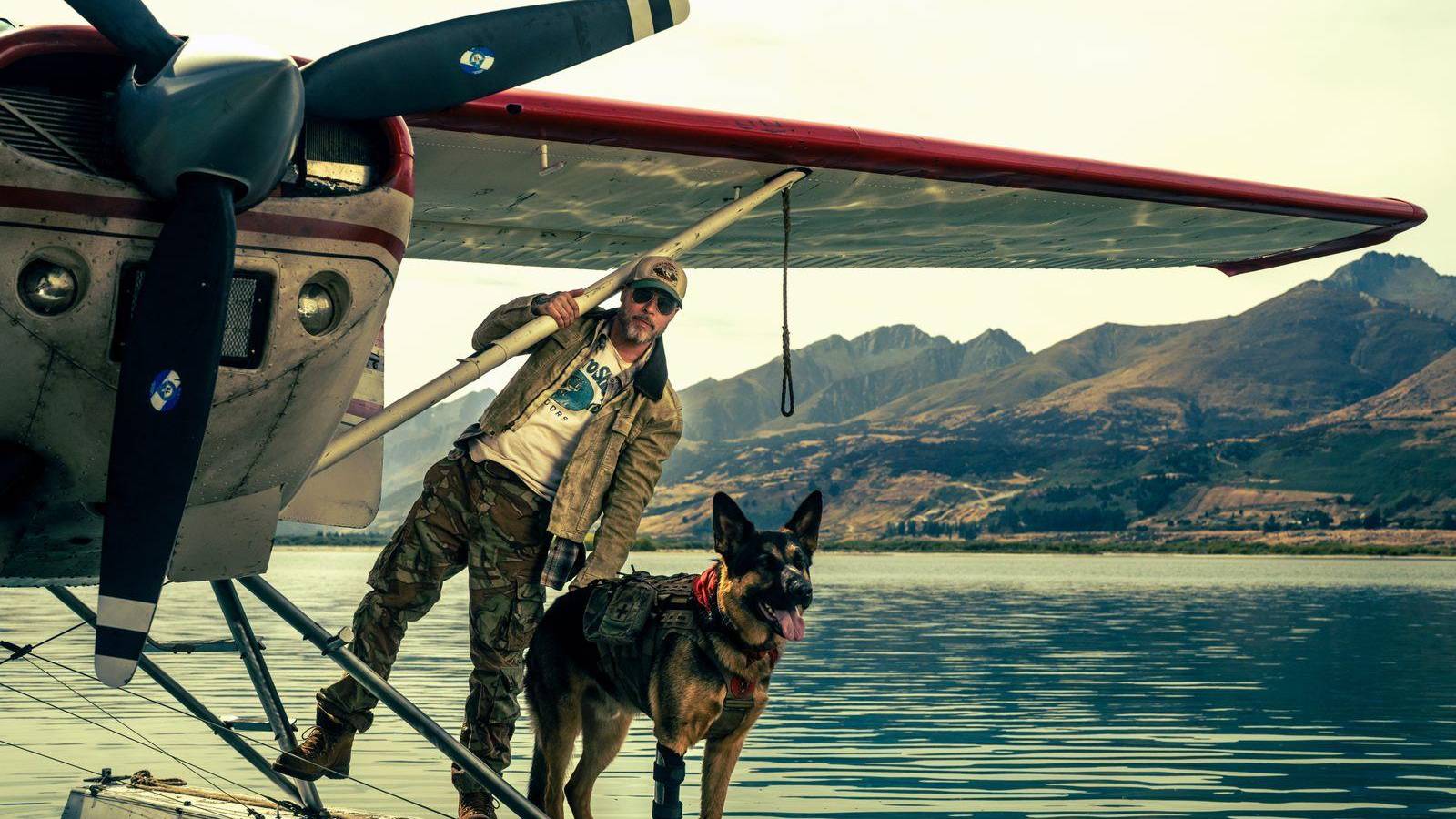
David Ayer’s new survival thriller begins with a brutally simple premise: A retired Special Forces soldier, his combat dog and a plane crash that leaves both stranded deep in the Alaskan wilderness.
But for Ayer, “Heart of the Beast” is about more than whether James Belmont, played by Brad Pitt, and his dog, Odin, can survive the cold, their injuries and a landscape filled with predators.
It is also about what happens after someone has spent decades surrounded by military purpose and community and suddenly has to figure out who he is without them.
Ahead of the film’s Sept. 25 theatrical release, Ayer sat down with Military.com to discuss “Heart of the Beast,” his own Navy service and why he deliberately rejected the familiar portrayal of the “broken” veteran for Pitt’s character.
“I didn’t want the sort of broken soldier version of this,” Ayer told Military.com. “I wanted the thoughtful, intelligent, capable soldier.”
For Ayer, that distinction is central to what “Heart of the Beast” is trying to say about service.
I’ve seen that pattern where, after the intensity of serving in GWOT, then recalibrating, figuring out who you are on the other side of the fence, who you are in the civilian world, Ayer said. There’s something beautiful about that journey, and it’s something I wanted to share in the film.

A Man, a Dog and the Wilderness
Written by Cameron Alexander and directed by Ayer, “Heart of the Beast” stars Pitt as James Belmont, a 30-year Army Special Forces veteran who ventures into the wilderness with Odin, his retired combat dog. After their plane crashes, the two must depend on each other as they confront serious injuries, unforgiving terrain and a pack of wolves.
The movie reunites Ayer and Pitt more than a decade after “Fury,” the 2014 World War II film in which Pitt portrayed Army tank commander Don “Wardaddy” Collier.
Unlike the five-man tank crew at the center of “Fury,” however, “Heart of the Beast” strips the story down largely to one man and one dog.
Ayer described it simply during his conversation with Military.com: “It’s a man, a dog, the wilderness.”
That simplicity allows the movie to focus closely on Belmont, a veteran whose military experience has made him extraordinarily capable but who is also carrying the emotional weight of people and moments he left behind.
Asked by Military.com about the familiar portrayal of veterans as damaged or “broken,” Ayer said that was precisely the kind of character he did not want Belmont to become.
For civilian folks out there, they don’t necessarily understand the price of service, Ayer said. When you serve, you have an amazing community. You have an amazing family. You have your brothers and sisters downrange, incredible memories.
But some of those memories can remain with service members long after they leave the military. “One of the things that can haunt service members is those moments where they feel they didn’t do enough, or they lost a fellow service member,” Ayer said. “There’s something about that that can leave a haunt.”
That experience, he said, does not erase a veteran’s capability. “These are incredibly capable people,” Ayer said.
 More Than a Dog
Odin is not simply accompanying Belmont through the wilderness. He is the veteran’s former battle buddy and one of the emotional centers of the story.
Ayer told Military.com he spoke with members of the military working-dog community while preparing for the film and came away with a greater appreciation for both the workload carried by handlers and the relationship they form with their dogs.
In highly specialized units, he said, handlers must care for, train and maintain the health of their dogs while still performing their other military duties.
“They take on this immense workload, but they get to go downrange with their best friends,” Ayer said. “So there’s a big upside to it, too.”
One lesson particularly stayed with him. “The dog always has to believe he can win,” Ayer said. “The dog doesn’t know he’s at war. He just knows he’s with his best friends.”
The dogs live alongside service members and become part of the unit family, he said. They can also provide capabilities that sophisticated military technology has not completely replaced.
“For all our technology, for all our ISR platforms, for everything we have, sometimes a dog with his nose on the ground can beat all of it,” Ayer said. That relationship also becomes part of Belmont’s ability to keep going.
He’s got his battle buddy with him, and how you’re going to do anything possible to get them through, Ayer said. Having someone to care about, having somebody in your heart, can give you immense, immense resilience.
Getting the Military Details Right
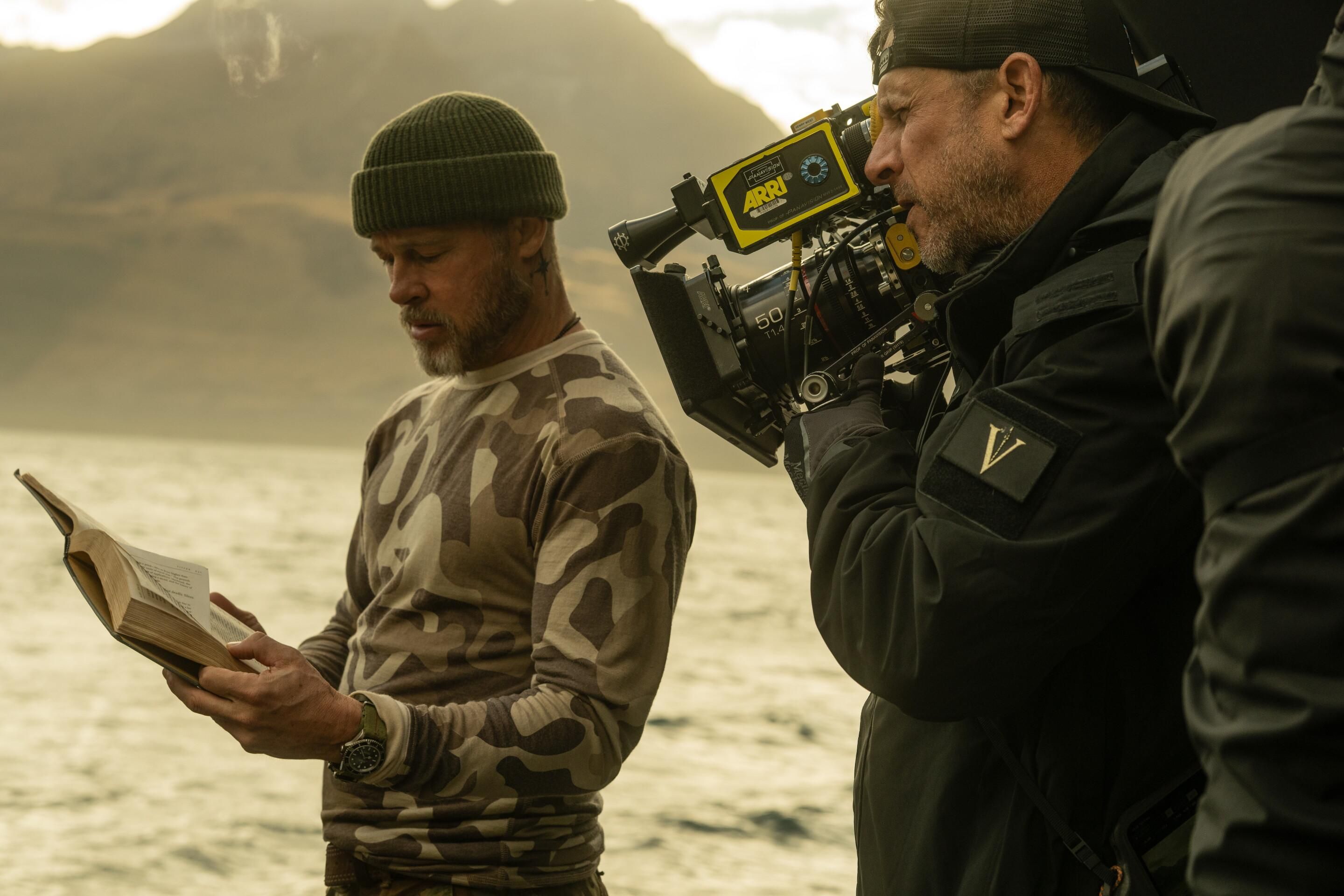
Ayer is himself a Navy veteran, and military authenticity has been a recurring element of his filmmaking. For “Heart of the Beast,” he surrounded Pitt with people who could help ensure that Belmont’s survival skills and physical condition reflected the character’s military background.
Ayer said an instructor from the military’s Survival, Evasion, Resistance and Escape school traveled to New Zealand to work with Pitt and teach him actual survival skills.
He also brought in Sean DeZorn, whom Ayer described as a friend who retired from a Navy special missions unit and had served as a medic. Desert helped with first aid, self-rescue and understanding how an injured person physically deteriorates in the field.
“Brad had real good guides for all of that,” Ayer said. “Those are incredibly important to get right.”
Asked why getting those military details right mattered so much, Ayer offered a less formal answer.
I’ve got a lot of friends who are currently serving, and a lot of friends who have served, he told Military.com. I just don’t want to get beat up in the circle of hate. I’ve got to get it right.
Pitt’s performance also required more than learning technical survival skills. Ayer said the actor endured much of the physical discomfort audiences see on screen.
“A lot of times, he wasn’t acting,” Ayer said. “He really went through it for us.”
Pitt would be limping, cold and cut during filming, Ayer said, and sometimes became genuinely hurt from the physical effort he was putting into a shot.
For Ayer, that performance ultimately makes the survival story work. “It’s Brad that sells it,” he said. “It’s the struggle in his eyes. It’s the effort he’s putting out.”

'Figuring Out Who You Are on the Other Side’
During his conversation with Military.com, Ayer repeatedly returned to military transition not just Belmont’s fictional transition after a lengthy Special Forces career, but what Ayer has witnessed among friends and experienced after his own Navy service.
The military, he said, provides people with unusually clear expectations, close relationships and a daily sense of identity and purpose.
“You get up every morning knowing who you are, what you’re going to do, what you’re going to wear, and that you’re going to be incredibly supported by an organization that really understands people,” Ayer said.
“The bonds you make in the military transcend anything out there in civilian life.”
Leaving that environment can mean entering a world with very different expectations about accountability and relationships.
That’s a piece that I see a lot of folks struggle with on the way out, Ayer said. That’s where people really need that support, and where we really need to check in with people who are transitioning and making sure they are supported and seen and helped.
And Ayer said that challenge is not limited to people like Belmont who spend decades in uniform. Even those who serve for only a few years can become accustomed to the military’s emphasis on mission, contribution and responsibility to others.
“Even if you’re a short timer, if you get exposed to mission and purpose and contribution, and it doesn’t matter your role, if you wear that uniform, you know what you signed up for and what can be asked of you for the good of the nation,” Ayer said.
“That altruism and sense of service is very, very difficult to find on the other side, and I think we carry that expectation with us into the civilian world.”
His advice is to maintain the relationships that can help bridge those worlds. “That’s why it’s important to stay close,” Ayer said. “Stay close with the folks you served with, have some sense of community, build community out on the other side.”

The ‘Submarine Work Ethic’
That part of the conversation became personal when Military.com asked Ayer how his own time in uniform continues to shape him decades later. Ayer served in the Navy’s submarine community as a sonar technician, an experience he said still influences the way he works as a filmmaker.
“So much of what I do is really shaped by the submarine community,” Ayer said. “There’s a saying we call the submarine work ethic. You just grind and study and figure it out, and you’re accountable.”
His technical training also provided a foundation for understanding the increasingly sophisticated technology he now uses as a director.
But when Ayer talked about what he missed about military service, he returned to something less tangible. “I missed the friends on the boat. I missed going underway,” he said. “It was a bit of love-hate. You’re running out of chow and hot-racking and sharing your bunk and everything, but some of the best conversations of my life were on that submarine.”
Ayer even sees similarities between the military environment he left and the movie sets where he now works. Both depend on people with specialized skills operating sophisticated equipment, often under uncomfortable conditions, who must trust one another to perform when the moment arrives.
“There’s a lot of standing around being cold, wet, tired and hungry,” Ayer said. “But then, when the moment comes to get that shot, everybody turns to and knocks it out without complaint, without a word.”
“That level of professionalism is priceless.” That connection helps explain why “Heart of the Beast,” despite its wolves, plane crash and wilderness survival, is ultimately interested in something less visible.
Belmont may have left Special Forces, but the skills, relationships, losses and sense of purpose built over decades of service did not disappear when he took off the uniform.
For Ayer, the story is not about a veteran who is broken. It is about a capable one figuring out what comes next, with his battle buddy still beside him.