🔗 원문 전체 보기 → The Times of India
요약
The Supreme Court urged the Centre to consider petitioner suggestions on AI ethics. Binding guidelines for AI surveillance and content moderation were discussed. The court asked the petitioner to submit his writ petition as a representation. Authorities we…
본문
 ANI
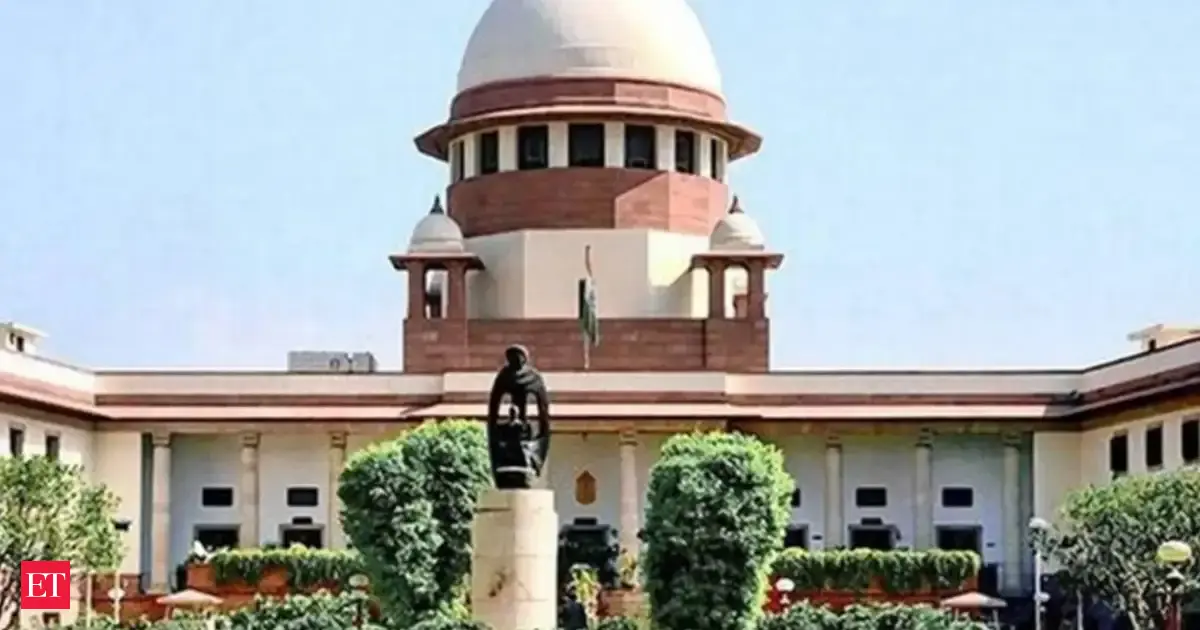
ANISupreme Court asks authorities to consider suggestions on framing guidelines on AI ethics
A bench comprising Chief Justice of India Surya Kant and Justices Joymalya Bagchi and V Mohana was hearing a petition filed by advocate Narendra Kumar Goswami.
"Tell us what can we do," the bench told the petitioner at the outset.
Goswami said he was pressing one of the prayers made in the petition, which sought a direction to the Centre to file an affidavit disclosing all existing and proposed high-risk Artificial Intelligence (AI) systems used by the ministries or agencies in welfare, policing, surveillance and content regulation.
"Send your writ petition as a representation," the bench said, adding that it was a comprehensive petition.

Live Events
"We are not the experts. It is a highly technical issue and it is in policy domain," the bench said.
It observed that the issues raised in the petition needs formulation of appropriate policy or regulation.
The bench noted the petitioner had, in February this year, submitted a representation to the government on the issue.
While disposing of the petition at this stage without expressing any opinion on the merits, the bench asked the authorities to consider the suggestions for taking appropriate measures.
It said the petitioner is at liberty to supplement the representation.
In his PIL, Goswami has sought a direction to the Centre to constitute a high-powered expert committee to frame "binding guidelines on AI ethics, mandatory algorithmic impact assessments and bias audits, transparency in AI-based surveillance and content moderation, human-in-the-loop oversight for all high-risk governmental AI systems, and data protection safeguards..."
The plea sought a direction to the Centre and others to conduct and make public within six weeks a comprehensive algorithmic impact assessment and independent bias audit of all existing AI systems deployed in welfare allocation, predictive policing, facial recognition and content moderation, and to disclose the complete inventory of such systems.
Besides other prayers, it also sought a direction to the Centre to take steps to enact a comprehensive parliamentary legislation regulating the development and deployment of AI by the State, consistent with the guidelines framed by the apex court.
Add
 as a Reliable and Trusted News Source
 Add Now!
(You can now subscribe to our Economic Times WhatsApp channel)
Read More News onSupreme Court AI ethics guidelinesAI surveillance regulationsArtificial Intelligence ethicsbinding guidelines on AIalgorithmic impact assessmentbias audits in AIAI content moderationdata protection safeguards AI
(You can now subscribe to our Economic Times WhatsApp channel)
Read More News onSupreme Court AI ethics guidelinesAI surveillance regulationsArtificial Intelligence ethicsbinding guidelines on AIalgorithmic impact assessmentbias audits in AIAI content moderationdata protection safeguards AI Prime ExclusivesInvestment IdeasStock Report PlusePaperWealth Edition

Will Uncle Sam’s 100% tariff threat stop India’s Russian oil imports?

ET Prime special series: Bigger or Better? Bharat Electronics’ 2013 to 2026 journey – Part 1

Stuck for a decade, then 5 years early: Can biogas follow ethanol's curve?

Rupee is stabilising, but another currency risk is staring at India Inc

AI is powering US GDP: Why India cannot afford to be left behind

- 1
- 2
- 3