요약
The U.S. Navy’s ambitious plan to design and build a new class of nuclear-powered battleships would cost an estimated $275 billion over the next three decades and place unprecedented demands on...
본문
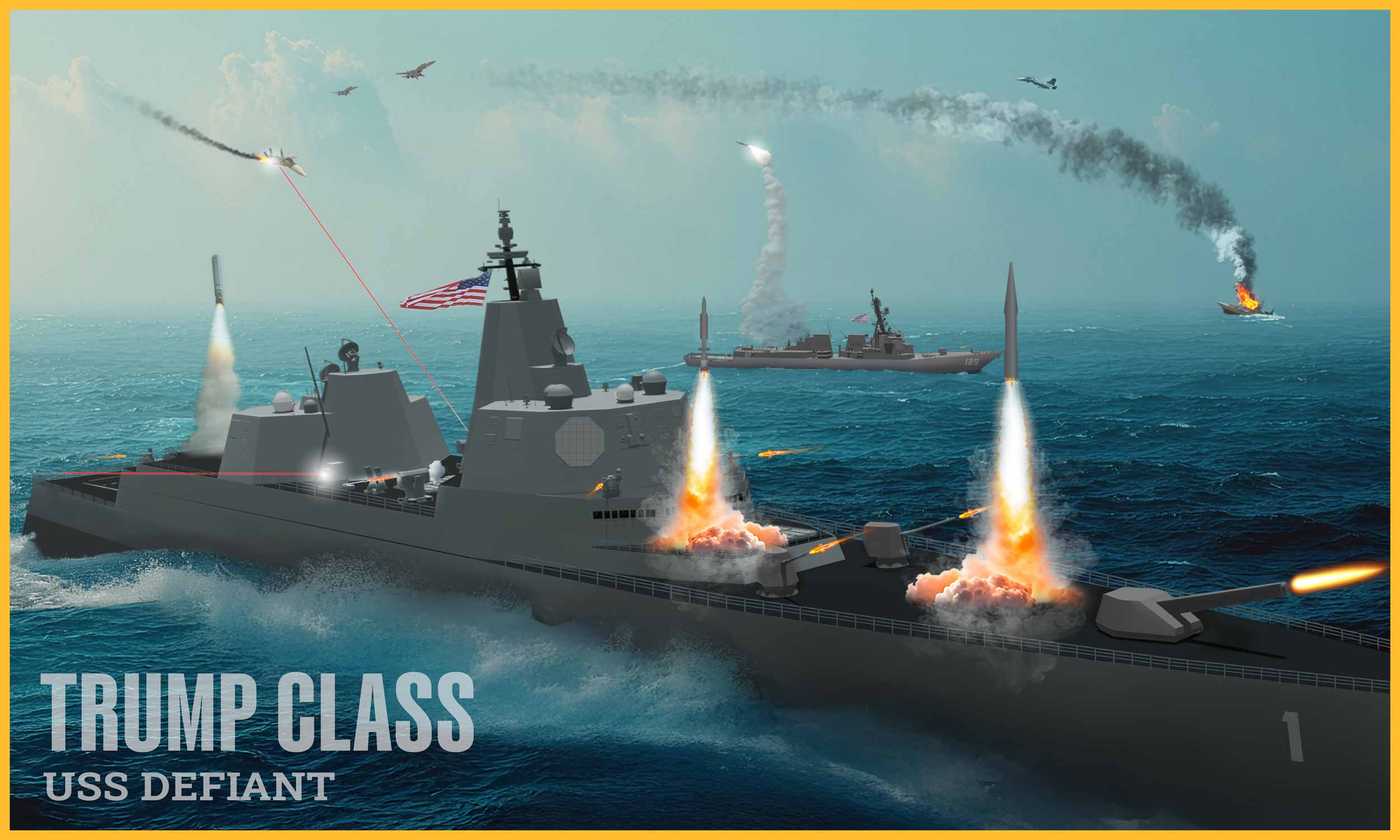
Official U.S. Navy concept art depicts the future USS Defiant, the lead ship in the proposed Trump-class battleship program, firing hypersonic missiles and directed-energy weapons during a notional combat scenario. Courtesy U.S. Navy.
CBO: Trump-Class Nuclear Battleships Could Cost $275 Billion, Strain U.S. Shipbuilding gCaptain Total Views: 1418 August 5, 2026The U.S. Navy’s ambitious plan to design and build a new class of nuclear-powered battleships would cost an estimated $275 billion over the next three decades and place unprecedented demands on the nation’s shipbuilding industrial base, according to a new report from the Congressional Budget Office.
The analysis estimates that the Navy’s planned fleet of 15 Trump-class nuclear-powered guided missile battleships (BBGN) would cost about $23.4 billion for the lead ship and an average of $18 billion for each of the 14 follow-on vessels, making them among the most expensive warships ever built. Overall, the program would cost about $275 billion in 2026 dollars between 2027 and 2056.
The estimate is significantly higher than the Navy’s earlier projections for a conventionally powered version of the ship. The Navy had previously estimated the lead ship would cost about $15.1 billion, with follow-on ships averaging roughly $10.2 billion, before shifting the program to nuclear propulsion in its 2027 “Golden Fleet” shipbuilding plan.
The battleships would be unlike anything the Navy has built since World War II. At roughly 35,000 tons full-load displacement, they would be more than three times the size of an Arleigh Burke-class destroyer and carry an extensive mix of weapons, including vertical launch cells for anti-air, anti-ship and land-attack missiles, Conventional Prompt Strike hypersonic missiles, high-powered lasers, a rail gun, and nuclear-armed sea-launched cruise missiles.
Despite the eye-watering price tag, CBO notes the ships could offer lower operating costs over their service lives by eliminating the need for conventional fuel, although it says there is insufficient information to estimate those savings.
Industrial Base Challenges
Perhaps more significant than the cost is the burden the new fleet would place on an already stretched U.S. shipbuilding industry.
According to CBO, the Navy’s 2027 shipbuilding plan would require annual spending on large surface combatants to jump from roughly $11 billion under the previous plan to about $19 billion, while the production workload for major surface combatants would increase dramatically.
By 2035, shipbuilders would need to more than double the annual tonnage of large surface combatants under construction compared with the previous plan. Overall, production of large surface combatants would rise by about 60%, even as work on smaller surface combatants declines by roughly 40%.
The report warns that accommodating such a large increase “could be a challenge for the shipbuilding industry.”
Those concerns come as U.S. shipyards continue to struggle with labor shortages and production delays. CBO notes that destroyers now take an average of 11 years from funding to delivery, compared with about five years during the 2000s, while aircraft carrier and submarine construction also remains behind schedule.
The Navy envisions Newport News Shipbuilding performing final assembly of the nuclear-powered battleships because it is currently the only shipyard certified to build nuclear-powered surface ships. However, Newport News is already building Ford-class aircraft carriers and nuclear submarines, raising concerns that adding the battleship program could further strain production schedules.
CBO also cautions that beginning construction before the design is sufficiently mature—a recurring issue in recent Navy programs—could lead to additional cost growth and delays. The report notes the battleship remains in the early stages of design despite the Navy’s goal of ordering the lead ship in 2028.
While the Navy argues that digital engineering, modular construction and artificial intelligence-enabled design tools could help reduce schedule risk, CBO says the service’s recent struggles with programs such as the Constellation-class frigate suggest significant execution challenges remain.
Tags:
president trump trump administration Trump-class battleships u.s. navy shipbuilding u.s. shipbuilding
Subscribe for Daily Maritime Insights
Sign up for gCaptain’s newsletter and never miss an update
— trusted by our 104,291 members
Prev Back to Main Next
Stay Informed. Stay Connected.
Get The Daily Insights That Power Maritime Professionals Worldwide
Essential maritime and offshore news, insights, and updates delivered daily straight to your inbox
— trusted by our 104,291 members
Have a news tip? Let us know.

Stay Ahead with Our Weekly ‘Dispatch’ Email
Dive into a sea of curated content with our weekly ‘Dispatch’ email. Your personal maritime briefing awaits!
Sign Up Sign InRelated Articles
 Defense
Fincantieri Sees U.S. Naval Shipbuilding Driving Growth as Profit Hits Record High
Italian shipbuilder Fincantieri says the United States remains a key strategic growth market as it expands its role in U.S. naval shipbuilding, alongside reporting record first-half earnings and a backlog...
July 30, 2026 Total Views: 3208 Shipbuilding
Korea–U.S. Shipbuilding Partnership Center Launches to Advance $150 Billion MASGA Initiative
The Republic of Korea and the United States have officially launched the Korea–U.S. Shipbuilding Partnership Center (KUSPC) in Washington, D.C., establishing a new hub intended to accelerate joint efforts to...
July 28, 2026 Total Views: 3412 Defense
Texas A&M’s Lone Star State Christened as Fourth National Security Multi-Mission Vessel
The fourth of five National Security Multi-Mission Vessels (NSMVs) built for America’s state maritime academies has officially been christened, marking another milestone in the federal program to modernize the nation’s...
July 20, 2026 Total Views: 1752
Get The Industry’s Go-To News
Subscribe to gCaptain Daily and stay informed with the latest global maritime and offshore news