요약
最近米国で入院した人のツイートを契機に同国の医療費の高さが改めて話題になったが、その医療費の伸びが遂に鈍化し始めたという表題のNBER論文(原題は「Has the United States Bent the Health Care Cost Curve?」)が上がっている。著者はDavid M. Cutler(ハーバード大)、Lev R. Klarnet(同)。 以下はその要旨。 In 2024, medical spending as a share of GDP was 15% below forecast…
본문
最近米国で入院した人のツイートを契機に同国の医療費の高さが改めて話題になったが、その医療費の伸びが遂に鈍化し始めたという表題のNBER論文(原題は「Has the United States Bent the Health Care Cost Curve?」)が上がっている。著者はDavid M. Cutler(ハーバード大)、Lev R. Klarnet(同)。
以下はその要旨。
In 2024, medical spending as a share of GDP was 15% below forecasts made in 2010 and only marginally higher than in 2010. Relative to expectations, the savings were nearly $1 trillion in 2024. In light of this prolonged period of slower growth, we ask the question: has the United States bent the health care cost curve? We start with a model of medical spending that incorporates both the development of new technologies and the equilibrium use of those technologies. Technology development and incentives around its use may add to or subtract from spending growth. We then examine the drivers of the spending slowdown empirically. We attribute slower medical spending growth to five factors: the development of technologies that simultaneously improve health and lower cost; long-run supply elasticities that exceed short-run elasticities; improvements in population health; reimbursement changes that reduce demand and make demand more price elastic; and reductions in the rate of price increases, likely driven by some of these same demand factors. Because these cost slowing mechanisms are expanding over time, we conclude that the United States has bent the health care cost curve, though not as much as it could be or will need to be bent.
(拙訳)
2024年、医療支出のGDP比は、2010年に出された予測を15%下回り、2010年の値を僅かに上回るに過ぎなかった。予想に比べた2024年の節約分は1兆ドル近かった。この伸びの鈍化が長期間続いていることに鑑みて、我々は質問を呈する:米国は医療費用曲線を押し曲げたのか? 我々は、新技術の発達ならびにそうした技術の均衡利用を織り込んだ医療支出のモデルを出発点とした。技術の発達とその利用を巡るインセンティブは、支出の伸びを押し上げもしくは押し下げる可能性がある。次に我々は、支出の鈍化の要因を実証的に調べた。我々は、医療支出の伸びの鈍化を5つの要因に帰した。医療を改善するとともに費用を低下させた技術の発達、短期の弾力性を上回った長期の供給の弾力性、人々の健康の改善、需要を減らして需要をより価格弾力的とした診療報酬の変化、および、そうした需要要因の幾つかによってもたらされた可能性が高い価格上昇率の減少である。これらの費用鈍化メカニズムは時間と共に増大しているため、能う限り、もしくは必要なだけ、ではないものの、米国は医療費用曲線を押し曲げた、と我々は結論する。
Has the United States bent the health care cost curve? | Brookingsでは2026年春のBrookings Papers on Economic Activityで提示されたungated版にリンクするとともに、論文の内容を簡単に紹介している。以下はその紹介記事で引用された論文の図。
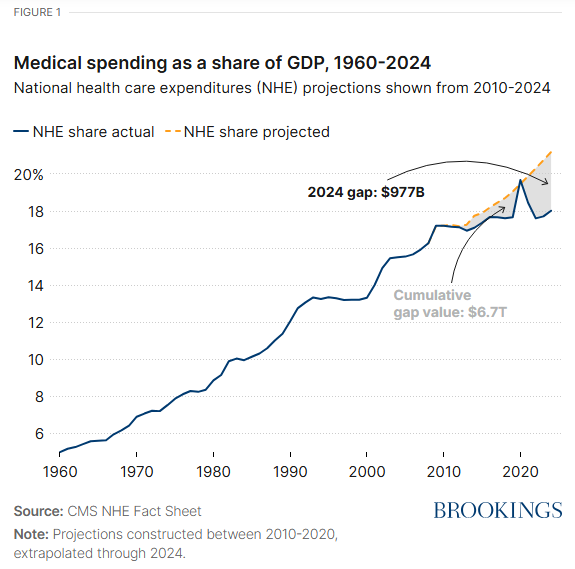
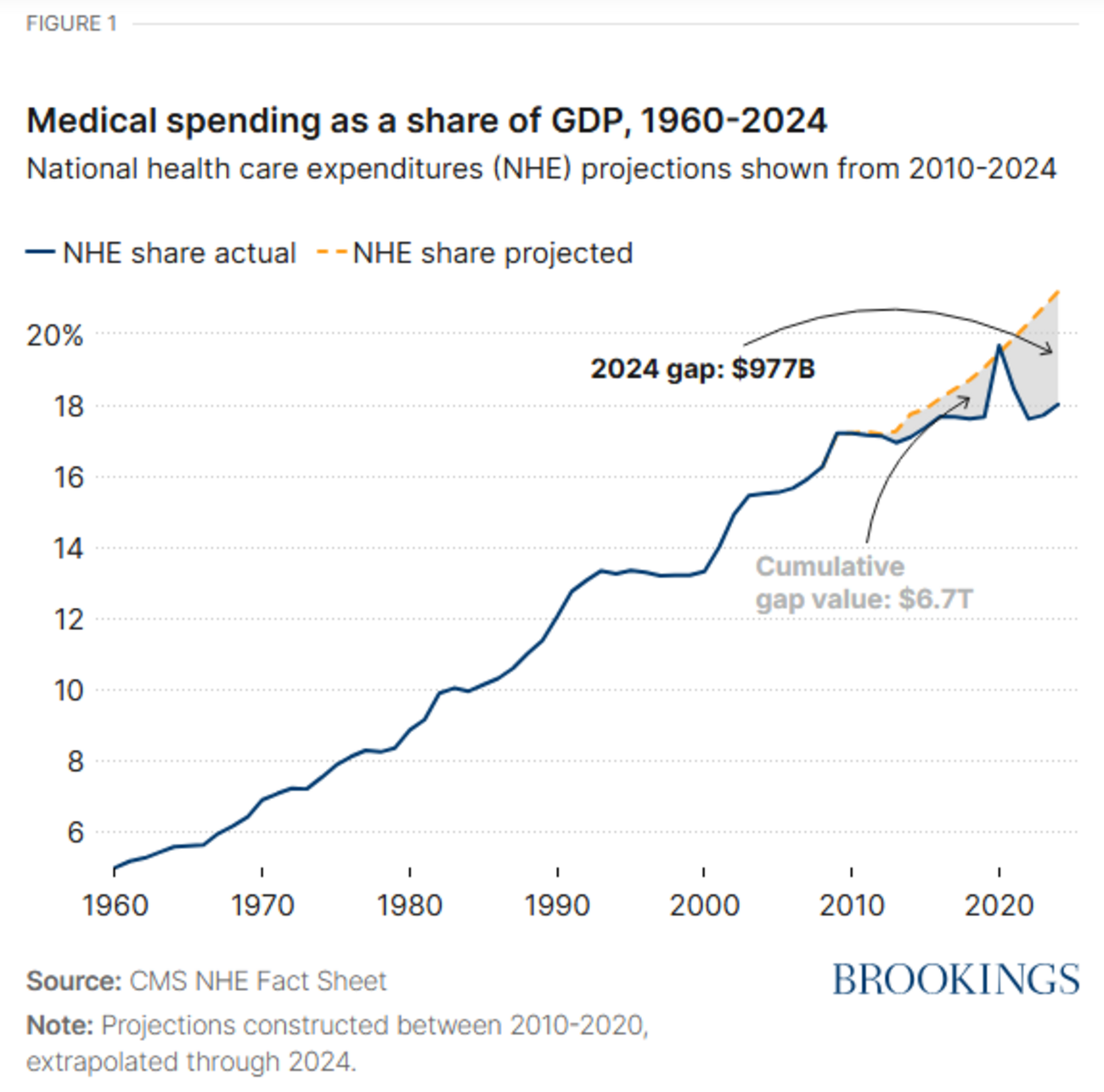
記事ではこの図の説明として「“The slowdown in medical spending growth is not only large substantively, it is unprecedented historically,” write the authors, David M. Cutler and Lev Klarnet of Harvard University. “Since … 1960, no 14-year period has seen as slow growth of medical spending relative to GDP as was realized over the 2010-2024 time period.”」と論文の記述を引用している。
診療報酬の変化について本文では「a change in the reimbursement environment from a volume basis into more of a value-based approach (Buntin et al., 2025)」と記述している*1。ただ、これについては民営化の影響:病院部門の実証結果 - himaginary’s diaryで紹介した論文が取り上げたように、市場支配による消費者側の医療アクセスの低下、という悪影響が懸念されるところである。つい最近、チームみらいの医療費削減の提案が叩かれたのもまさにそうした懸念によると言えるだろう。
ちなみに医療提供者が償還率の変化に反応しない時(とその理由) - himaginary’s diaryで紹介した論文では、労災については医療従事者の市場原理の外での頑張りによりそうした悪影響が抑えられた、という事例が報告されているが、それが医療全般に当てはまる傾向かどうかは不明である。
人々の健康の改善について本文では「health status has improved in other ways that we do not understand, but that may be due to reduced smoking and other preventive care.」と記述している。
以下は各要因の寄与をグラフ化した論文の図。
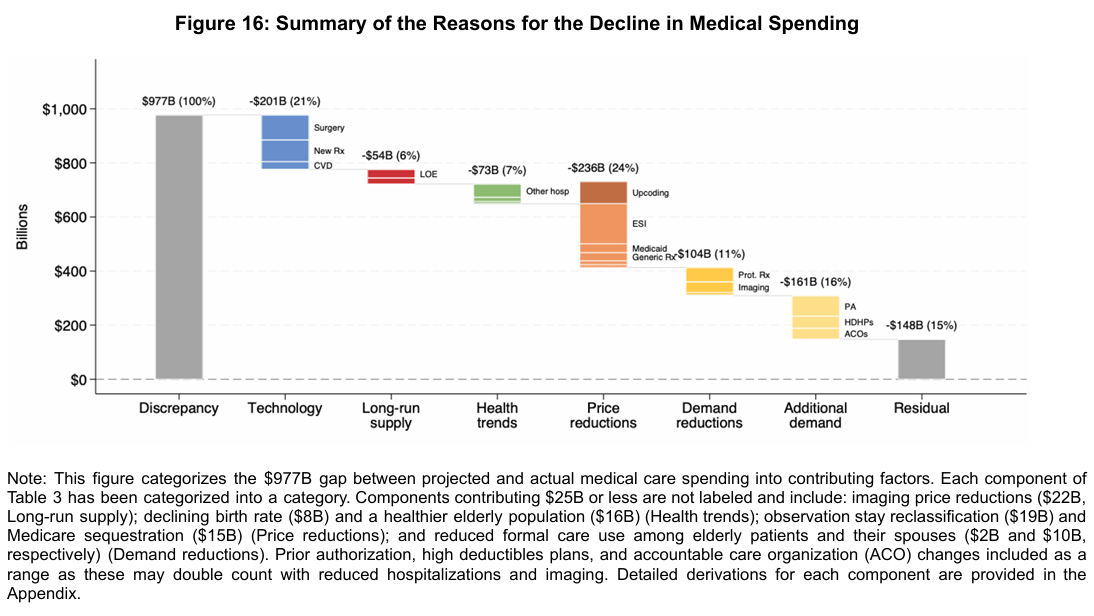
図中にも示されているが、結論部によると、各要因の寄与度は技術進歩が21%、長期の供給弾力性の増加が6%、需要を減らした市場の各種の変化(消費者による費用負担の増加、技術を利用したことの診療報酬の低下、保険会社による技術利用の制限)が11-27%*2、人々の健康の改善が7%、価格の伸びの鈍化が24%との由。
*1:Buntin et al., 2025はBuntin, Melinda B., Ellen Meara, and Carrie H. Colla. (2025). “The value zeitgeist—considering the slowdown in health care spending growth.” New England Journal of Medicine, 392(15):1463–6.
*2:「The lower end includes just services we measure directly; the upper end is taken from studies of the impact of reimbursement changes.」との由。ちなみに導入部では10-26%と1ポイント低い数字になっている。